#local merge queue
103 related articles

·3 min
Jenkins Deep Dive: The Evergreen King of CI/CD Automation
An in-depth analysis of Jenkins' technical architecture, plugin ecosystem, distributed builds, and use cases — explaining why it remains the CI/CD leader.
Read more →

·3 min
14-Byte AI Brain Takes on a Maze: Pushing the Intelligence Limits of Minimalist Neural Networks
A tiny 14-byte AI brain attempts to solve a 2D maze, exploring the limits of information compression and intelligence. Discover evolutionary algorithms, memory constraints, and the value of minimal AI.
Read more →

·4 min
Burning Through 80 Billion Tokens: Why Vibe Coding Is Doomed to Fail
A creator spent 40 days and 80 billion tokens testing the real limits of Vibe Coding. This article dissects why AI programming crashes in production: complexity, context limits, and compression loss.
Read more →
Intelligent Model Routing: The Core Te…
·3 min
Intelligent Model Routing: The Core Technology and Implementation Guide for AI Cost Reduction and Efficiency
Intelligent Model Routing is becoming key AI infrastructure. This article explores its principles, solution types, technical challenges, and implementation considerations to help developers balance cost, latency, and quality.
Read more →
GitHub Daily · July 23: The Duet of Ru…
·3 min
GitHub Daily · July 23: The Duet of Rust's Dominance and the AI Agent Collaboration Paradigm
GitHub Trending July 23: block/buzz tops the chart with 3,252 stars, Rust dominates system tools, and AI Agents shift from tools to parallel collaborators.
Read more →

·6 min
The Complete Codex Guide: From Beginner to Pro with the All-in-One AI Assistant
OpenAI Codex is more than a coding tool—it's an AI agent that writes code, makes slides, and operates browsers. This guide covers its four versions, permission modes, plugins, automation, and six best practices.
Read more →
Multi-Agent Collaboration: A GPT Team …
·2 min
Multi-Agent Collaboration: A GPT Team Engineering Paradigm and Practical Guide
Explore multi-agent collaboration architecture: role division, communication protocols, coordination mechanisms, and how Workbench templates help developers build efficient AI agent teams.
Read more →

·3 min
Multica: An Open-Source Tool for Managing Multiple AI Coding Agents from a Single Dashboard
Multica is an open-source AI Agent management tool that unifies Claude Code, Codex, Cursor and more into one visual dashboard with kanban, task queues, and cloud deployment support.
Read more →

·4 min
MiniMax M2 Local AI Knowledge Base Test: Source Tracing, Deduplication, and Fact Verification
Build a local AI knowledge base with MiniMax M2 in OpenCode: source tracing, fact vs. opinion separation, conflict preservation, and timeliness management.
Read more →
·2 min
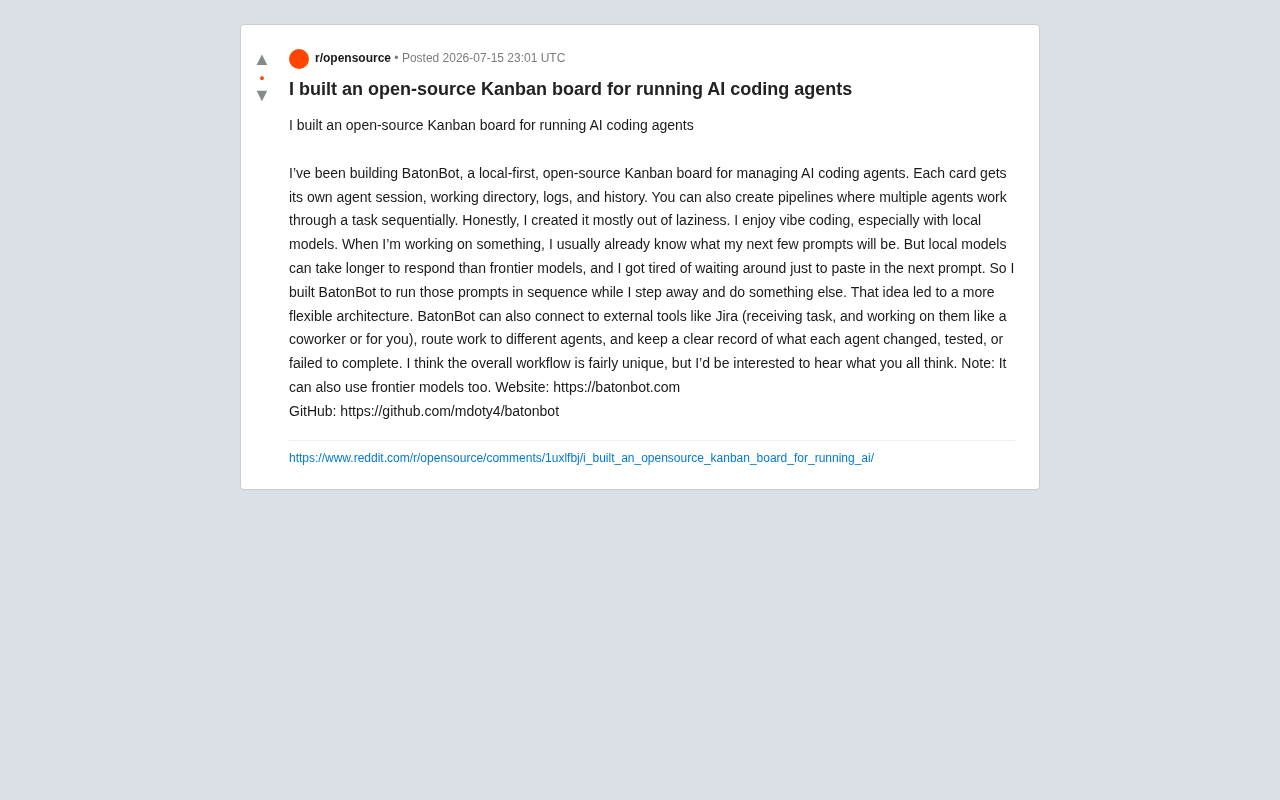
BatonBot: An Open-Source Kanban Tool for Managing AI Coding Agents
BatonBot is a local-first open-source kanban tool built for AI coding agents. Features prompt queuing, pipelines, Jira integration, and multi-model support.
Read more →

·3 min
AI Second Brain Tech Stack: Building a Proactive Intelligent Assistant for ADHD Users
How to build a true AI second brain for ADHD users: LangGraph, n8n, RAG, vector databases, and layered architecture for a proactive personal assistant.
Read more →
Using LLMs to Master MikroTik Network …
·2 min
Using LLMs to Master MikroTik Network Configuration: A Practical Guide to AI-Assisted Network Operations
Explore how LLMs can streamline MikroTik RouterOS configuration — from natural language command generation to AI-assisted troubleshooting and security auditing.
Read more →

·2 min
DecisionRL: An Open-Source Reinforcement Learning Library Built for Operational Decision-Making
DecisionRL is an open-source RL library for operational decision-making, with six built-in scenarios (inventory, pricing, energy), OR baselines, and support for DQN, PPO, SAC, and more.
Read more →

·2 min
Dify 1.8.0 Hands-On Tutorial: Deploy and Build Your AI Application Platform from Scratch
A hands-on guide to deploying Dify 1.8.0, covering setup steps, Workflow vs. Chatflow differences, RAG knowledge base, and MCP support for AI app development.
Read more →

·3 min
Bonsai-27B Extreme Quantization: Running 1-bit LLMs on Consumer Hardware
Bonsai-27B supports binary/ternary extreme quantization for 27B LLMs running on 8GB VRAM. Covers llama.cpp upstream progress, RTX 4060 benchmarks (30 t/s), and real-world limitations.
Read more →

·2 min
llama.cpp Milestone: The Open-Source Evolution of Local LLM Inference
llama.cpp hits a new milestone, growing from a solo hobby project into core local AI inference infrastructure. Explore its iteration speed, GGUF quantization, and how AI coding agents are reshaping open-source development.
Read more →

·3 min
AgentScope 2.0 Deep Dive: Six Core Upgrades for Production-Grade Multi-Agent Development
AgentScope 2.0 by Alibaba's Tongyi Lab delivers six major upgrades: typed event streaming, dangerous instruction interception, human-in-the-loop, concurrent execution, workspace system, and agent-as-a-service for production-grade multi-agent development.
Read more →

·4 min
Claude Code vs. Codex vs. Cursor: A Deep Comparison of Three AI Coding Tools
Claude Code, Codex, or Cursor? This in-depth comparison covers each tool's positioning, ideal users, and how to combine them for maximum productivity in your AI coding workflow.
Read more →

·3 min
Why Transformer Dominates AI Foundation Models: A Deep Dive into Its Three Core Advantages
Why do ChatGPT and Gemini both use Transformer? This deep dive explains how self-attention solves RNN's serial inefficiency and CNN's local limitations across three key dimensions.
Read more →
·4 min
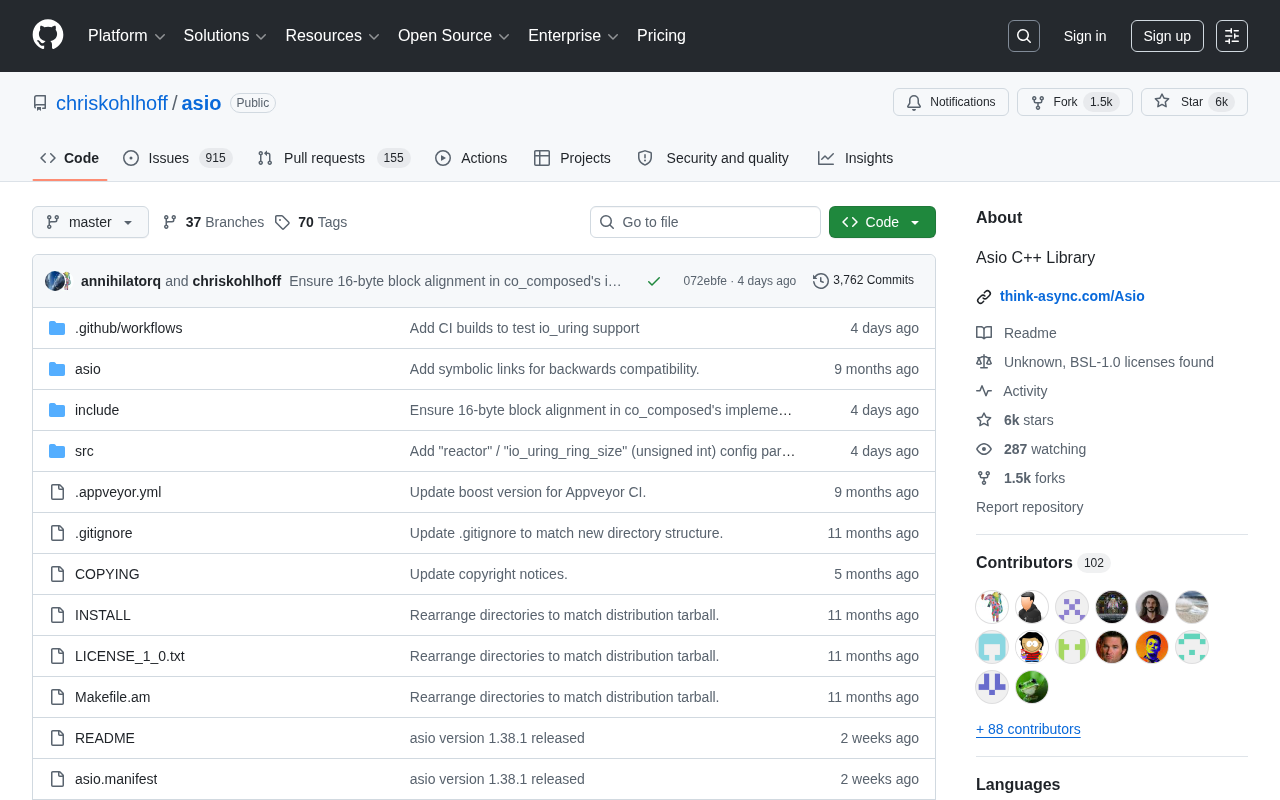
Deep Dive into Asio: The De Facto Standard and Core Design of C++ Asynchronous Network Programming
A comprehensive analysis of Asio (Boost.Asio) covering its Proactor async model, completion token mechanism, C++20 coroutine support, and cross-platform I/O abstraction for high-performance C++ networking.
Read more →