#mathematical optimization
610 related articles
 Research
·2 min
Optimize Anything: One API to Unify Optimization of Code, Prompts, and Agent Architectures
UC Berkeley and Stanford propose Optimize Anything, a universal text optimization framework that unifies optimization of CUDA kernels, agent architectures, and prompts through one declarative API.
Read more →
 Deep Dives
·2 min
Claude Opus vs. Sonnet vs. Haiku: How to Choose the Right Model
Compare Anthropic's Claude Opus, Sonnet, and Haiku models across intelligence, speed, and cost. Practical selection guide with multi-model routing strategies.
Read more →
 Product Reviews
·3 min
Cursor 3.0 Deep Dive: From Code Editor to AI Agent Command Center
Deep dive into Cursor 3.0's major upgrades: proprietary Composer 2 coding model, multi-agent parallel workflows, built-in browser and design mode. Exploring the shift from VS Code fork to Rust rewrite and the AI agent programming paradigm.
Read more →
 Tutorials
·3 min
Open-Source Multi-Agent Intelligent Diagnostic System: Deep Dive into MCP + RAG + Skill Routing Architecture
Deep dive into an open-source multi-Agent diagnostic system built on modified OneCall, featuring MCP real-time interaction, RAG-enhanced Q&A, and Skill routing to minimize Token consumption.
Read more →
 Tech Frontiers
·3 min
GPT-5.3 Codenamed "Garlic" Coming Soon, Claude Cowork Launches Targeting Non-Developers
OpenAI's GPT-5.3 codenamed Garlic is coming soon, Anthropic launches Claude Cowork for non-developers, plus breakthroughs in Baichuan M3 medical and SiNong agricultural AI models.
Read more →
 Tutorials
·3 min
From Traditional RAG to Agentic RAG: Principles Compared and Enterprise-Grade Implementation Guide
Deep dive into traditional RAG limitations and Agentic RAG upgrades, with ChatBox source code analysis covering core tool design, intelligent decision flows, and LangGraph implementation for enterprise deployment.
Read more →
 Tutorials
·3 min
Getting Started with AI Full-Stack Development: A Knowledge Framework from Machine Learning to Large Language Models
A systematic guide to the relationships between AI, machine learning, deep learning, and large language models, helping developers build a clear knowledge framework and find an efficient learning path.
Read more →
 Product Reviews
·3 min
Kimi K2.6 In-Depth Review: A Complete Breakdown of Its Coding and Agent Capabilities
In-depth review of Kimi K2.6's coding, Agent collaboration, and visual development capabilities. #1 open-source on SWE-Bench Pro, 300 parallel sub-agents, API priced at 1/3 of competitors.
Read more →
 Tech Frontiers
·2 min
Kimi K2.5 Fully Open-Sourced: Deep Dive into 1T Parameter MoE Architecture + Agent Cluster Capabilities
Deep dive into Moonshot AI's fully open-sourced Kimi K2.5: 1T parameter MoE architecture, Vision-to-Code capabilities, and 100-Agent parallel cluster system topping open-source benchmarks.
Read more →
 Tutorials
·3 min
Enterprise RAG Implementation: Architecture Principles and Production-Grade Optimization Guide
Complete guide to enterprise RAG architecture covering data indexing, vectorization, and retrieval optimization. Practical insights on chunking strategies, hybrid retrieval, and hallucination control for production-grade LLM applications.
Read more →
 Product Reviews
·3 min
Local Deployment of Qwen 3.6 27B on 4×3080Ti: Real-World Coding Test with OpenCode
Real-world test of Qwen 3.6 27B FP8 deployed on 4×3080Ti 16GB modded GPUs with OpenCode for system tool development. Covers hardware setup, inference speed, context management, and productivity gains.
Read more →
 Tutorials
·3 min
Universal AI Prompts for Mathematical Modeling: A Zero-to-Hero Four-Stage Practical Guide
A detailed guide to the four-stage universal AI prompt system for mathematical modeling, covering problem analysis, innovative model construction, data processing, and model solving for competitions.
Read more →
 Tutorials
·3 min
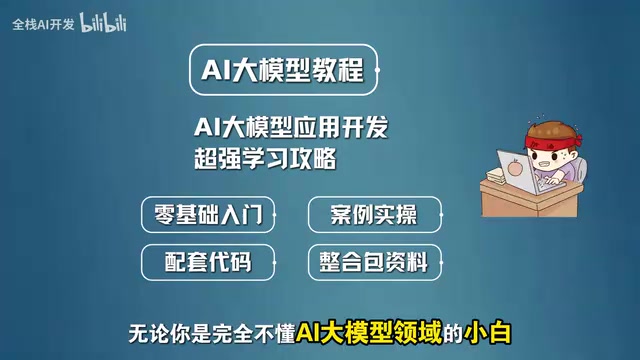
LLM Learning Roadmap: A Complete Guide from Beginner to Project Implementation Across Seven Core Modules
A systematic breakdown of seven core LLM learning modules covering environment setup, Prompt Engineering, RAG, Agents, dev frameworks, fine-tuning, and hands-on projects for developers.
Read more →
 Research
·3 min
Inside Cursor Composer 2 Training: A Complete Breakdown of Its Distributed Reinforcement Learning Architecture
Deep dive into how Cursor trained Composer 2 on Fireworks: async pipeline architecture, MoE numerical precision challenges, Router Replay, and global distributed GPU coordination.
Read more →
 Expert Opinions
·1 min
Validation-Driven Development: The Key to Unlocking AI Coding's True Potential
The bottleneck of AI coding tools isn't model capability — it's your validation infrastructure. Learn the validation-driven development paradigm and how to achieve 5–7x efficiency gains.
Read more →
 Tutorials
·1 min
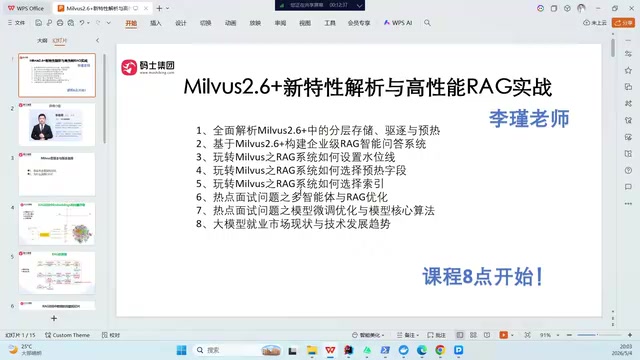
Milvus 2.6 Core New Features Explained: Tiered Storage, Architecture Deep Dive & RAG in Practice
Deep dive into Milvus 2.6.x core features including tiered storage, eviction strategies, warmup mechanisms, cloud-native architecture design, and key optimization strategies for building high-performance RAG systems.
Read more →
 Tutorials
·2 min
Complete Guide to Connecting GPT-5.5 in Trae: API Proxy Configuration and Real-World Testing
Step-by-step guide to connecting GPT-5.5 in Trae IDE via API proxy, covering Base URL config, API Key setup, error troubleshooting, and real coding tests.
Read more →
 Product Reviews
·2 min
Trae China Edition In-Depth Review: Free AI Coding IDE Hands-On Experience & Comparison with International Version
In-depth review of Trae China edition AI coding IDE, comparing model support, code generation, and features with the international version. Free, no VPN needed.
Read more →
 Product Reviews
·2 min
Trae Deep Dive: ByteDance Launches China's First AI-Native IDE — How Will It Transform the Programming Industry?
ByteDance launches Trae, China's first AI-native IDE, integrating Doubao, DeepSeek, and Claude 3.7. A deep dive into its Chat and Build modes, impact on outsourcing, and what it means for developers.
Read more →
 Industry Insights
·2 min
A New Self-Marketing Tactic in AI: Can a Recommendation List Featuring Only Yourself Go Viral?
An AI blogger posts a "top 13 people to follow" list naming only himself. Analyzing the self-deprecating marketing strategy, attention economy dynamics, and how to identify truly valuable AI practitioners.
Read more →