#natural language programming limitations
535 related articles

·2 min
Running Manim in the Browser: Rebuilding 3Blue1Brown's Animation Engine with WebGPU
Explore how WebGPU brings 3Blue1Brown's Manim math animation engine to the browser, enabling zero-install, real-time mathematical visualization with interactive education potential.
Read more →

·2 min
awesome-systematic-trading: A Complete Guide to the 9,000-Star Quantitative Trading Open Source Resource List
Deep dive into the 9,100-star awesome-systematic-trading GitHub project covering backtesting frameworks, strategy implementations, data tools, and classic books for quantitative traders.
Read more →

·6 min
Harness Engineering: From Context Engineering to the Third Phase of AI Programming
Explore Harness Engineering: the next evolution beyond context engineering for AI programming. Learn how to build enterprise-grade Skill systems and deliver real projects with mid-tier models.
Read more →

·4 min
OpenAI Employee Shares How to Build an AI Work Operating System with Codex
OpenAI's Jason Liu shares how he uses ChatGPT Workbench and Codex to build an AI work OS: Chief of Staff automation, persistent threads, Skills/Plugins, browser control, and app-building methodology.
Read more →

·3 min
Learning AI Large Language Models: A Complete Roadmap from Beginner to Practitioner
A systematic breakdown of the AI LLM learning roadmap covering prompt engineering, AI Agent development, RAG knowledge bases, model fine-tuning, and hands-on projects for beginners.
Read more →

·4 min
Spring AI 2.0 in Practice: Building an Enterprise RAG Knowledge Base Q&A System with Cursor
Build an enterprise RAG knowledge base Q&A system using Spring AI 2.0, Cursor AI programming, Ollama local deployment, and Redis vector storage. Runs on just 4GB VRAM.
Read more →

·3 min
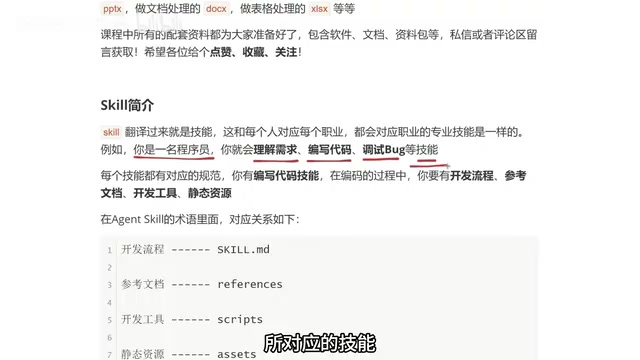
What Are Agent Skills? A Complete Guide to AI Agent Skill System Architecture and Principles
A deep dive into AI Agent Skills: their core concepts, technical implementation, the four key elements (SKILL.md, references, scripts, assets), and how Skills differ from prompts.
Read more →
·3 min
What Are Agent Skills? A Detailed Guide to AI Agent Skill System Architecture and Principles
A deep dive into AI Agent Skills: understand the core concepts and technical implementation through the four key elements — SKILL.md, references, scripts, and assets — and learn how Skills differ from prompts.
Read more →

·2 min
A Beginner's Guide to Vibe Coding: Building Your Career Moat with AI Programming
A detailed guide to Vibe Coding with AI programming tools like Claude Code, Cursor, and Codex. Learn how to leverage AI-driven development to ship products independently and build lasting career value.
Read more →

·4 min
Colibri: Running a 744-Billion-Parameter LLM on an Ordinary Laptop
Colibri uses MoE hot-cold separation and 4-bit quantization to run 744B-parameter models like GLM 5.2 on consumer hardware. Learn about its three-tier memory architecture and speculative decoding.
Read more →

·3 min
How AI Agents Are Reshaping Enterprise Work: From Task Automation to Organizational Restructuring
Explore how AI agents are redefining enterprise work—from applied AI partnerships and multi-agent collaboration to structural workflow redesign and organizational transformation.
Read more →

·5 min
Running GPT-5.6 Inside Claude Code: Best Practices for Subagent Orchestration and System Prompts
Deep dive into running OpenAI GPT-5.6 inside Claude Code: comparing Codex vs Claude Code on subagent orchestration, workflow design, and system prompt quality, revealing how harness engineering determines model output.
Read more →

·5 min
A Beginner's Guide to Prompt Engineering: From One-Off Instructions to a Systematic Methodology
A beginner's guide to prompt engineering covering the four functions of prompts, the key differences from prompt engineering, a six-step systematic workflow, and critical technical and practical limitations.
Read more →

·2 min
Zero-Code Guide to Coze: A Complete Beginner's Guide to AI Agent Development
A detailed guide to ByteDance's Coze platform covering agent building, workflow orchestration, and knowledge base management to help beginners start AI app development with zero coding.
Read more →

·4 min
A Beginner's Guide to AI Agents: Core Principles and Learning Paths Explained
Learn AI Agent core principles from scratch: understand how Agents differ from LLMs, their execution mechanisms, why rule design matters, and find the right learning path for your goals.
Read more →

·3 min
Deconstructing Agents: Task Decomposition, Context Compression, and the Case Against Heavy Frameworks
A deep engineering analysis of Agent internals: how LLMs decompose tasks via tool calling, why context compression and memory are essential, and why solo developers should avoid heavy frameworks.
Read more →
·3 min
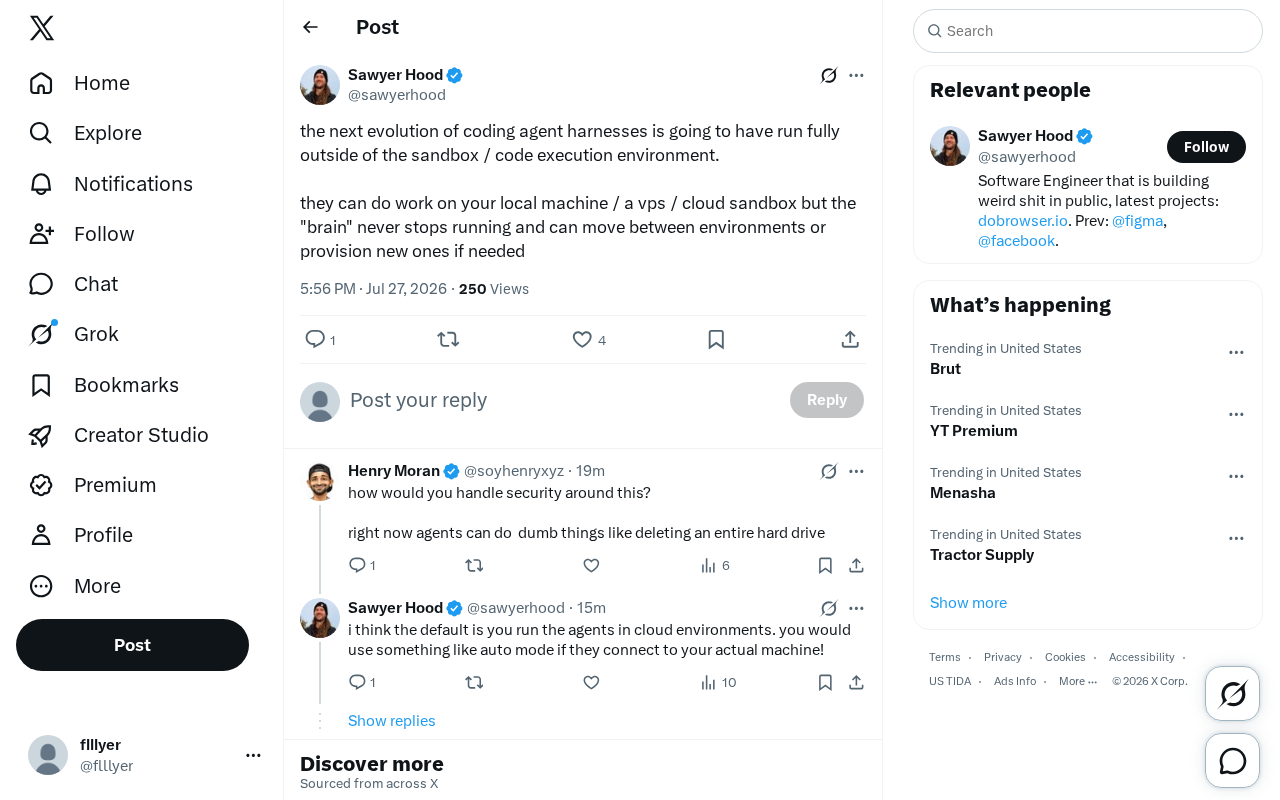
The Next Evolution of Coding Agents: Letting the Brain Break Free from the Sandbox
Exploring the key evolution in coding agent architecture: separating the reasoning core from code execution environments to decouple control and execution planes.
Read more →

·3 min
Getting Started with Codex: A Complete Guide to AI Agent Programming Tools
Compare Codex and Claude Code AI agent programming tools. Learn AI Agent concepts, tool selection, cost analysis, and GPT account setup in this complete beginner's guide.
Read more →
·4 min
A Beginner's Guide to AI Agents: Core Principles and Learning Paths Explained
A beginner's guide to AI Agents: understand core principles, how Agents differ from LLMs, their execution mechanisms, and get tailored learning path recommendations.
Read more →

·2 min
Jensen Huang Champions Open-Source AI: Distillation Is Not Plagiarism, DeepSeek and Kimi Are Excellent
NVIDIA CEO Jensen Huang defends open-source AI, calls distillation legitimate learning, praises DeepSeek and Kimi, and co-signs open letter with 20+ companies while OpenAI and Google stay silent.
Read more →