#open-source vs closed-source
202 related articles

·2 min
Rediscovering Tcl/Tk: The Hidden Gem for Lightweight Cross-Platform Tool Development
Explore Tcl/Tk's unique value in cross-platform tool development: ultra-lightweight footprint, event-driven architecture, seamless CLI-GUI unification, and advantages over bloated modern frameworks.
Read more →

·3 min
Why Musk's xAI Can Keep Pace with the AI Leaders While Meta Falls Behind
Deep comparison of Musk's xAI vs Zuckerberg's Meta in the AI race. Analyzing why xAI achieves more with less while Meta's massive spending yields limited breakthroughs.
Read more →

·5 min
Flux 3 Video Generation Experience: Home Movie Style and Prompt Optimization Capabilities
In-depth analysis of Flux 3 video generation model's home movie style capabilities, intelligent prompt optimization, Hermes Agent usage experience, and outlook for official release.
Read more →

·6 min
AI Coding Boosts Productivity 10x: Are Programmers Writing Their Own Pink Slips?
A senior developer admits 95% of work is done by Claude Code, with 10x productivity gains. From coding to architecture, AI is eroding programmers' core skill moats. Deep analysis of AI coding's impact on tech employment.
Read more →

·3 min
DeepSeek-V4-Flash Local Deployment Test: $8,000 Hardware Approaches Frontier Model Performance
DeepSeek-V4-Flash-0731 scores 50 on the Intelligence Index, nearly matching the frontier model score of 51 from five months prior. We analyze local deployment, hardware requirements, and implications.
Read more →

·2 min
Anthropic's Call to Restrict Open-Source Models Sparks Outrage: Safety or Monopoly?
Anthropic CEO's call to restrict "dangerous capabilities" in open-source AI models sparks fierce backlash. Developers question double standards and fear monopoly disguised as safety.
Read more →

·2 min
DeepSeek V4 Flash Weights Open-Sourced: A New Option for Lightweight LLM Deployment
DeepSeek V4 Flash model weights reportedly open-sourced. This article analyzes its lightweight positioning, open-weight value, comparisons with closed-source models, and deployment guidance.
Read more →

·3 min
Cynative Open-Source AI Cloud Security Tool: Audit Cloud Infrastructure with Natural Language
Cynative is an open-source AI cloud security auditing tool that lets you query AWS, GCP, Azure, and Kubernetes infrastructure using natural language. Its read-only architecture ensures zero risk to production environments.
Read more →

·3 min
Cynative Open-Source AI Cloud Security Tool: Audit Cloud Infrastructure with Natural Language
Cynative is an open-source AI cloud security tool that lets you audit AWS, GCP, Azure, and Kubernetes infrastructure using natural language. Its read-only architecture ensures production environments stay safe.
Read more →

·3 min
Buzz Open-Source Group Chat Platform: A New Choice for Human-AI Agent Collaboration
Buzz is an open-source decentralized group chat platform for human-AI agent collaboration—model-agnostic, self-sovereign, and designed to replace the fragmented Slack/GitHub experience.
Read more →

·3 min
Why AI Companies Are Reluctant to Open Source: The Strategic Dilemma and Game Theory of Market Leaders
Deep analysis of why leading AI companies refuse to open-source core models. Exploring moat mentality, competitive game theory, and the open vs. closed source dialectic.
Read more →

·3 min
Self-Hosting Kimi K3: Is Spending 20% More on Hardware Worth a 20% Improvement in Task Performance?
Analysis of whether spending 20% more on hardware for self-hosting Kimi K3 to gain 20% task performance improvement is worthwhile, covering inference precision, VRAM optimization, and tiered deployment.
Read more →

·2 min
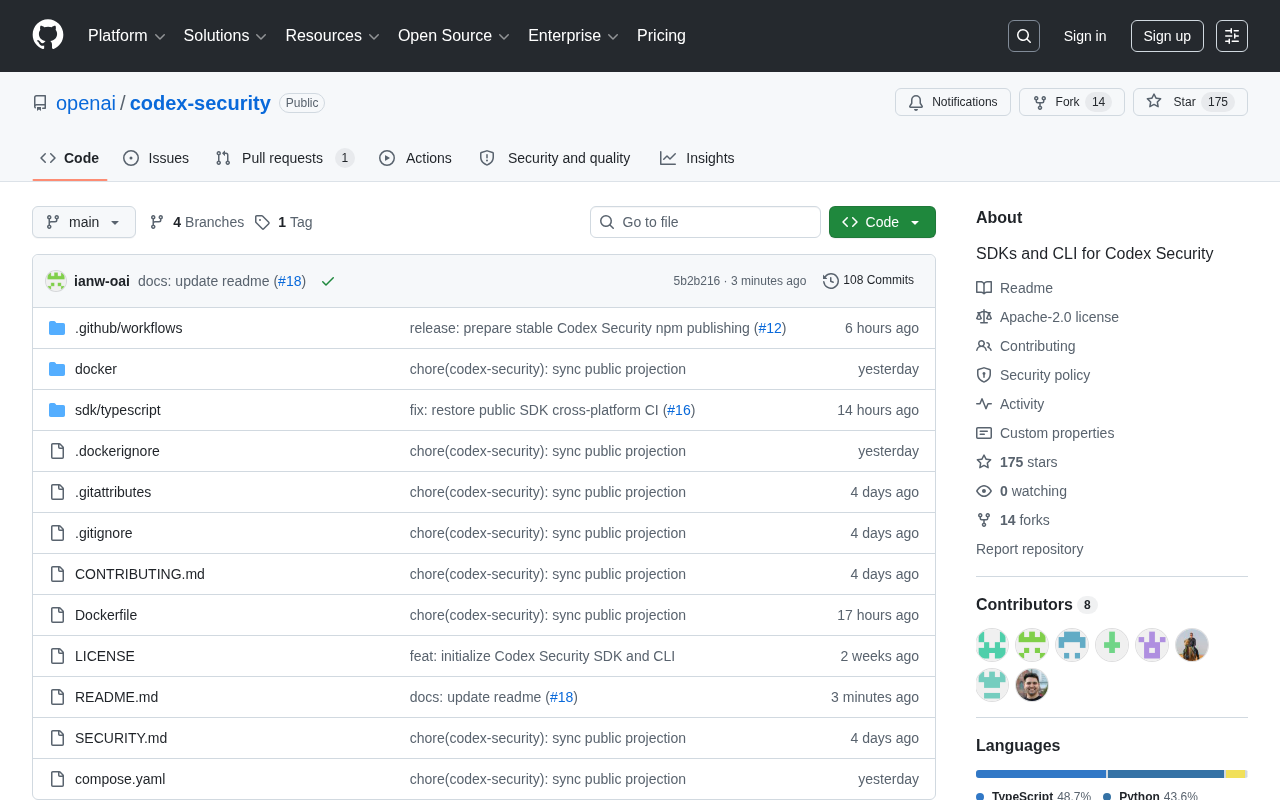
OpenAI Open-Sources Codex Security Components: Setting a New Standard for AI Coding Safety
OpenAI open-sources Codex Security components, bringing automated security detection to AI code generation. Analysis of its strategic value, developer impact, and the industry shift from capability to security.
Read more →
·2 min
OpenAI Open-Sources Codex Security Components: Setting a New Standard for AI Coding Safety
OpenAI open-sources Codex Security components, bringing automated security detection to AI code generation. Analysis of its strategic significance and industry impact.
Read more →

·3 min
Super Productivity v18.16 Open-Source Task Management Tool: A Complete Review
In-depth review of Super Productivity v18.16: faster task capture, Todoist migration, Android widget, Flowtime focus mode, and Docker self-hosting under MIT license.
Read more →

·3 min
Super Productivity v18.16 Open-Source Task Management Tool: A Complete Review
In-depth review of Super Productivity v18.16: faster task capture, Todoist migration, Android widget, focus mode improvements, and Docker self-hosting—all MIT-licensed and free.
Read more →

·3 min
Kimi K3 Hands-On Review: 2.5 Trillion Parameter Open-Source Model Challenges Claude
Kimi K3 hands-on review: Moonshot AI's 2.5T parameter MoE model matches Claude in coding, surpasses it in 3D game development, with API pricing at one-tenth the cost of competitors.
Read more →

·3 min
Kimi K3 Hands-On Review: 2.5 Trillion Parameter Open-Source Model Takes on Claude
Hands-on review of Kimi K3, Moonshot AI's latest 2.5T parameter MoE model. Coding ability ties with Claude, surpasses it in 3D game dev, with API pricing at one-tenth of competitors.
Read more →

·4 min
Kimi K3 Deep Dive: 2.8 Trillion Parameter Open-Source Model Closes the Gap with Closed-Source Frontier for the First Time
Moonshot AI releases Kimi K3 open-weight model with 2.8T parameters and 1M token context. Our deep dive covers coding, 3D dev, agent capabilities, and safety concerns.
Read more →

·3 min
A Beginner's Guide to AI Agents: Two Learning Paths for Developers and Practitioners
How to learn AI Agents from scratch? This guide covers two clear paths: developers go from Python to LLMs to open-source framework source code; practitioners use Claude Code or similar tools to get results fast.
Read more →