#parent-child Agent pattern
19 related articles

·3 min
Deep Dive into Row-Bot's Multi-Agent Orchestration Architecture: Parent-Child Agent Collaboration and Concurrency Control
Deep analysis of Row-Bot's multi-agent orchestration: parent-child Agent collaboration, Git worktree concurrency safety, state persistence, and fault recovery design for production AI Agent systems.
Read more →

·4 min
8.3 Billion AI Digital Humans Mirroring All of Humanity: A Disruptive Shift in Product Testing Methodology
Harvard, MIT, and OpenAI jointly publish paper on 8.3B AI digital humans with 1,290-dimension profiles for product testing. Deep dive into methodology, judgment signals, pitfalls, and the representation crisis.
Read more →

·3 min
A Complete Guide to AI Agent Observability and Evaluation Tech Stacks
Deep dive into three technical approaches for AI Agent observability and evaluation: LangSmith native integration, open-source self-hosted solutions like LangFuse, and unified platforms like Lyzr.
Read more →

·3 min
TraceLLM: An Open-Source LLM Observability Platform Built on OpenTelemetry
TraceLLM is an open-source observability platform for production AI apps, built on OpenTelemetry, offering Prompt tracing, Token monitoring, latency analysis, and full distributed tracing.
Read more →

·4 min
11-Node LangGraph in Practice: Complete Architecture Breakdown of a Compliance-Grade RAG Agent
Deep dive into an 11-node Agentic RAG agent built with LangGraph, featuring 6-way intelligent routing, hallucination guards, PII masking, circuit breakers, and zero-cost deployment.
Read more →

·5 min
Complete Breakdown of Core Competencies for AI Agent Engineers: From Demo to Production-Grade Systems
Deep breakdown of 4 core AI Agent engineer competencies: business decomposition, multi-Agent architecture, quantitative evaluation, and engineering delivery—bridging the gap from Demo to production.
Read more →

·7 min
Context Engineering: A Systematic Approach to Stop AI Agents from 'Talking Nonsense'
Context engineering is the core methodology for building efficient AI Agents, covering query enhancement, RAG retrieval, prompt design, memory management, and tool invocation. Master Write, Select, Compress, and Isolate to solve LLM hallucination at its root.
Read more →

·7 min
The Complete Guide to LLM Application Engineer Interviews: Six High-Frequency Agent Topics
A focused guide to core LLM application engineer interview topics, covering agent architecture, Multi-Agent, Langfuse evaluation, security, and RAG optimization.
Read more →

·7 min
The Complete Guide to LLM Application Engineer Interviews: Six High-Frequency Topics in the Agent Domain
A focused guide to the core interview topics for LLM application engineers, covering agent architecture, Multi-Agent, Langfuse evaluation & tracing, security, and RAG optimization.
Read more →

·7 min
Zero-Basis Learning Path for AI Agents: A Three-Stage Journey from Beginner to Deployment
A systematic zero-basis learning path for AI Agent development, covering Python and LLM fundamentals, five core capabilities like task planning and RAG, and LangChain hands-on practice.
Read more →

·6 min
AI Agent Learning Roadmap: A Four-Stage Guide from Beginner to Practical Mastery
A systematic AI Agent learning roadmap in four progressive stages: fundamentals → ReAct core paradigm → memory & tools → multi-agent collaboration. Master LangChain, AutoGen, and more, growing from beginner to practical developer in three months.
Read more →

·3 min
Godot + Cursor: Building a Survivors-like Game from Scratch to Steam — A Complete Record
How to use Cursor AI with Godot engine to build a Survivors-like game from scratch and publish on Steam. Covers Godot selection, Git setup, Cursor toolchain, and AI code generation workflow.
Read more →
Deep Dives
The Complete Guide to OpenTelemetry: T…
·4 min
The Complete Guide to OpenTelemetry: The Three Pillars of Observability & DevOps in Practice
Deep dive into OpenTelemetry's core architecture, the three pillars of observability (logs, metrics, traces), with a real-world food delivery app crash debugging case showing how distributed tracing locates microservice bottlenecks and how AI is revolutionizing DevOps monitoring.
Read more →
 Tutorials
·2 min
Cursor 0.50 Deep Dive: New Features, Model Selection & Workflow Tips
Deep dive into Cursor 0.50: Ask/Manual/Agent modes, model selection strategies, new symbol commands, Chat concurrency, MCP setup, Rules workflows, and tips to fix AI coding degradation.
Read more →
 Tutorials
·3 min
SubAgent Architecture: The Core Implementation for Context Isolation
Deep dive into SubAgent context isolation architecture, covering parent-child Agent roles, tool definitions, run_subagent implementation, and differences from TodoList and Agent Teams.
Read more →
 Tutorials
·2 min
LangGraph vs LangChain: How to Choose Your Agent Development Framework
In-depth comparison of LangGraph vs LangChain: controllability, extensibility, and FastAPI-powered performance. Covers storage, enterprise private deployment, and migration guidance for agent developers.
Read more →
 Product Reviews
·1 min
Datasette LLM Accountant: An Open-Source Tool for LLM Usage Tracking and Cost Management
datasette-llm-accountant 0.1a4 released, fixing a response chain tracking bug. This open-source plugin helps developers monitor LLM API calls, token usage, and costs with chain tracking for Agent workflows.
Read more →
 Product Reviews
·2 min
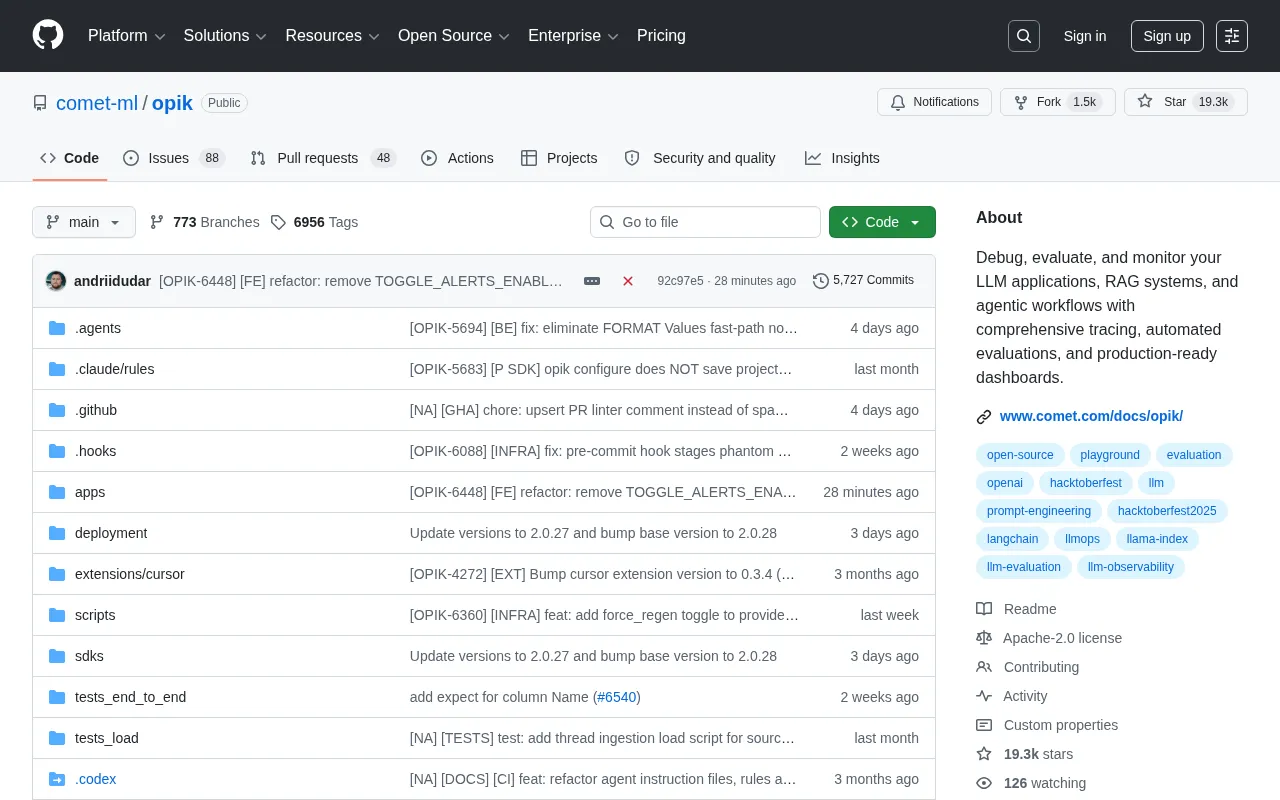
Opik: An Open-Source LLM Observability Platform for Debugging, Evaluation, and Monitoring All in One Place
Deep dive into Opik: an open-source platform for LLM app lifecycle management with tracing, automated evaluation, hallucination detection, and production monitoring for RAG and Agent workflows.
Read more →