#selective SSM
55 related articles

·6 min
GPT-5.6 Officially Approved for Release: How National Security Review Is Reshaping the AI Launch Process
OpenAI's flagship GPT-5.6 was delayed by national security review before winning U.S. government approval. An in-depth look at the Sol, Terra, and Luna model lineup and the emerging AI regulatory regime.
Read more →

·4 min
Tencent Open-Sources Agent Memory: A Fully Local AI Long-Term Memory Solution with Zero External Dependencies
Tencent Cloud open-sources TencentDB Agent Memory — a fully local AI Agent memory system with a 4-tier progressive pipeline, zero external API dependencies, and 8,100+ GitHub Stars. Ideal for finance, healthcare, and privacy-sensitive use cases.
Read more →

·2 min
Truecaller vs. TRAI: The Battle Over India's Anti-Spam Call Regulations
Truecaller clashes with India's TRAI over dedicated business number series policy. Truecaller warns users are mass-blocking commercial numbers, hurting legitimate businesses.
Read more →

·3 min
GPT-5.6 Revealed: What a 54% Token Efficiency Boost in Agentic Coding Actually Means
Sam Altman revealed GPT-5.6 boosts token efficiency 54% in agentic coding — meaning near-halved API costs, longer work chains, and faster responses. A deep dive into the technical implications for developers.
Read more →

·6 min
LangChain 1.3 in Practice: A Complete Guide to DeepAgent Architecture and the Harness Philosophy
An in-depth look at LangChain 1.3's core modules and DeepAgent architecture—covering the Harness philosophy, LangGraph internals, HITL, memory management, and guardrails to master production-grade AI Agent development.
Read more →

·7 min
Block-Sparse Featurizers: Opening the Black Box of Vision Model Neural Geometry
Block-sparse featurizers remap dense vision model activations into block-sparse representations, making the internal feature spaces of ViT, CNN, and other models readable and interpretable. This article explores their core principles, links to mechanistic interpretability, and applications.
Read more →

·5 min
Content Screening in Production: Why Non-AI News Shouldn't Be Forced into Articles
Explore why non-AI news shouldn't be forced into tech articles. Learn about content screening mechanisms, topic classification models, and proper editorial gatekeeping.
Read more →

·5 min
In Praise of Observational Evidence: When Randomized Controlled Trials Can't Answer Everything
Are RCTs really the only standard for scientific evidence? This article explores the scientific value of observational evidence, the rise of causal inference methods, and how data scientists can draw reliable conclusions from observational data when A/B testing isn't feasible.
Read more →

·6 min
GPT-5.6 Three-Model Family Launch: A Complete Breakdown of Sol/Terra/Luna Capabilities and the Government Restriction Incident
OpenAI officially launches the GPT-5.6 family, including the Sol flagship, Terra balanced, and Luna lightweight models. Coding capabilities set a new industry benchmark, generating a Minecraft clone in 90 minutes—while OpenAI publicly opposes U.S. government release restrictions.
Read more →
·3 min
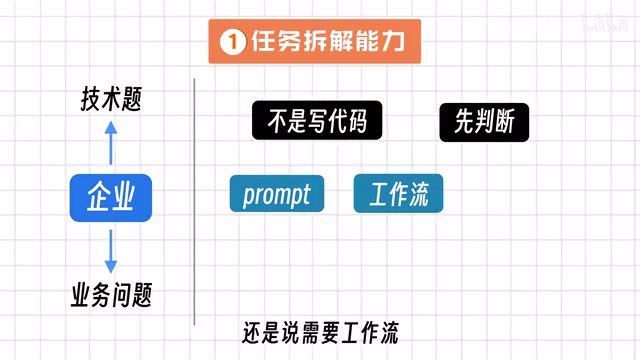
4 Core Competencies Every High-Value LLM Application Engineer Must Have
Why can't companies find qualified AI engineers? Discover the 4 core competencies every high-value LLM application engineer needs: task decomposition, tool calling, observability, and production readiness.
Read more →

·7 min
Dispersion Loss: A Key Technique for Solving Embedding Condensation in Small Language Models
Embedding condensation is a hidden bottleneck in small language model training. Dispersion Loss combats this by enforcing representation spread during training at zero inference cost.
Read more →

·7 min
Inside the AI Fraud Industry Chain: Deepfakes and Identity Deception Revealed Through the Lily Jay Incident
The Lily Jay incident exposes the AI fraud industry chain: how deepfakes, image synthesis, and content automation create fake identities. Practical methods for identifying false content in the AI era.
Read more →

·7 min
Claude Sonnet 5 Released: The Most Capable Agent Model at Mid-Tier Pricing
Anthropic releases Claude Sonnet 5, its most agentic Sonnet model yet. With planning, browser/terminal tool use, and autonomous execution, it brings flagship Agent capabilities to mid-tier pricing.
Read more →

·7 min
Claude Sonnet 5 Released: The Most Powerful Agent-Capable Mid-Tier AI Model
Anthropic releases Claude Sonnet 5, its most agentic mid-tier model with planning, browser/terminal tool use, and autonomous execution—bringing flagship Agent capabilities at significantly lower cost.
Read more →

·7 min
Hermes Agent Deep Dive: An AI Agent Framework That Uses Fewer Tokens Than Open Cloud
Full comparison of Hermes Agent vs Open Cloud: lower token usage, 200+ model support, auto Skill encapsulation, WeChat/DingTalk integration. A cost-effective AI Agent alternative for long-term deployment.
Read more →

·8 min
MCP Server or Agent Skills? A Clear Guide to Architecture Decision-Making
MCP Server vs Agent Skills: how to choose? This article systematically outlines an AI Agent architecture decision framework across three dimensions—essential differences, applicable scenarios, and judgment criteria.
Read more →

·7 min
AI Agent Code Execution Sandbox Selection Guide: In-Depth Comparison of E2B and Four Other Solutions
In-depth comparison of five AI Agent code execution sandbox solutions—E2B, Daytona, Modal, Cloudflare Sandbox, and Vercel Sandbox—across isolation, cold start latency, state management, and pricing.
Read more →

·4 min
Is the 748-Episode AI Large Language Model Tutorial on Bilibili Worth Watching? A Full Breakdown of Content Structure and Study Tips
In-depth analysis of Bilibili's 748-episode AI LLM tutorial covering RAG, Agent, and fine-tuning. Includes content structure breakdown and practical study tips for beginners.
Read more →
·4 min
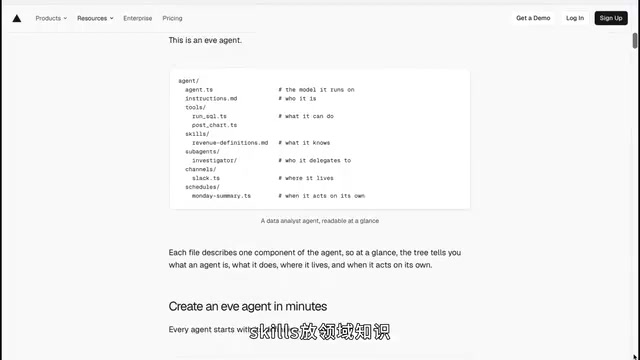
Deep Dive into Six AI Development Tools: Loop Recipe Library, Vercel Agent Framework, and More
Deep analysis of Loop workflow recipes, Vercel's open-source Agent framework, Pyker AI-native project management, Arrow P2P tool, DBX database client, and NVIDIA's Skill Spectre security tool.
Read more →

·2 min
AI Progress Demands a More Nuanced Examination: A Rational Framework Beyond Hype and Panic
Current AI discourse is trapped in polarization. This article explores how to rationally assess AI's real progress, analyzes the gap between benchmarks and actual capabilities, and offers a pragmatic evaluation framework.
Read more →