#task delegation
148 related articles
 Tutorials
·3 min
AI Full-Stack Development Platform Project Structure Explained: Backend Modules & Frontend Directory Organization
A detailed breakdown of AI full-stack platform project structure, covering backend Java modules, frontend directory organization, and MVC request flow to help developers locate code precisely during AI-assisted development.
Read more →
Product Reviews
How a 5-Person Team Reimagined the Ent…
·3 min
How a 5-Person Team Reimagined the Entire Software Development Workflow with Codex: A Real-World Case Study
How a 5-person fleet management team uses OpenAI Codex to revolutionize efficiency: non-technical staff build products independently, orchestrator pattern for layered scheduling, and verify-first mode for code quality.
Read more →
 Tutorials
·3 min
Hermes Orchestrating DeepSeek + MiniMax Dual-AI Collaborative Coding: A From-Scratch Project Test
Testing Hermes agent coordinating DeepSeek V4 and MiniMax 2.7 for collaborative coding: PDF export in 9 minutes, RSS service built from scratch in Nim language.
Read more →
 Tutorials
·3 min
Learn AI Agents in 30 Days: A Four-Stage Learning Roadmap from Zero to Production
A systematic breakdown of the AI Agent learning roadmap covering core architecture, ReAct/CoT paradigms, multi-agent collaboration, and Prompt optimization across four stages with quality resource recommendations.
Read more →
 Tutorials
·3 min
OpenClaw + Claude Code Token-Saving Guide: Zero-Polling with Hooks Callbacks
How to solve high Token consumption when OpenClaw calls Claude Code. Achieve zero-polling with Stop Hook and Session End dual callbacks, combined with Agent Teams for fully automated dev workflows.
Read more →
 Industry Insights
·3 min
Deep Dive into LangChain's Full-Lifecycle Toolchain for Agent Development
LangChain unveils a full-lifecycle toolchain for Agent development at Interrupt, covering Deep Agents 0.6, SmithDB, Context Hub, LLM Gateway, and LangSmith Engine.
Read more →
 Industry Insights
·4 min
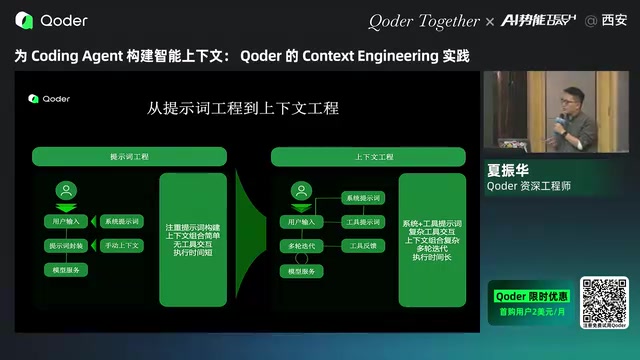
Qoder's Context Engineering in Practice: Four-Layer Retrieval Engine and Memory System Architecture
Deep analysis of Qoder's (Tongyi Lingma international edition) context engineering architecture, including its four-layer retrieval engine, memory engine, context caching, and core product design.
Read more →
 Tutorials
·3 min
Spring AI Agent Utils: A Java Agent Toolkit Reverse-Engineered from Claude Code's Core Features
Deep dive into Spring AI Agent Utils toolkit covering Skill modules, Ask a User Question, To Do Write, Auto Memory, and multi-Agent orchestration — empowering Java developers to build powerful AI Agents.
Read more →
 Tutorials
·2 min
MCP Protocol Practical Guide: The Standard Interface for Connecting LLMs to Everything
Deep dive into MCP (Model Context Protocol) principles and practical applications. Learn how LLMs connect to external tools via MCP to become agents, covering Java tech stacks, MCP Server ecosystem, Cherry Studio demos, and A2A protocol comparison.
Read more →
 Tutorials
·3 min
Deep Dive into Claude Code SDK: A New AI Programming Paradigm for Auto-Writing Code and Reviewing PRs
In-depth analysis of Anthropic's Claude Code SDK & GitHub Action: piping, structured output, permissions, session resumption, and fully automated Issue-to-PR workflows.
Read more →
 Tutorials
·3 min
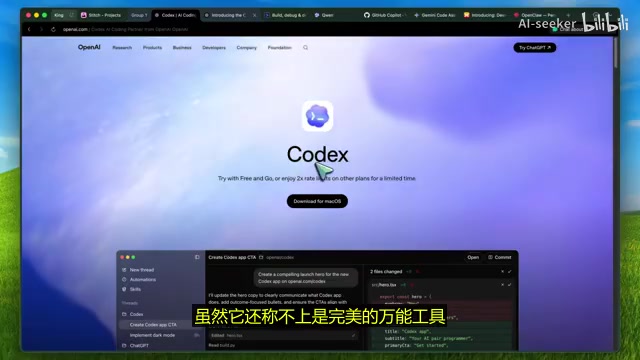
8 Free AI Coding Tools: Build a Complete Development Workflow at Zero Cost
A systematic review of 8 free AI coding tools covering UI design, terminal agents, IDE integration, and async coding to help developers build a complete zero-cost AI development workflow.
Read more →
 Tutorials
·3 min
SubAgent Architecture: The Core Implementation for Context Isolation
Deep dive into SubAgent context isolation architecture, covering parent-child Agent roles, tool definitions, run_subagent implementation, and differences from TodoList and Agent Teams.
Read more →
 Deep Dives
·2 min
Agents Need Control Flow, Not More Prompts
Why do longer Prompts make AI Agents less stable? This article explains the control flow first architecture, replacing natural language control flow with code orchestration to boost multi-step reliability from 40% to over 90%.
Read more →
 Product Reviews
·2 min
Mistral Vibe: Free Open-Source Terminal AI Coding Assistant — A Claude Code Alternative
Mistral Vibe is an open-source, free terminal AI coding agent by Mistral with sub-agents, async processing, and Slash commands — a powerful Claude Code alternative for developers.
Read more →
 Product Reviews
·2 min
Claude Code vs Codex Hands-On Comparison: What 100 Hours of Deep Testing Reveals
100+ hours of hands-on testing comparing Claude Code and ChatGPT Codex across customization, performance, token usage, and cost with real-world benchmarks.
Read more →
 Product Reviews
·2 min
Tollecode: A Local-First AI Coding Agent That Keeps Your Code on Your Machine
Tollecode is a local-first AI coding agent supporting file operations, Shell commands, and sub-agent scheduling. Code stays on your machine with full developer control—ideal for privacy-conscious engineers.
Read more →
 Deep Dives
·1 min
Factory Missions Architecture Deep Dive: How a Multi-Agent System Runs Continuously for 16 Days
Deep dive into Factory Missions multi-agent architecture: how validation contracts, serial execution, and structured handoffs enable an AI coding system to run 16 days without losing context.
Read more →
 Tutorials
·4 min
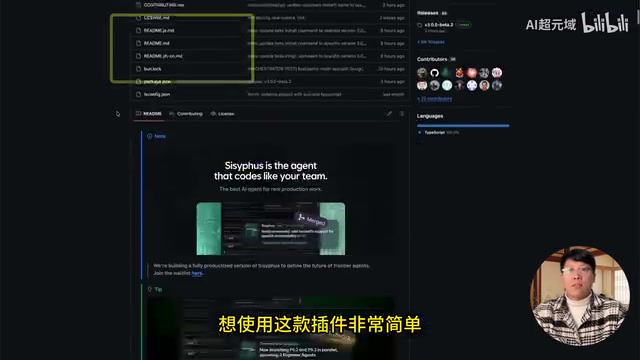
OMO Plugin in Action: Sisyphus Multi-Agent Collaboration for Building an AI Programming Team
Deep dive into the Oh My OpenCode (OMO) plugin's Sisyphus multi-agent system for intelligent AI model scheduling and collaborative development, with practical demos.
Read more →
 Product Reviews
·2 min
Qoder 1.0 In-Depth Review: How Good Is This AI Autonomous Coding Platform Really?
In-depth review of Alibaba's Qoder 1.0: Quest task units, Multi-Agent expert teams, Knowledge Engine, and comparison with Codex, Claude Code, and other competitors.
Read more →
 Tech Frontiers
·3 min
Google Jules Officially Launches: How Critical Agents Are Redefining AI Programming
Google's AI coding agent Jules exits Beta, now available to all developers. Features include Critical Agent for proactive code review, environment snapshots, web browsing, and seamless GitHub PR creation.
Read more →