#task routing
716 related articles

·2 min
AI Task Routing for Cost Reduction: A Framework for Smaller Teams to Evaluate ROI
Task routing is hailed as a silver bullet for LLM cost reduction, but routing strategy design, model training, and self-hosting each carry hidden engineering costs. This deep dive helps smaller teams evaluate ROI and offers a phased implementation path.
Read more →

·4 min
Infrastructure Architecture for Agent Applications: Four Core Patterns Explained
A deep dive into infrastructure architecture patterns for production-grade Agent applications, covering state persistence, sandbox isolation, LLM observability, and cost control.
Read more →

·4 min
Infrastructure Architecture for Agent Applications: Four Core Patterns Explained
Deep dive into infrastructure architecture patterns for production-grade Agent applications, covering state persistence, sandbox isolation, LLM observability, and cost control.
Read more →

·3 min
Self-Hosting Kimi K3: Is Spending 20% More on Hardware Worth a 20% Improvement in Task Performance?
Analysis of whether spending 20% more on hardware for self-hosting Kimi K3 to gain 20% task performance improvement is worthwhile, covering inference precision, VRAM optimization, and tiered deployment.
Read more →

·3 min
Production-Grade LLM Inference Deployment: A Practical K8s Handbook
Complete guide to deploying production-grade LLM inference on Kubernetes, covering GPU scheduling, vLLM engine selection, autoscaling, observability, and cost optimization.
Read more →

·3 min
Long Documents Don't Work: Why AI Agents Can't Follow Your Rules
Analysis of why AI Agents can't reliably follow long policy documents, covering context dilution, rule conflicts, and soft constraint limitations, with more reliable governance architectures.
Read more →

·3 min
Is LLM Inference Actually Profitable? Breaking Down the Cost Structure and Business Logic of Large Model Inference
A deep dive into LLM inference cost structure and profitability models—from GPU throughput, MoE architecture, and KV Cache to scale effects—revealing the business logic behind API price wars.
Read more →

·2 min
Is a $200/Month AI Subscription Worth It? A Guide to Cost Anxiety and Rational Spending
More users are questioning whether $200/month AI subscriptions are worth it. This article analyzes the rise of open-source alternatives and provides a framework for evaluating AI subscription value.
Read more →

·4 min
11-Node LangGraph in Practice: Complete Architecture Breakdown of a Compliance-Grade RAG Agent
Deep dive into an 11-node Agentic RAG agent built with LangGraph, featuring 6-way intelligent routing, hallucination guards, PII masking, circuit breakers, and zero-cost deployment.
Read more →

·2 min
OpenWork: Open-Source Alternative to Claude Cowork with 17,000+ Stars
OpenWork is an open-source alternative to Claude Cowork built on opencode with TypeScript. With 17,000+ GitHub stars, it offers data privacy, flexible model switching, and deep customization.
Read more →

·3 min
Ollama API Key Proxy: Multi-Key Rotation to Solve Rate Limiting Issues
Learn how Ollama API Key Proxy solves cloud LLM rate limiting through reverse proxy with round-robin key rotation, 429 auto-cooldown, and smart retry logic.
Read more →

·2 min
Tutorial: Installing Tailscale on a Jailbroken Kindle to Create a Private Network Node
Learn how to deploy Tailscale on a jailbroken Kindle, turning an idle e-reader into a private network node. Covers cross-compilation, power optimization, and risk considerations.
Read more →

·3 min
Gemini 2.5 Flash Deprecation: A Practical Migration Guide for Image Understanding Models
Gemini 2.5 Flash will be deprecated in October 2026. Learn how to choose between gemini-3.1-flash-lite and gemini-3.5-flash-lite for image understanding tasks with migration evaluation methods and architecture tips.
Read more →

·3 min
Is Perplexity Still Worth Renewing? Analyzing the Optimal Multi-Model Subscription Strategy
Deep analysis of whether Perplexity Pro remains the best multi-model subscription choice, comparing Poe, You.com, API solutions and more, with a decision framework to find your optimal AI subscription.
Read more →

·2 min
Gemini 3.5 Flash-Lite: A Low-Cost, High-Throughput Powerhouse for Scaling AI
Deep dive into Google's Gemini 3.5 Flash-Lite model. This lightweight model is designed for high-frequency repetitive tasks like ticket sorting and data extraction, solving enterprise AI scaling challenges through ultra-low cost and high throughput.
Read more →

·2 min
Gemini 3.5 Flash-Lite: A Low-Cost, High-Throughput Powerhouse for Scaling AI
A deep dive into Google's Gemini 3.5 Flash-Lite model. Designed for high-frequency repetitive tasks like ticket sorting and data extraction, it tackles the core cost challenge of enterprise AI scaling through ultra-low pricing and high throughput.
Read more →
·4 min
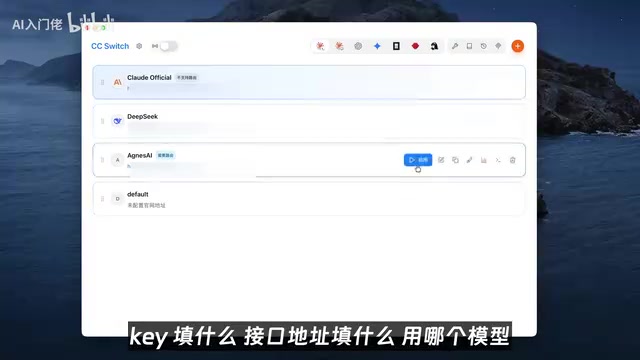
Free Claude Code Tutorial: Complete Configuration Guide for Connecting to Agnes Multi-Modal Models
Learn how to connect Claude Code to Agnes AI's free models via Sense Switch for zero-cost text, image, and video generation, with complete setup steps and real-world results.
Read more →

·4 min
Getting Started with Claude Code: Environment Setup, Common Commands, and Git Workflow in Practice
A detailed guide to Claude Code installation, domestic model switching, project analysis commands, and Git workflow practice to help developers quickly master this AI programming collaboration tool.
Read more →

·2 min
What AI Developers Can Learn from Bukowski: Authenticity, Restraint, and the Philosophy of Slowness
Exploring Bukowski's creative philosophy for AI developers: avoid over-engineering, fight hallucinations, stay humble. Authenticity and patience are key to building reliable AI systems.
Read more →

·3 min
Gemini Batch API Major Upgrade: 80% Latency Reduction, Success Rate Exceeds 99.998%
Google's Gemini Batch API completes major infrastructure upgrade with 80% lower p95 latency, 99.998%+ success rate, 98% fewer expirations, and new partial batch support for large-scale AI inference.
Read more →