#technical writing
3793 related articles
 Product Reviews
·1 min
awesome-agent-skills: The Ultimate Resource Collection for AI Agent Skill Development
Explore awesome-agent-skills, a comprehensive GitHub resource with 4500+ stars featuring tutorials, guides, and skill catalogs for AI Agent development.
Read more →
 Product Reviews
·3 min
EloPhanto Open Source Project Deep Dive: An Autonomous Startup Framework That Gives AI Agents a Personality
A deep dive into EloPhanto, the open source AI Agent project using Ego, Emotions, and Identity to drive autonomous business operations with zero human involvement.
Read more →
 Product Reviews
·2 min
OpenYak: Open-Source Local AI Agent Supporting 100+ Models with Zero Telemetry Privacy
OpenYak is an open-source local AI agent supporting Windows/macOS/Linux. Access 100+ models via OpenRouter, MCP, and Ollama with BYOK zero-telemetry privacy — a strong alternative to Claude Code and OpenAI Codex.
Read more →
 Product Reviews
·2 min
Claude Code Prompt Optimizer: Using AI to Automatically Rewrite Prompts for Better Code Generation
Explore claude-code-prompt-optimizer: an open-source tool using Hook interception and Claude Opus to auto-rewrite simple prompts into structured instructions, boosting Claude Code output quality.
Read more →
 Product Reviews
·3 min
LibreChat: A Complete Guide to the Open-Source Self-Hosted Multi-Model AI Chat Platform
Deep dive into LibreChat, an open-source self-hosted AI chat platform supporting GPT, Claude, Gemini multi-model switching, MCP protocol, Agents, code interpreter, and enterprise deployment.
Read more →
 Product Reviews
·4 min
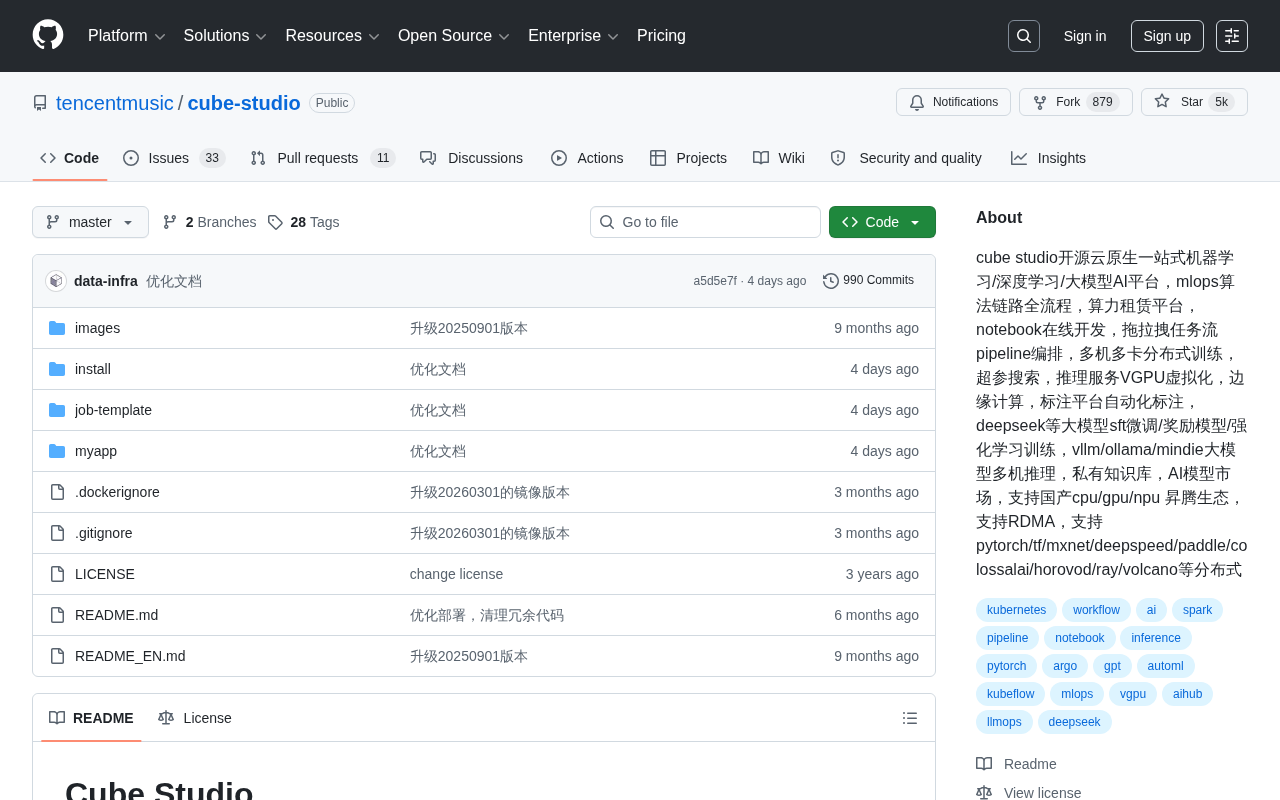
Cube Studio: Tencent's Open-Source All-in-One AI Platform Covering the Full Pipeline from Large Model Training to Inference
Deep dive into Tencent Music's open-source Cube Studio cloud-native AI platform, covering distributed training, LLM fine-tuning, vLLM inference, VGPU virtualization, and Huawei Ascend adaptation.
Read more →
 Product Reviews
·2 min
Chatbox: A Detailed Look at the Open-Source Multi-Model AI Desktop Client
Chatbox is an open-source AI client with nearly 40K GitHub Stars, supporting ChatGPT, Claude, Gemini and local models with cross-platform desktop apps, local data storage, and Prompt management.
Read more →
 Product Reviews
·2 min
Simon Willison Built an iNaturalist Observation Display Tool Using Only a Phone + Claude Code
Simon Willison built an iNaturalist observation display toolchain using only his phone and Claude Code while camping—featuring Python CLI, Git Scraping, and a pure frontend architecture with zero server maintenance.
Read more →
 Product Reviews
·2 min
OpenMemory: Local Persistent Memory Storage for Shared Context Across AI Tools
OpenMemory is an open-source local memory storage solution providing a unified memory layer for Claude Desktop, GitHub Copilot, and other LLM apps, enabling shared context while ensuring data privacy.
Read more →
 Product Reviews
·2 min
Simon Willison Used Claude Code on His Phone to Add Wildlife Sightings to His Blog
Simon Willison used Claude Code's web version on his phone to integrate a decade of iNaturalist wildlife observations into his blog, showcasing AI-assisted mobile development.
Read more →
 Product Reviews
·4 min
Deep Dive into Cube Studio: Tencent's Open-Source All-in-One AI Platform
Deep dive into Tencent's open-source AI platform Cube Studio, covering distributed training, large model fine-tuning and inference, Pipeline orchestration, VGPU virtualization, and Huawei Ascend support for enterprise cloud-native MLOps.
Read more →
 Product Reviews
·4 min
Chatbox Open-Source AI Client: A Deep Dive into the 40K-Star Cross-Platform AI Chat Tool
Deep dive into Chatbox, an open-source AI client with 40K GitHub Stars. Supports GPT-4, Claude, Gemini via direct API, covers all platforms, and stores data locally for privacy.
Read more →
 Product Reviews
·2 min
Full Record: Simon Willison Develops Blog Wildlife Sighting Feature Using Claude Code on His Phone
Simon Willison used Claude Code on his phone to build an iNaturalist wildlife sighting sync feature for his blog, backfilling a decade of data. A deep dive into the technical details and AI-assisted mobile development.
Read more →
 Expert Opinions
·3 min
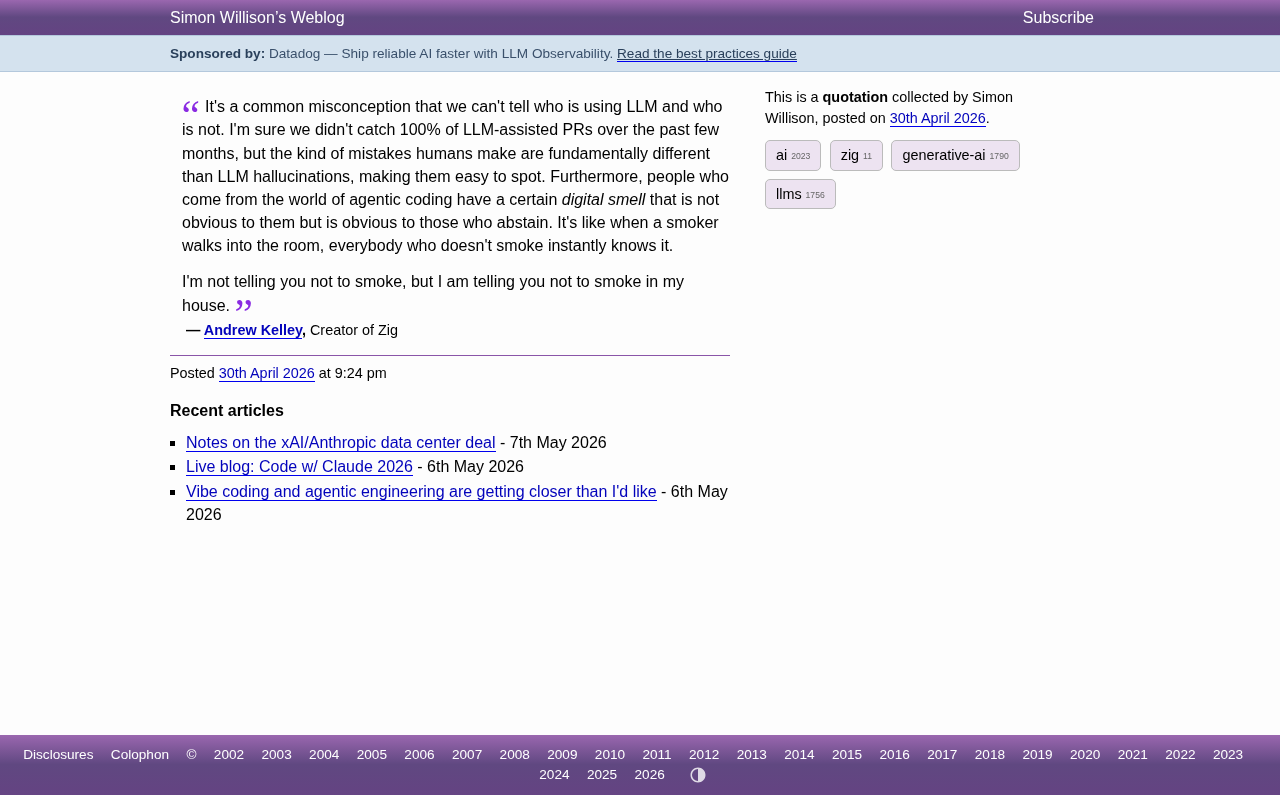
Zig Creator on AI Code Ban: You Can Smoke, But Not in My House
Zig creator Andrew Kelley uses a smoking analogy to address the AI code ban controversy: developers can use AI tools, but Zig's codebase won't accept LLM-assisted contributions.
Read more →
 Product Reviews
·2 min
Building an iNaturalist Observation Tool Entirely on a Phone with Claude Code
Simon Willison built an iNaturalist observation display tool entirely on his phone with Claude Code while camping, using Git Scraping + GitHub Actions for a zero-cost serverless architecture.
Read more →
 Tutorials
·3 min
Microsoft's Open-Source Generative AI Course: 21 Lessons to Build AI Apps from Scratch (110K Stars)
Microsoft's official open-source Generative AI for Beginners course features 21 lessons covering LLM fundamentals, Prompt Engineering, and hands-on AI app development. 110K+ GitHub Stars, Jupyter Notebook-based learning for developers.
Read more →
 Expert Opinions
·2 min
The Vibe Coding Era: Why We Need RSS to Share Personal Micro-Apps
AI coding makes building micro-apps as easy as blogging, but how do we share them? Matt Webb proposes RSS for distributing vibe coding output, and Simon Willison has already put it into practice.
Read more →
 Product Reviews
·2 min
Cyrus Open Source Project: A Self-Hosted Claude Code Background Programming Agent
Cyrus is an open-source AI programming agent supporting self-hosted deployment, integrating Linear, Slack, GitHub, and multiple AI models like Claude, Codex, and Gemini for secure automated coding workflows.
Read more →
 Product Reviews
·2 min
nmem Open-Source Project Explained: A Six-Layer Memory Architecture That Makes AI Agents Smarter Over Time
Deep dive into nmem, an open-source AI Agent memory system featuring a six-layer memory hierarchy, hybrid search, confidence decay, cross-agent knowledge sharing, MCP integration, and more.
Read more →
 Expert Opinions
·2 min
In the Vibe Coding Era, Why RSS Is the Best Solution for Sharing Personal Apps
Vibe Coding makes building apps as easy as blogging, but how are these personal micro-apps discovered? Matt Webb proposes RSS for distributing vibe-coded apps, and Simon Willison has already implemented it.
Read more →