#tiered API
571 related articles
 Tech Frontiers
·3 min
OpenAI Codex Comes to ChatGPT Mobile: The AI Coding Tool War Heats Up
OpenAI brings Codex to the ChatGPT mobile app, competing directly with Claude Code. Explore Codex mobile features, developer impact, and the 2025 AI coding tool landscape.
Read more →
 Deep Dives
·3 min
Cursor Unlimited Refill Plugin: How It Works, Risks, and Better Alternatives
Deep dive into how Cursor's unlimited refill plugin works via multi-account rotation, its security and ban risks, plus compliant alternatives like Cursor Pro, API access, and multi-tool strategies.
Read more →
 Tech Frontiers
·2 min
Mistral AI Named to TIME100 Most Influential Companies: The Rise of European Open-Source AI
Mistral AI named to TIME's 2026 TIME100 Most Influential Companies in the AI top ten. Explore how its open-source models and private deployment strategy make it Europe's flagship AI company.
Read more →
 Deep Dives
·4 min
The Four Stages of AI Agent Evolution: A Complete Guide from Copilot to Multi-Agent Collaboration
Deep dive into the four stages of AI Agent evolution: Chat, Copilot, Agent, and Agentic AI. Covers ReAct framework, Spring AI stack, and multi-Agent architecture design for 2025.
Read more →
 Deep Dives
·3 min
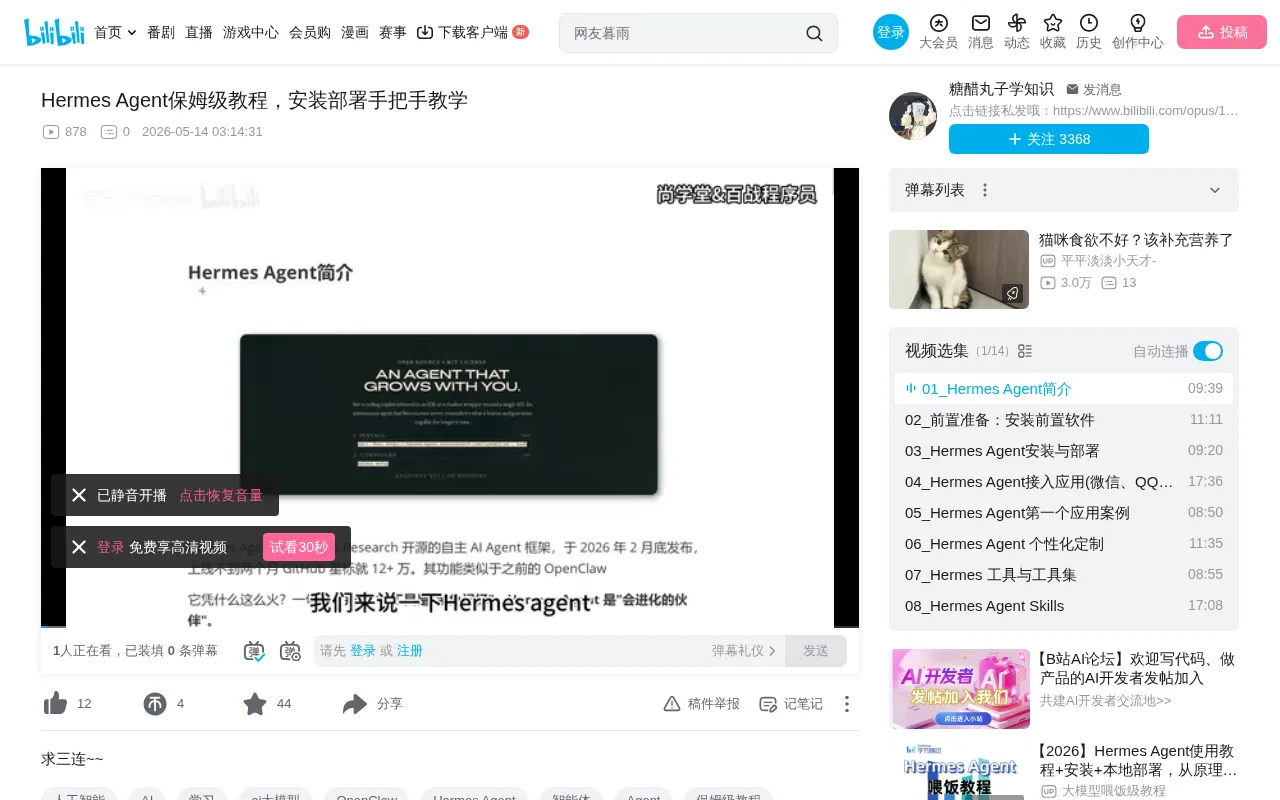
Deep Dive into Hermes Agent: A Self-Evolving AI Framework That Uses Fewer Tokens Than OpenManus
Deep analysis of Hermes Agent: lower Token usage than OpenManus, persistent long-term memory, and a self-learning loop. See how this 120K-Star GitHub project redefines AI Agents.
Read more →
 Expert Opinions
·3 min
Sam Altman in Conversation with Garry Tan: How OpenAI and YC Are Co-Shaping the AI Startup Ecosystem
Sam Altman and YC President Garry Tan discuss the convergence of OpenAI's foundation models and YC's startup ecosystem, revealing key signals about the next phase of AI entrepreneurship.
Read more →
 Deep Dives
·3 min
ARS Academic Framework Explained: A Complete System Where 35 AI Agents Collaborate on Research
Deep dive into the ARS academic framework: how 35 AI Agents collaborate on literature review, paper writing, and quality assessment with a ten-step workflow, multi-layer quality control, and academic integrity safeguards — all for just $4-6.
Read more →
 Tech Frontiers
·2 min
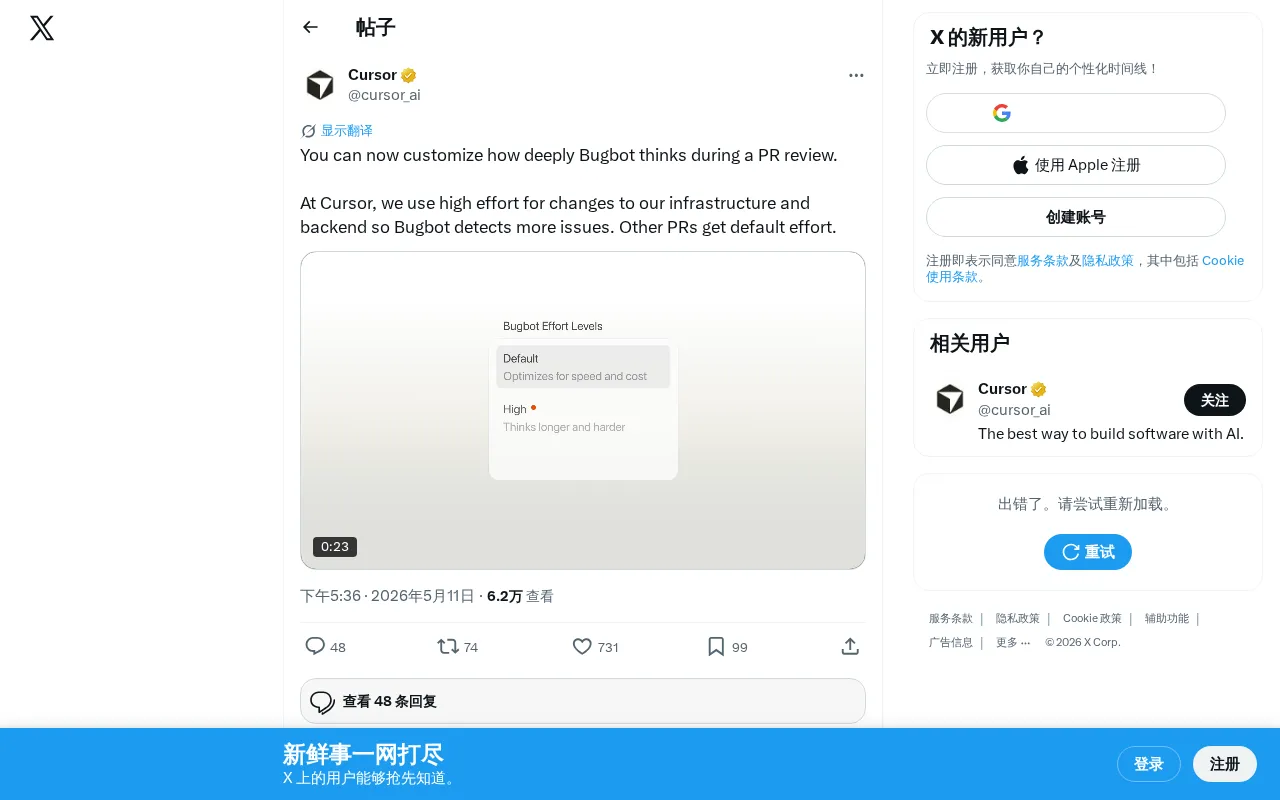
Bugbot Custom PR Review Depth: Cursor Team's New Approach to AI Code Review
Cursor's AI code review tool Bugbot adds custom review effort, letting developers adjust PR review depth by code importance. Analysis of usage strategies and workflow impact.
Read more →
 Tutorials
·4 min
LangChain Deep Agents in Practice: Ten Agent Development Pain Points and Their Solutions
Deep dive into LangChain Deep Agents paradigm, analyzing ten Agent development pain points including tool sprawl and context pollution, with practical enterprise solutions using Deep Research.
Read more →
 Tech Frontiers
·2 min
Cursor Launches Claude Opus 4 Fast Mode: 2.5x Faster, 6x More Expensive — Is It Worth It?
Cursor launches Claude Opus 4 Fast Mode with 2.5x speed but 6x cost. We analyze use cases, cost tradeoffs, and practical tips to help you decide if it's worth it.
Read more →
 Tech Frontiers
·3 min
SWE-bench Official Blog Launches: AI Coding Evaluation Enters a New Phase
SWE-bench launches its official blog for in-depth content on AI coding evaluation, AI Agents, and toolchains—signaling a new phase of maturity and standardization in AI programming benchmarks.
Read more →
 Tech Frontiers
·2 min
Kimi K2 Official Verification Tool K2-Vendor-Verifier: One-Click API Vendor Model Accuracy Detection
Moonshot AI open-sources K2-Vendor-Verifier to verify third-party Kimi K2 API vendor inference accuracy. Learn how this tool helps developers detect over-quantization, model substitution, and other API market risks.
Read more →
 Tech Frontiers
·3 min
CL4R1T4S Project: Massive Leak of Major AI System Prompts Sparks Transparency Debate with 25,000+ Stars
GitHub project CL4R1T4S leaked system prompts from ChatGPT, Claude, Gemini and other major AI products, earning 25,000+ Stars and igniting debate over AI transparency vs. security.
Read more →
 Deep Dives
·3 min
Claude's Advisor Strategy: Small Models Execute, Large Models Supervise — A New Cost-Saving Paradigm for AI Agents
Anthropic's Advisor Strategy lets Sonnet execute tasks while Opus serves as advisor, cutting costs 12% while boosting SWE-Bench by 2.7 points. A new multi-model AI Agent paradigm explained.
Read more →
 Tutorials
·3 min
AI Project Evaluation Framework: A Practical Guide to 5 Levels and 30 Key Metrics
A battle-tested AI project evaluation framework covering 5 levels and 30 core metrics—model quality, UX, system efficiency, business value, and data loops—to scientifically assess LLM Agent performance.
Read more →
 Product Reviews
·3 min
Real-World LLM Reliability Testing: Three Core Problems Exposed by a Pizza Shop AI Chatbot
A fictional pizza shop AI chatbot reveals three core LLM reliability challenges in 2025: topic control, information security, and response accuracy.
Read more →
 Tutorials
·3 min
Agentic Flow: A Guide to Low-Cost Model Switching in Claude Code and Production Agent Deployment
Deep dive into Agentic Flow, an open-source project enabling flexible low-cost model switching in Claude Code and one-click Agent deployment to cloud production environments.
Read more →
 Tech Frontiers
·3 min
UK AISI Assessment Report: GPT-5.5 Cybersecurity Capabilities and Public Availability Raise Governance Concerns
UK AISI releases GPT-5.5 cybersecurity assessment showing vulnerability discovery capabilities on par with Claude Mythos, but its public availability raises urgent AI safety governance challenges.
Read more →
 Research
·3 min
UK AISI Evaluates GPT-5.5 Cybersecurity Capabilities: On Par with Claude Mythos but Already Publicly Available
UK AI Safety Institute (AISI) evaluates GPT-5.5 cybersecurity capabilities, finding vulnerability discovery on par with Claude Mythos. The key difference: GPT-5.5 is already publicly available, raising urgent AI safety governance concerns.
Read more →
 Research
·3 min
UK AISI Assessment Report: GPT-5.5 Cybersecurity Capabilities on Par with Claude Mythos
UK AISI releases GPT-5.5 cybersecurity assessment showing vulnerability discovery capabilities on par with Claude Mythos, but with GPT-5.5 already publicly available, raising new AI safety governance concerns.
Read more →