#token utilization
331 related articles

·3 min
Moonshot AI Open-Sources FlashKDA: A Deep Dive into High-Performance CUDA Kernels for KDA Attention
Moonshot AI open-sources FlashKDA, providing high-performance CUDA kernels for Kimi Delta Attention. Explore its technical principles, performance gains, and value for long-context training and inference.
Read more →

·2 min
Grok 4.6 and 4.7 Roadmap Leaked: Analyzing xAI's Rapid Iteration Strategy
Reddit leaks suggest Grok 4.6 arrives around August 7 and Grok 4.7 in early September. This article analyzes xAI's rapid iteration strategy and token efficiency improvements.
Read more →

·3 min
Should the ACM Digital Library Open Up to Large Language Models? The Battle Between Academic Corpora and AI Training
Exploring whether the ACM Digital Library should open to LLM training. Analyzing the value of academic corpora for AI, data exhaustion concerns, copyright battles, and pragmatic paths including licensing and RAG.
Read more →

·5 min
July 24 AI Daily Brief: Flux 3 Multimodal Release, Kimi K3 Lags in Testing, Qwen Tops TTS Rankings
July 24 AI news: Black Forest Labs launches Flux 3 multimodal model, Kimi K3 lags in US-UK gov tests, Alibaba Qwen tops TTS rankings, Etched raises $300M, AMD unveils MI430X.
Read more →

·3 min
AI Game Development Showdown: Claude, Kimi K3, and ChatGPT Recreate Classic Games — Who Wins?
Bilibili creator tests Claude Fable 5, Kimi K3, and ChatGPT Codex recreating Hollow Knight, Cuphead, and Zelda — comparing code quality, collision detection, and Boss design.
Read more →

·3 min
Deconstructing Agents: Task Decomposition, Context Compression, and the Case Against Heavy Frameworks
A deep engineering analysis of Agent internals: how LLMs decompose tasks via tool calling, why context compression and memory are essential, and why solo developers should avoid heavy frameworks.
Read more →

·3 min
Agent Skills Explained: Solving the MCP Context Bloat Problem
Deep dive into Anthropic's Agent Skills mechanism, explaining how Progressive Disclosure solves MCP context bloat and tool calling accuracy issues in AI agents.
Read more →
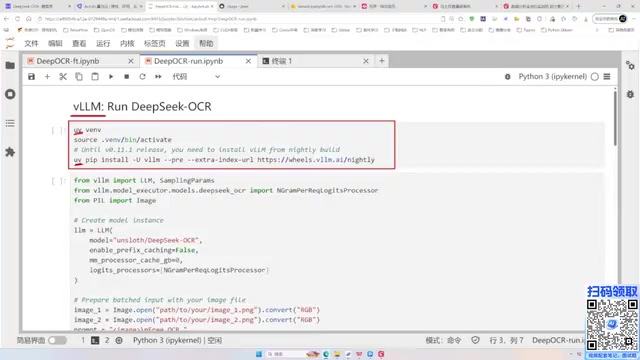
·3 min
DeepSeek-OCR Deployment & Fine-Tuning in Practice: From vLLM Inference to Unsloth Fine-Tuning
Complete guide to DeepSeek-OCR from vLLM inference deployment and Unsloth model loading to fine-tuning, covering cloud server setup, GPU selection, and code examples — all on a single 4090 GPU.
Read more →

·5 min
Will Chinese Open-Source Models Burst the US AI Bubble? A Deep Dive into the Transmission Chain
Chinese open-source models like Kimi K3 and DeepSeek approach US closed-source performance at a fraction of the cost. This deep dive analyzes the transmission chain from price competition to valuation reassessment.
Read more →

·3 min
Deep Dive into the Kimi-K3 Technical Report: A Comprehensive Analysis of Architecture, Long-Context Processing, and Reasoning Capabilities
Deep dive into Moonshot AI's Kimi-K3 technical report, analyzing its long-context processing, MoE architecture, reasoning improvements, and its position in global AI competition.
Read more →
·3 min
Deep Dive into the Kimi-K3 Technical Report: Architecture, Long Context, and Reasoning Capabilities
Deep analysis of Moonshot AI's Kimi-K3 technical report covering long context processing, MoE architecture, reasoning capabilities, and China's position in the global AI competition.
Read more →

·4 min
The More Complex the AI Agent, the More It Hallucinates? The Hidden Cost of Architectural Complexity
Why do AI Agents hallucinate more as they grow more complex? This article analyzes the causes from error accumulation, context noise, and model completion nature, with 5 practical production strategies.
Read more →

·3 min
Opus 5 Hands-On: Powerful but Slow — Inference Speed Becomes the New AI Battleground
An AI practitioner tests Opus 5: powerful capabilities but painfully slow inference. Deep analysis of how LLM competition is shifting from intelligence to inference speed.
Read more →

·3 min
HuggingHack Update: S3 Storage, Dual-Engine Scheduling, and GGUF Inspection Get Major Upgrades
HuggingHack releases major updates with S3/MinIO storage, Ollama + vLLM dual-engine scheduling, GGUF inspection, and local accounts for enterprise-grade local LLM management.
Read more →

·5 min
Ollama Performance Degrades After Connecting to OpenWebUI? A Complete Troubleshooting Guide
Complete guide to troubleshooting Ollama performance degradation with OpenWebUI, covering num_ctx truncation, sampling parameter differences, GPU resource contention, and system prompt interference.
Read more →

·3 min
DeepSeek-OCR Deployment and Fine-Tuning: A Complete Hands-On Guide
Master the full DeepSeek-OCR deployment and fine-tuning workflow: vLLM inference deployment, efficient Unsloth fine-tuning, dataset preprocessing, LoRA training, validation, and RAG vector database integration.
Read more →

·2 min
D-Flash: How Diffusion Drafting Delivers 3.5x Faster LLM Inference
D-Flash solves the autoregressive drafter latency bottleneck in speculative decoding via fast diffusion parallel drafting and target feature KV injection. 16 tokens in just 6ms, up to 3.5x speedup on HumanEval, beating EAGLE3 and MTP.
Read more →

·3 min
D-Flash: The Secret Behind 3.5x LLM Inference Speedup with Diffusion Drafting
D-Flash uses fast diffusion parallel drafting and target feature KV injection to solve the autoregressive Drafter latency bottleneck in speculative decoding. 16 tokens in just 6ms, up to 3.5x speedup on HumanEval, surpassing EAGLE3 and MTP.
Read more →

·2 min
Grok 4.5 Hands-On Review: Code Generation and Research Visualization Capabilities
Hands-on review of xAI's Grok 4.5: one-shot web code generation and research figures rivaling top journal visuals. Covers core capabilities, Claude Opus comparison, and aggregation platform tips.
Read more →

·3 min
Laguna S 2.1: The Open-Source Coding Model That's 14x Smaller Yet Stronger
Poolside releases Laguna S 2.1, an open-source agentic coding model: 118B total params with only 8B active, scoring 40.4% on DeepSWE — ~4.5x DeepSeek V4 Pro Max. Supports 1M-token context, deployable on a single workstation.
Read more →