AI Agent Enterprise Practical Guide: From Low-Code Platforms to LangChain Framework Implementation
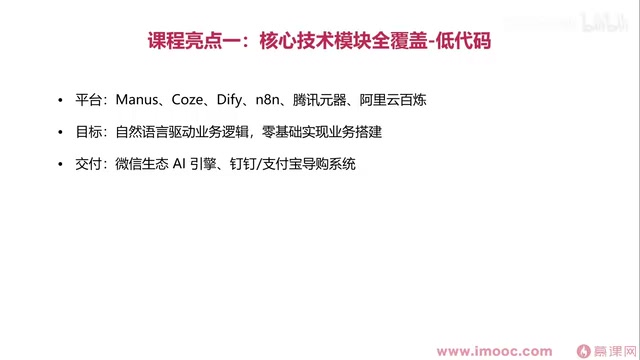
A dual-track enterprise AI Agent course spanning low-code tools and LangChain frameworks across 9 business roles.
This article introduces an enterprise-focused AI Agent course on Bilibili. It argues that large models alone can't close the loop on real tasks — Agents give them the ability to act. The course runs two parallel tracks: low-code platforms (Coze, Dify, n8n) for rapid deployment and code frameworks (LangChain, LangGraph, etc.) for deep customization. It covers MCP protocol, multi-agent frameworks, and RAG, grounded in nine enterprise roles from marketing to R&D. Four capstone projects — including a CrewAI CRM system and a LangGraph meeting tracker — serve as the deliverables. The article also cautions readers to look past the marketing hyperbole and focus on building genuine architectural thinking.
Large Models Aren't the Destination — Agents Are the Real Productivity
Many people treat large models like ChatGPT and DeepSeek as productivity tools, but once they return to their actual jobs, an uncomfortable truth emerges: the workload hasn't really decreased. You're still copying and pasting generated content repeatedly, and whatever gets generated still needs round after round of editing before it's usable.
The root of the problem is that a large model is, at its core, a highly knowledgeable brain with no arms or legs. It can write copy and analyze data, but it can't close the loop on tasks — it can't automatically format your WeChat articles, query orders in a CRM system, or proactively follow up on progress in DingTalk. The value of AI Agents lies precisely in giving this intelligent brain a body: transforming it from a question-answering bot into a "digital employee" that can invoke tools, execute workflows, and actually solve problems.
This is also the core entry point of this enterprise-focused practical course on Bilibili: not teaching you to memorize a longer list of tool names, but helping you internalize the underlying logic of how to bring AI into business operations.
A Dual-Track Course Design
One of the most noteworthy aspects of the course is its commitment to a "low-code and code framework dual-track" design philosophy — a structure that mirrors the two real-world paths enterprises take when deploying AI.
If you want to quickly validate ideas or improve day-to-day office efficiency, low-code platforms are the go-to choice. Tools like Coze, Dify, and n8n work like LEGO bricks — using prompts and drag-and-drop nodes, the course claims a short-video production pipeline for a business unit can be up and running within a week. The barrier to entry is extremely low: as long as you can clearly express your requirements in natural language, you can build it.
But when enterprises need to handle core business processes, highly sensitive data, or extremely complex approval workflows — such as cross-department data integration, customized approvals, core customer data processing, or multi-agent collaborative customer service — code-based development becomes the only real option. This is where frameworks like LangChain and LangGraph come in, breaking through the constraints of low-code platforms and enabling fully customized solutions.
To put it simply: low-code handles rapid validation and efficiency gains; code frameworks handle deep customization and high-value complex problems. This division of labor is itself a solid reference framework for enterprise AI selection.
Three Core Technical Modules
The course aims for comprehensive coverage across its tech stack, which can be broken down into three major categories.
Low-Code and Workflow Platforms
This covers mainstream platforms including Manus, Coze, Dify, n8n, Tencent Yuanqi, and Alibaba Cloud Bailian. The course emphasizes building enterprise applications grounded in cutting-edge industry concepts — for example, a smart retail assistant that integrates WeChat, DingTalk, and Alipay ecosystems. These platforms are relatively accessible to those without a technical background.
MCP Protocol: The Key to Breaking Down Information Silos
This is a module that's easy to overlook but carries significant value. In reality, much of a company's data is locked inside local databases and internal APIs that AI simply can't access. The course describes the MCP protocol as a "master key" — mastering it allows Agents to securely read local files and call internal interfaces, truly bridging the information silos within an enterprise. For enterprise-level deployment, this is often the deciding factor between success and failure.
MCP (Model Context Protocol) is an open standard released by Anthropic in late 2024, designed to establish a unified communication specification between large models and external data sources or tools. Before MCP, integrating a new system — such as an enterprise database, internal API, or file system — required developers to write custom adapter code each time, at high cost and with poor reusability. MCP defines a standardized "tool invocation" interface, allowing Agents to communicate with different systems using the same protocol — much like how USB standardized the connection of peripherals. For enterprises, the practical value of MCP lies in two areas: it supports local deployment so data doesn't need to be uploaded to the cloud, satisfying compliance requirements for sensitive workloads; and it allows Agents to proactively "discover" and call existing internal services without requiring large-scale changes to legacy systems. Today, mainstream solutions including Claude, certain GPT integrations, and various open-source frameworks already support MCP, and it is gradually becoming foundational infrastructure for enterprise-grade Agent deployment.
Agent Development Frameworks (Hardcore Code Track)
This section provides an in-depth look at frameworks including LangChain, LangGraph, LlamaIndex, AutoGen, CrewAI, and MetaGPT, with a focus on inter-agent communication, state management, and enterprise knowledge base construction. This portion is especially relevant for job seekers and those looking to pivot into AI roles — so you won't be caught off guard by unfamiliar technical terms in job descriptions.
Each of these frameworks has a distinct focus, and understanding their positioning is key to making the right choice. LangChain is currently the most mature Agent foundation framework, providing core capabilities like tool invocation, memory management, and chain-style calls — well-suited for rapid prototyping. LangGraph, developed by the LangChain team, is an advanced framework built on a directed graph (state machine) design, specifically engineered for complex Agent workflows with multiple steps and conditional branching — ideal for scenarios requiring precise control over execution logic. LlamaIndex focuses on RAG (Retrieval-Augmented Generation) and enterprise knowledge base construction, excelling at transforming unstructured documents into queryable knowledge sources for Agents. CrewAI, AutoGen, and MetaGPT all target multi-agent collaboration: CrewAI emphasizes role-based division of labor (e.g., a "researcher" and a "writer" collaborating on a task); AutoGen, developed by Microsoft, supports conversational multi-agent collaboration; MetaGPT is modeled after a software engineering team, making it well-suited for complex code generation tasks. RAG (Retrieval-Augmented Generation) is a technical architecture that has the large model first retrieve relevant content from an external knowledge base before generating an answer — effectively addressing the limitations of the model's knowledge cutoff date and the inability to directly train on enterprise proprietary data.
Technology Grounded in Nine Core Enterprise Roles
A defining characteristic of the course is that its case studies are directly tied to nine core intelligent roles that actually operate within enterprises — rather than staying at the level of isolated technical demos.
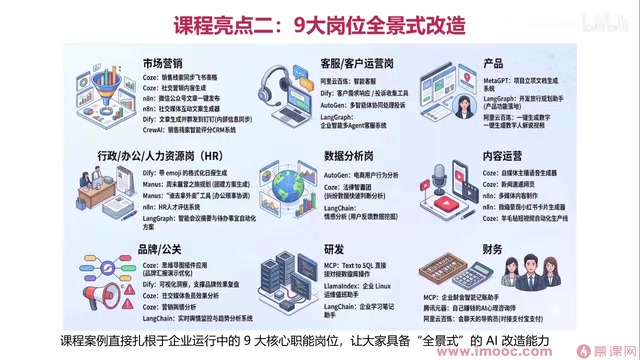
The course authors repeatedly make this point: when you get to a company, you'll find that the hardest part isn't writing code — it's that you have no idea where the business pain points and pitfalls are. So the principle behind the case studies is straightforward: "hit where it hurts."
- Marketing: Say goodbye to manually importing leads and wrangling spreadsheets — automate lead syncing and cleansing.
- Finance: Use an intelligent bookkeeping assistant to compress account processing from hours to seconds.
- R&D: Text-to-SQL lets the Agent query the database in natural language when a manager asks for a report — no complex queries to write by hand.
- PR & Operations: Build a real-time public sentiment monitoring system that automatically alerts and pushes response plans at the first sign of a PR fire.
- Additional scenarios include HR resume screening, multi-turn customer complaint handling, product manager data analysis, and automated content production pipelines.
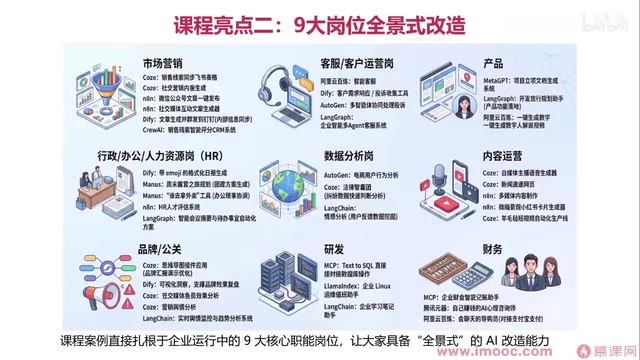
This "technology + business" combination aims to give learners an "AI eye" — the ability to walk into any company and immediately spot which repetitive tasks are worth replacing with an Agent.
Four Enterprise-Level Capstone Projects
The course culminates in four complete, deliverable systems — not scattered code snippets.
Project 1: CrewAI-Based Intelligent Sales Lead Scoring CRM System. Simulates a complete sales team — one Agent is responsible for gathering intelligence from across the web, while another Agent scores leads with precision based on business logic. The core challenge is converting non-standardized customer lead information into quantifiable scoring results through a scientifically designed evaluation framework.
Project 2: LangGraph-Based Enterprise Intelligent Meeting Summary and Action Item Tracking System. This is a hands-on implementation of the LangGraph state machine approach that's gaining traction at major tech companies. The goal isn't just to summarize a passage of text — it's to "get things done": from ingesting meeting recordings and automatically identifying responsible parties, to dispatching tasks directly to email to-do lists, closing the business loop end-to-end. This project focuses on building Agent memory and state management under complex logic.
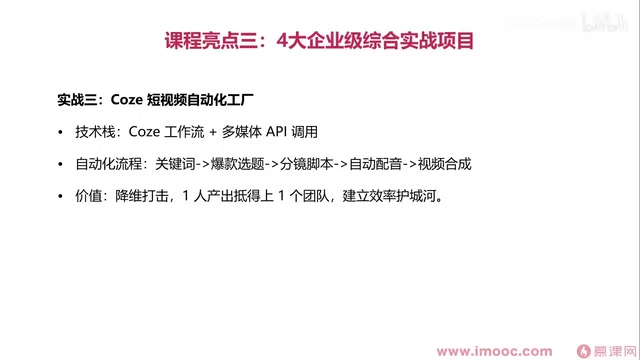
Project 3: Coze-Based Social Media Short Video Automated Production Pipeline. Input a keyword, and the system automates the entire pipeline — from topic selection and shot-by-shot scripting to voiceover generation and video synthesis. According to the course, a single person using this pipeline can match the output of an entire team.
Project 4: n8n-Based Global Industry News Intelligence Gathering System. Leveraging n8n's connectivity capabilities, this project builds an intelligence system with genuine reasoning ability — one that automatically crawls global news sites, structures content, distills key insights, and distributes them according to logical rules. The goal: "not a rigid web scraper, but a Chief Intelligence Officer."
The "state machine" concept used by LangGraph deserves its own explanation. A state machine is a programming model that breaks down complex processes into discrete "state nodes" and explicitly defines the transition conditions between them. For tasks like meeting summaries and action item tracking, execution is not linear — an Agent may need to jump between nodes such as "extract key information," "identify responsible parties," and "confirm task priority," and may even need to roll back and retry if a step fails. LangGraph manages this flow explicitly through a graph structure (nodes + edges) and maintains a "state object" that persists throughout the entire execution, enabling the Agent to remember context and make conditional decisions. The core difference from a simple chain-style call (LangChain Chain) is that a state machine allows for loops, branches, and interrupted recovery — a critical capability for building production-grade complex Agents.
Value Worth Noting — and a Dose of Realism
From a content planning perspective, this course follows a relatively clear line of thinking: start from business pain points, solve problems via both the low-code and code framework paths, and ultimately produce project work that can go on a résumé and be deployed in production. The core question it sets out to answer is: how do you transform AI from a "chat tool" into genuine productivity?
That said, it's worth tempering expectations. Phrases in the marketing materials like "dimensional superiority," "nuclear weapon," and "one person worth a whole team" carry strong promotional overtones. Real-world deployment outcomes depend heavily on an enterprise's data foundation, the complexity of its business processes, and the learner's actual hands-on investment. No matter how many tools you have, what ultimately matters is whether you've truly internalized the architectural thinking and design logic behind Agent development.
For developers and professionals who want a systematic introduction to AI Agents — especially those focused on enterprise deployment scenarios — this course's framework, covering the full stack from Agents and RAG to MCP and LangChain, offers a relatively complete learning path.
Related articles
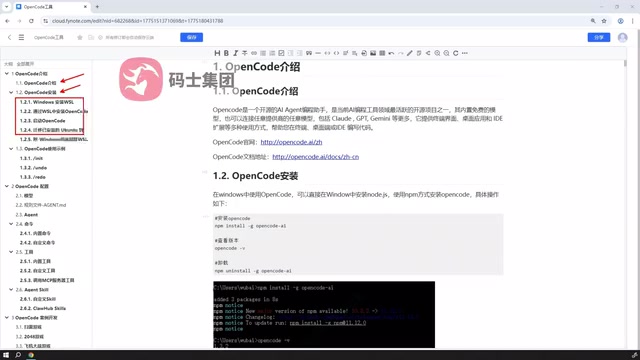
OpenCode Complete Guide: Installation, Configuration & Practical Usage
A complete guide to OpenCode, an open-source AI coding tool: desktop and WSL installation, model and rule configuration, agent types, custom commands, MCP integration, and Agent SQL reuse.
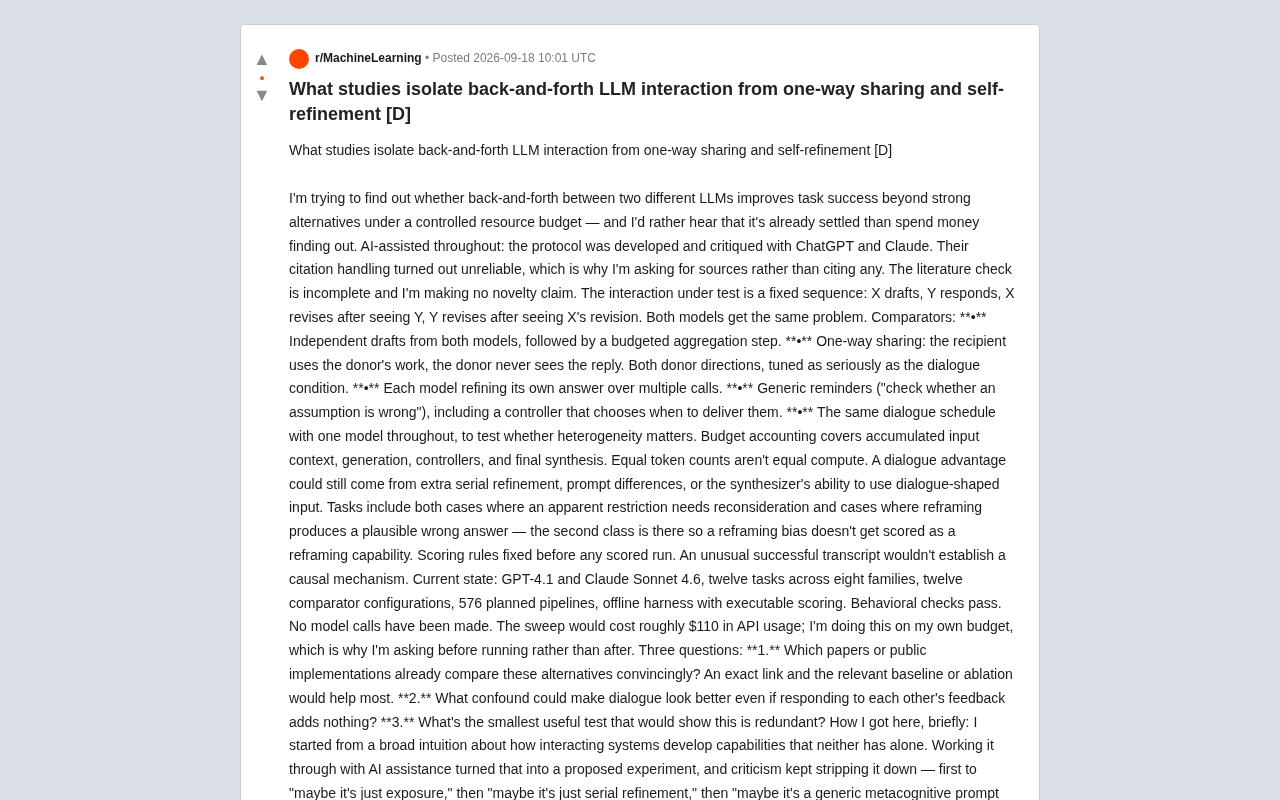
Can Multi-LLM Dialogue Really Improve Task Performance? Lessons from a Rigorous Experimental Design
A researcher designed rigorous controlled experiments to isolate whether multi-LLM back-and-forth dialogue genuinely outperforms simpler baselines like self-refinement and one-way sharing.

Which $10 AI Coding Plan Should You Choose? Go vs. Code Credit Breakdown
After DeepSeek's price hike, should you pick Go or Code for your $10 AI coding plan? We break down credit allocations for Mimo, Qwen, DeepSeek V4, Kimi, and more.