Andrew Ng's Agentic AI Course Deep Dive: How to Build Truly Useful Agentic AI Applications
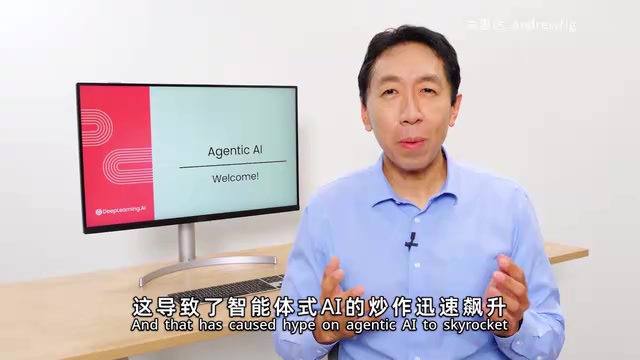
Andrew Ng's course argues that eval-driven engineering discipline — not flashy frameworks — is the true foundation of useful Agentic AI.
Based on Andrew Ng's Agentic AI course, this article maps out the practical value and learning path for agent technology. It begins by noting that while "agentic" has been over-marketed, genuinely valuable applications — spanning customer support, deep research, legal documents, and medical assistance — are growing fast. The course's core methodology argues that the real differentiator isn't which framework you use, but whether you can build a disciplined development process centered on evals and error analysis. The advice for developers: understand what problem agentic workflows solve, then iterate with evaluation at the center.
From Buzzword to Practical Value: The Real Case for Agentic AI
When Andrew Ng first coined the term "agentic" to describe a rapidly emerging trend he observed in application development, he never anticipated that marketers would plaster it onto nearly every product in sight. The result: hype around Agentic AI has been pushed to a fever pitch.
But beyond the noise, a more important truth holds: the number of genuinely valuable, useful Agentic AI applications is also growing fast — even if not quite as fast as the hype would suggest. This is the core message the course aims to deliver: ignore the bubble, and focus on the problems that agentic workflows can actually solve.
For developers, learning to distinguish "hype" from "practical value" is the first lesson in getting started with Agentic AI. Terminology gets abused, but the underlying engineering capabilities and methodologies are where long-term value lives.
What Agentic Workflows Can Do
In the course, Andrew Ng walks through a range of real-world applications currently being powered by agentic workflows — examples that sketch out the practical boundaries of where agent technology actually lands:
- Customer support agents: Automatically handling user inquiries and issue resolution
- Deep Research: Assisting in writing research reports with substantive insights
- Legal document processing: Handling structurally complex documents with intricate clauses
- Medical diagnostic assistance: Analyzing patient inputs to suggest possible diagnoses

These scenarios share a common thread: most of them exceed what a single LLM call can handle. They require multi-step reasoning, tool use, information retrieval, and iterative refinement — which is exactly where agentic workflows earn their place.
Ng is candid about the fact that many projects across the teams he leads simply couldn't exist without agentic workflows. The weight of that statement is significant — Agentic AI isn't just a nice-to-have technique; it's the capability that takes certain applications from "impossible" to "possible."

The Core Methodology: Evals and Error Analysis
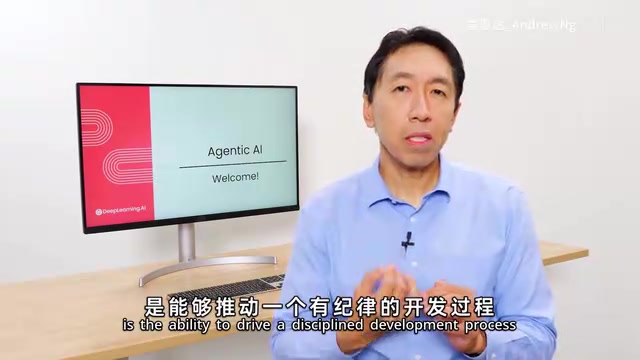
The most thought-provoking insight in the course is Ng's take on what separates skilled practitioners from average developers. He argues that the biggest differentiator in building good Agentic AI applications is whether you can drive a disciplined development process — one centered around evaluations (evals) and error analysis.
Why Evals Matter So Much
Agentic systems are typically composed of multiple sequential components, and any deviation in one step can compound downstream. Without a systematic evaluation approach, it's hard for developers to pinpoint whether a problem stems from the prompt, a tool call, retrieval quality, or reasoning logic. Evals provide a quantifiable, reproducible standard — turning "it feels better" into "the data proves it's better."
In AI engineering, evals occupy a role similar to unit tests and integration tests in software engineering. In practice, developers typically assemble a "golden test set" — a collection of input-output pairs covering typical scenarios and edge cases — to measure whether the system genuinely improves after each iteration. Common evaluation dimensions include: task completion rate, response accuracy, tool call correctness, multi-turn conversational coherence, and end-to-end latency and cost.
For Agentic AI, evaluation is far more difficult than for single-turn Q&A systems, because an agent's execution path is non-deterministic — the same task may be completed through different sequences of tool calls, making traditional exact-match evaluation ill-suited. Common industry approaches include: using an LLM-as-a-Judge to score output quality, evaluating based on trajectory rather than final answer, and constructing reference benchmarks through human annotation.
The Practical Value of Error Analysis
Error analysis is the tool for finding the right direction to improve. Rather than blindly tuning parameters or stacking up complex logic, it's far more effective to systematically break down which specific cases the agent fails on, understand why it fails, and then optimize in a targeted way. This "data- and error-driven" iteration approach is the defining difference between amateur and professional development.
For learners eager to jump straight into frameworks like LangChain or LangGraph, this is an especially valuable reminder: tools are just means to an end. A disciplined evaluation process is the real foundation for building reliable agents.
The Real-World Significance of Learning Agentic AI
Ng emphasizes repeatedly at the start of the course that mastering the ability to build Agentic AI applications is one of the most important and valuable skills in AI today. This capability opens up tangible career opportunities and empowers developers to independently build impressive software.
Looking at the course's overall framework, systematic coverage of topics including Agents, RAG, MCP, Skills, LangChain, LangGraph, and multi-agent coordination forms a complete path from concept to engineering practice. And the "evaluation-driven development" philosophy that runs throughout is the methodological foundation that allows these technologies to deliver real value.
For developers looking to enter this space, the advice is: don't be misled by the marketing buzzwords flying around. Return to engineering fundamentals — first understand what problem an agentic workflow is solving, then learn to use evals and error analysis to validate and improve your system. That's the most valuable thing this course has to offer.
Two key technical pillars that come up repeatedly when building practical agents are RAG (Retrieval-Augmented Generation) and MCP (Model Context Protocol). The core idea behind RAG is to retrieve relevant document chunks from an external knowledge base before the model generates a response — bypassing the training data cutoff limitations of large language models and reducing hallucinations. In agentic contexts, RAG typically exists as a callable tool that the agent autonomously decides when to invoke.
MCP (Model Context Protocol) is an open protocol introduced by Anthropic in 2024, designed to standardize how AI models connect to external tools and data sources — essentially defining a unified "plugin interface" for AI applications. Through MCP, developers can enable agents to access databases, file systems, APIs, and other heterogeneous resources in a consistent way, without writing custom integration logic for each tool. This significantly reduces the integration complexity of multi-tool agents.
Related articles
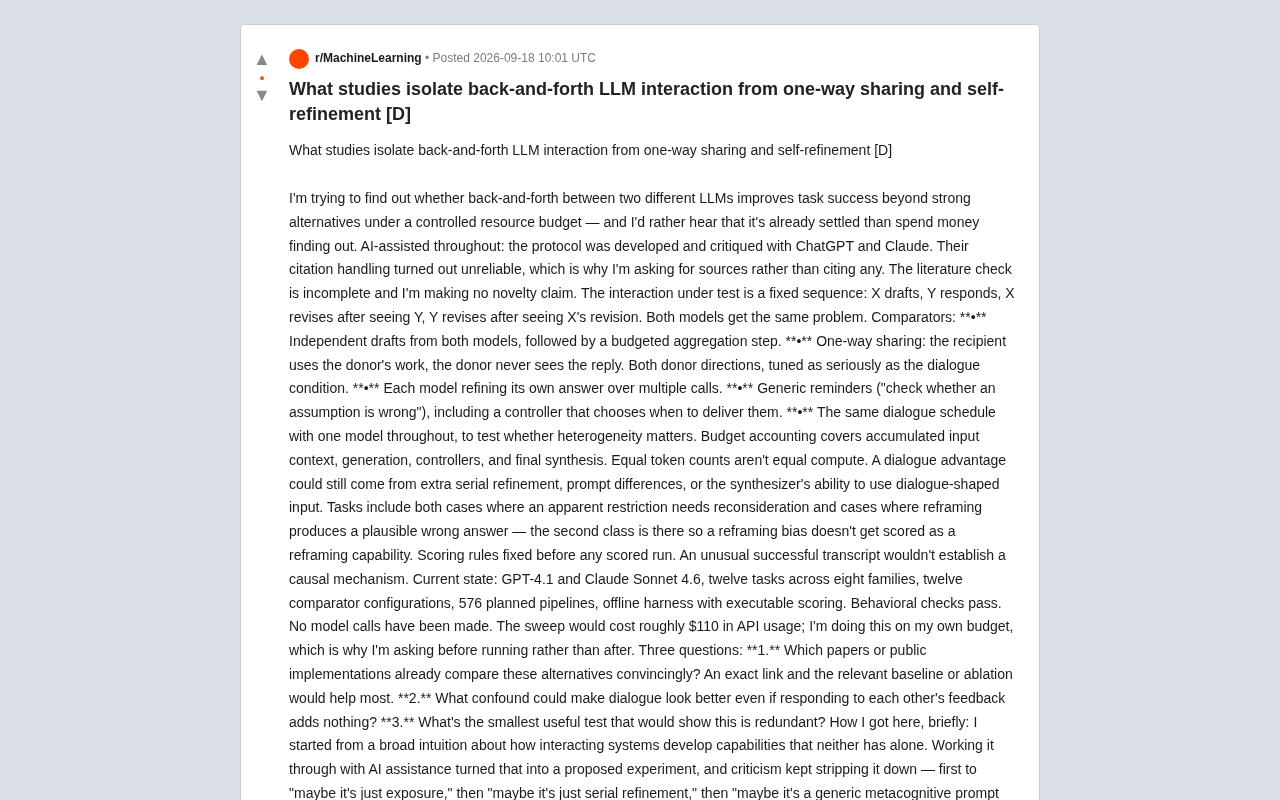
Can Multi-LLM Dialogue Really Improve Task Performance? Lessons from a Rigorous Experimental Design
A researcher designed rigorous controlled experiments to isolate whether multi-LLM back-and-forth dialogue genuinely outperforms simpler baselines like self-refinement and one-way sharing.

Which $10 AI Coding Plan Should You Choose? Go vs. Code Credit Breakdown
After DeepSeek's price hike, should you pick Go or Code for your $10 AI coding plan? We break down credit allocations for Mimo, Qwen, DeepSeek V4, Kimi, and more.
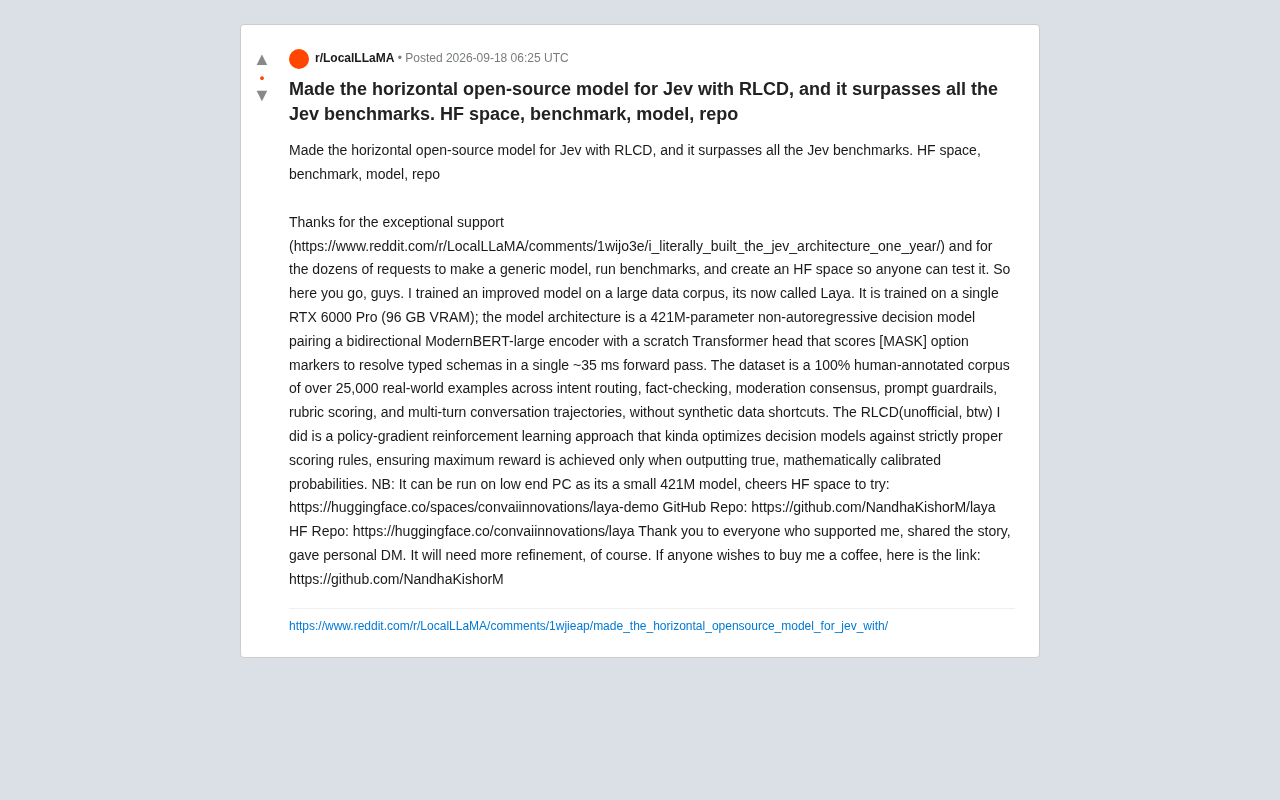
Laya Open-Source Decision Model: How 421M Parameters Beat Jev Benchmarks
Laya is an open-source 421M-parameter non-autoregressive decision model built on the Jev architecture, trained with RLCD on 25,000 human-annotated samples using a single GPU, running in ~35ms on low-end PCs.