Getting Started with LangChain: The Core Framework for LLM Agent Development
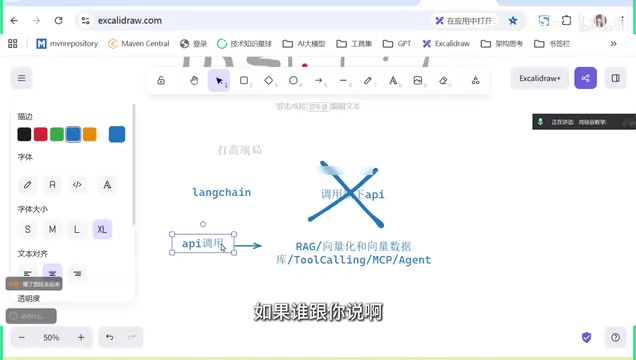
LangChain bridges LLMs to the outside world — real AI development goes far beyond just calling an API.
This guide uses a LangChain introduction course as its foundation to clear up key misconceptions about LLM development. LangChain is a JDBC-style bridging framework that connects large models to code, databases, and tools. "Configuring an API key" barely scratches the surface — a complete AI application stack involves RAG, vector databases, Function Calling, MCP, and multi-agent collaboration. Advanced Python skills (decorators, closures, type annotations) are a non-negotiable prerequisite. The recommended learning approach is minimum viable knowledge combined with learn-by-doing. On the career side, foundation model roles suit only a tiny elite; most developers' opportunities lie in vertical domain LLMs and agent-based applications.
What Exactly Is LangChain
If you had to pin down exactly what LangChain is, it's essentially an AI engineering framework built around open-source large language models — one that connects LLMs to all kinds of components in the outside world. A useful analogy for Java developers: just as Java needs JDBC to connect to a MySQL database, your business logic needs an intermediary to interface with a large model. That intermediary is LangChain.
In other words, LangChain is not a large model itself — it's a bridging layer that enables LLMs to work in concert with code, data, tools, databases, and other external resources. Its purpose can be summed up in one line: a tool that connects large models to the outside world.
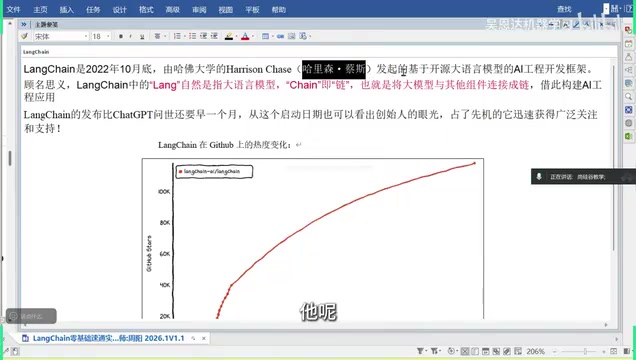
One interesting historical footnote: LangChain was actually released about a month before ChatGPT launched. Created by Harrison Chase, it was built specifically to bridge the Python ecosystem with large models. There's also a Java counterpart — LangChain4j (LangChain for Java) — serving developers on the Java stack.
Why "Calling an API" Is Not the Same as LLM Development
One of the core points this tutorial hammers home is that many people fundamentally misunderstand what LLM development actually involves.
After a first brush with large models, a lot of people walk away thinking: "That's it? Just set up an API key and call an endpoint?" The author is blunt about this — that view is simply wrong. It's the equivalent of saying "Java is easy, you just install Tomcat and write some JDBC" — you've barely scratched the surface.
Actual LLM application development involves an entire technology stack: RAG (Retrieval-Augmented Generation), vectorization and vector databases, Function Calling, MCP (Model Context Protocol), and AI Agents. These can be broken down into three levels of difficulty:
- Beginner: Master LLM fundamentals and core LangChain capabilities
- Intermediate: Use LangGraph to orchestrate complex workflows
- Advanced: Agent to Agent (A2A) — multiple agents collaborating, dividing responsibilities, and calling one another
Only by connecting all of these do you get true Agent development capability — not just "getting an endpoint to respond."
A few of these core concepts are worth unpacking individually. RAG (Retrieval-Augmented Generation) lets a large model retrieve from an external knowledge base when generating answers, rather than relying solely on training data — addressing both the "knowledge cutoff" problem and hallucinations. Vector databases are the storage layer that powers RAG: they convert text into high-dimensional numerical vectors and index them so that semantically similar content can be retrieved quickly — fundamentally different from keyword matching in traditional databases. Function Calling is the mechanism that lets a large model invoke external functions or APIs; instead of only outputting text, the model outputs structured "tool call instructions" that a program then executes, feeding results back to the model. MCP (Model Context Protocol), introduced by Anthropic, is an open protocol designed to standardize how LLMs communicate with external tools and data sources — think of it as the "USB standard" for AI tool integration. Stack all of these together and you get an AI application capable of running in production — a completely different level of complexity from simply "calling an endpoint."
Python Fundamentals Are a Non-Negotiable Prerequisite
The course targets learners with widely varying backgrounds — seasoned developers with five or more years of experience, people transitioning from big data or Java, and complete beginners. The author is explicitly skeptical of the claim that "all languages are basically the same, so Python should be easy if you know Java."
His benchmark is concrete: if you're fuzzy on lambda functions, variable/keyword arguments, type annotations, decorators, argument unpacking, and closures, your command of advanced Python is essentially zero. Drawing on 14 years of professional experience, the author argues that Python 3 and JDK 21 are, in many respects, "almost two different languages" — assuming they're interchangeable just because both have loops and types is a fast track to hitting a wall.
For anyone serious about LangChain development, solid advanced Python is a prerequisite, not something you can skip.
A Learning Methodology Built for Speed
Beyond the technical content itself, the author devotes considerable space to how to learn — and this is arguably one of the more valuable parts of the material. He puts forward two key learning principles:
Minimum Viable Knowledge
In a limited number of sessions (a matter of days), it's impossible to exhaust everything LangChain has to offer. The strategy, therefore, is to focus on the most common, mainstream operations and get through them as quickly as possible — not to pursue deep mastery of every detail from day one. This mirrors the approach of rapidly transitioning from Flink and Spark to LLMs in the big data world.
Learn by Doing, Not Learn Then Do
The traditional "learn it thoroughly first, then get tested" model creates what the author calls the "curse of knowledge." His prescription is the opposite: get something running first, and when you hit errors, trace back and fill in the gaps. The goal is speed and quick proficiency, not depth. Get the mainstream workflows running, see the error messages, then fill in the knowledge they expose.
He also emphasizes that alongside any framework, you should be learning a methodology and mental model — because technology keeps evolving. LangChain is today's framework; tomorrow there will be something new. The transferable skill is the general approach: when you encounter a new technology, figure out what it is, what it does, what problem it solves, where to get it, and how to start using it. That playbook is what keeps you relevant as the landscape shifts.
The "Curse of Knowledge" is a concept from behavioral economics: once you know something, it becomes nearly impossible to imagine not knowing it, which makes it difficult to teach others effectively. The author borrows it here to describe a different trap — learners who block themselves with the mental prerequisite that they must fully master something before they dare touch it. This shares the same root as "over-engineering" in software development. "Learn by doing" isn't the same as being reckless; it's an acknowledgment that learning is inherently spiral in nature. The first pass: get the mainstream path running. The second pass: fix real errors and fill targeted gaps. Only the third pass gives you the perspective to examine nuances and edge cases. For framework-type technologies, this route is typically more efficient than the linear "read all the docs, then write Hello World" approach — because the design intent of a framework often only becomes clear through actual use.
The LLM Job Landscape: Tiers and Realities
The author applies the 80/20 principle to break down LLM-related career paths — a section with real practical value for job seekers.
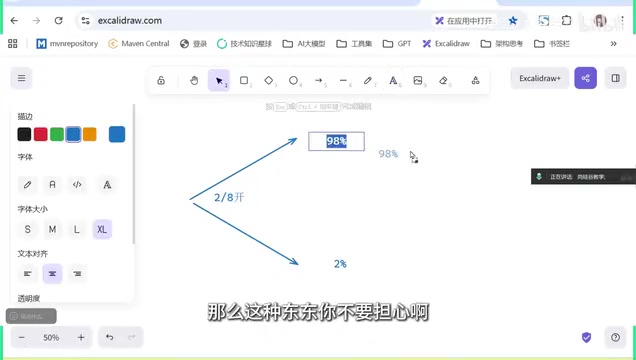
Roughly 2% of roles: Foundation model development. These positions are at companies like ByteDance, Huawei Pangu, Moonshot AI, Zhipu AI, and OpenAI, working on the underlying model architecture. The bar is extremely high — typically requiring a computer science background from a top-tier Chinese university (985 or C9 level), with compensation reaching the ¥2 million/year range. The author is candid: this path has little to do with most ordinary developers.
Roughly 98% of roles: Application development. This is where most people will build their careers, and it breaks down into:
- Vertical domain LLMs: Taking a general-purpose model and fine-tuning it on domain-specific data for industries like legal, medical, insurance, finance, or securities — producing specialized models such as a "Qianwen Legal" model.
- Super-individual agents: Building Jarvis-style agents for specific scenarios — handling supply chain, finance, invoicing, taxation, and other business workflows. The author sees this as a major opportunity for the younger generation: "Eventually, everyone will have their own agent."
His recurring reminder to learners: be clear about your purpose. You're learning to earn a living and get employed, not learning for its own sake. Choosing a direction that matches your background and has market demand is far more pragmatic than chasing the highest-barrier foundation model roles.
"Vertical LLMs" refers to specialized models built on top of a general-purpose foundation model through domain-specific fine-tuning or continued pre-training, enabling them to outperform the general model in a specific field. Their core value: general-purpose LLMs are prone to errors in high-expertise scenarios — citing legal statutes, medical diagnostic terminology, financial regulatory details — while a vertically trained model can significantly reduce hallucination rates and improve compliance. These models require a lower barrier than building a foundation model from scratch, but demand both domain expertise and AI engineering skills. They represent a segment of the application layer with relatively higher technical moats and relatively clear commercial value. For developers with backgrounds in finance, healthcare, or law, this is a window to convert existing domain knowledge into competitive advantage.
Summary
The core value of this material lies in clearing up several persistent misconceptions: LangChain is a framework for connecting LLMs to the outside world, not some black art; "calling an API" is nowhere near the same as LLM development; advanced Python proficiency is a hard prerequisite; and the LLM job market has clear tiers, with the real opportunities for most developers sitting firmly in the application layer. For developers looking to transition or level up, the path is fairly clear: shore up Python fundamentals first, then work through the stack — LangChain → LangGraph → multi-agent collaboration — one layer at a time.
Related articles
vLLM v0.30.0rc1 Released: Isolates FlashInfer BF16 Autotuning Logic
vLLM v0.30.0rc1 release candidate fixes FlashInfer BF16 autotuning isolation (PR #57285). Learn the technical background and its impact on inference deployment.
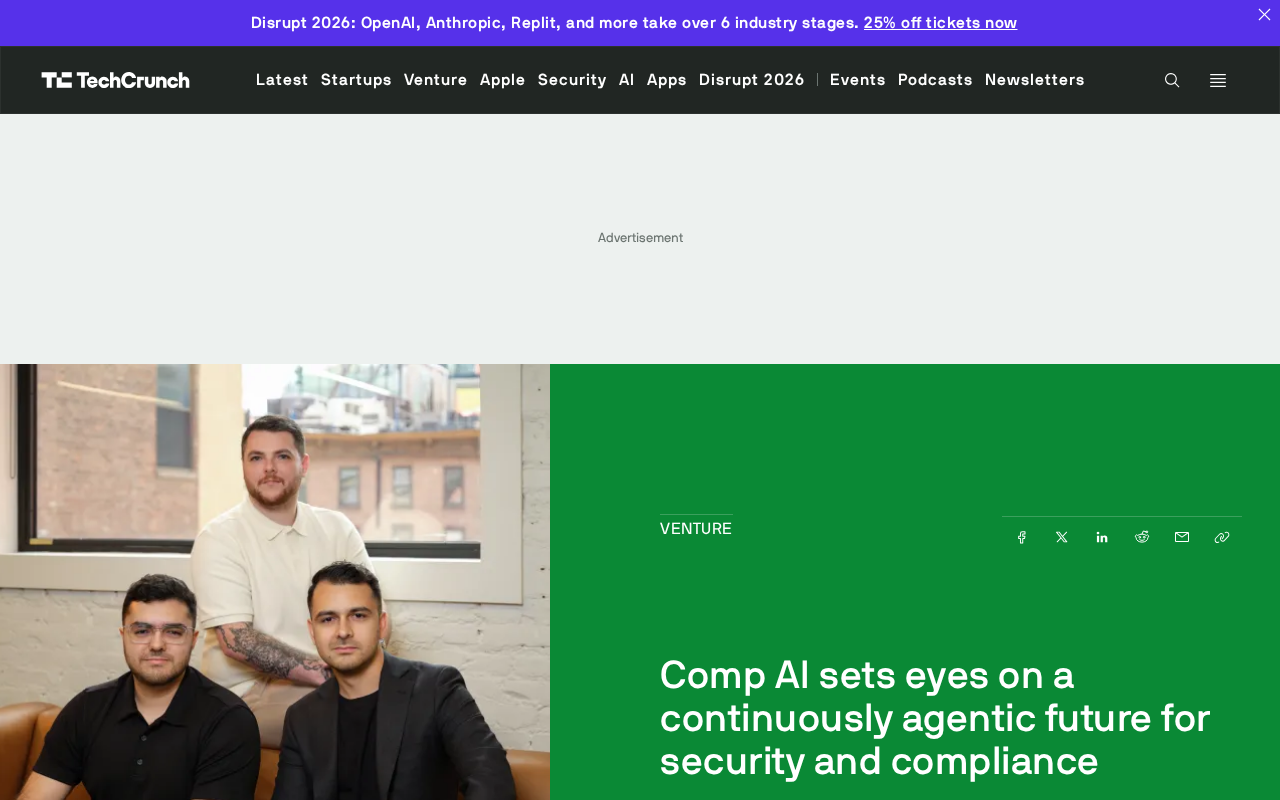
Comp AI Raises $34M Series A, Bets on Agentic Security Compliance
Comp AI raises $34M Series A led by Roo Capital and Grand Ventures, betting on "continuously agentic" AI to transform compliance from periodic audits into real-time monitoring.
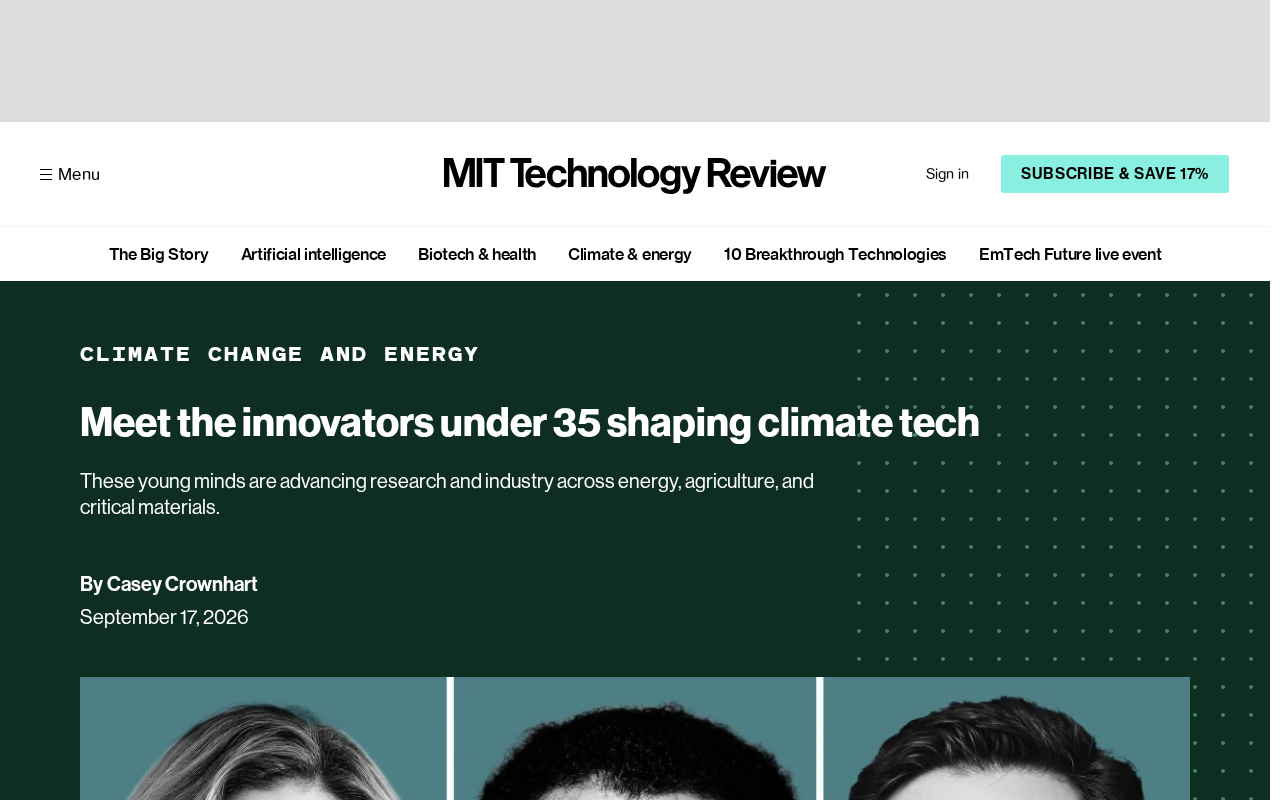
MIT Technology Review's 35 Innovators Under 35: A Climate Tech Edition Explained
MIT Technology Review's latest 35 Innovators Under 35 list focuses on climate tech, spotlighting nine young global innovators. Here's what the list means and why it matters.