All articles
39602 articles
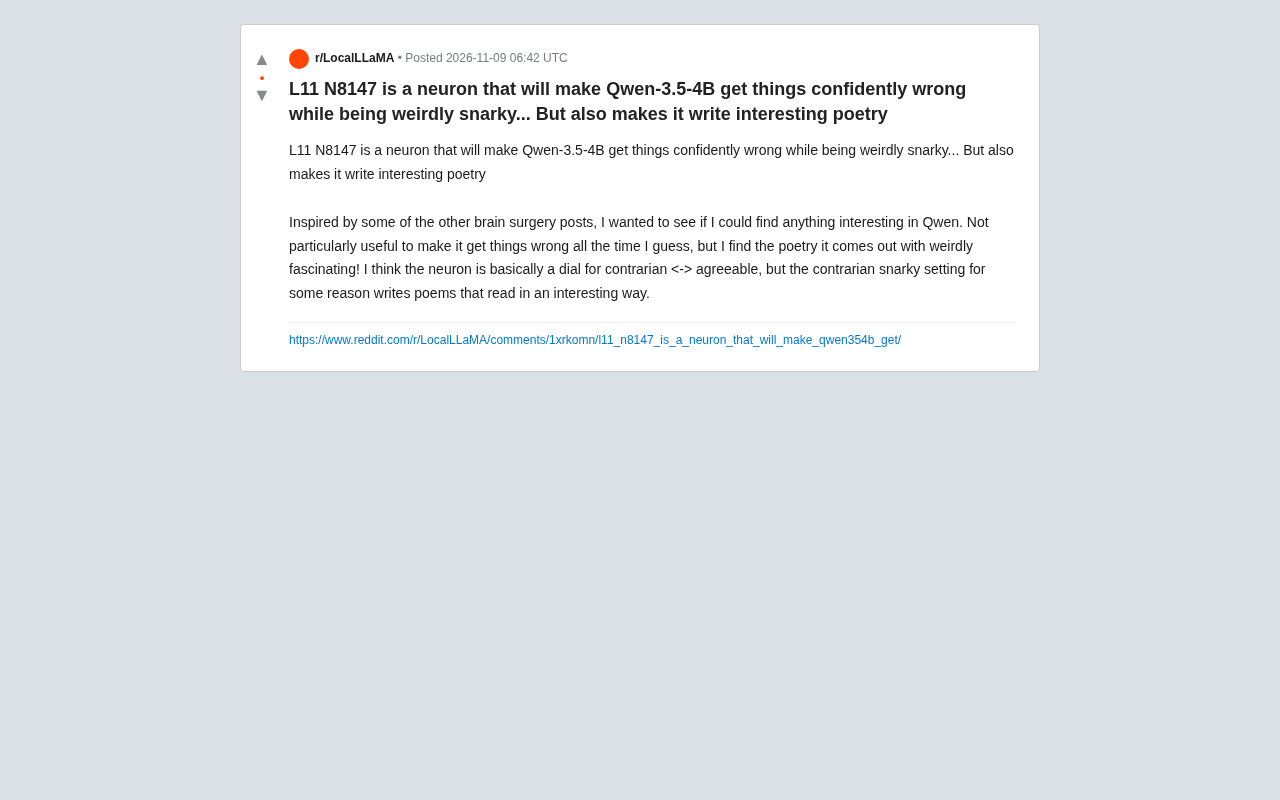
The Rebel Neuron in Qwen-3.5-4B: Making the Model Confidently Wrong Yet Poetic
Reddit users found that activating neuron #8147 in layer 11 of Qwen-3.5-4B makes the model confidently give wrong answers with a snarky tone, yet its poetry is surprisingly interesting. This article interprets the principles and implications of this neuron intervention experiment.

Ling-3.2-flash Demo: From Paper Formulas to CPU-Runnable Grad-CAM
In a launch demo for Ling-3.2-flash, Grad-CAM paper formulas are translated into executable code and run on CPU, with heatmaps for boxer and tabby cat categories demonstrating the model's accurate translation of mathematical semantics.

MLSys 2027 Reviewers Haven't Received Paper Assignments Yet? Community Discussion Draws Attention
Reddit community discusses whether MLSys 2027 reviewers have received paper assignments. Reciprocal reviewers report no assignments yet, with attention on timelines and impact.

RTX 5060 Ti 16GB Flying Off Shelves: The New Darling of the AI Boom
Reddit buzzes as AI users snap up the RTX 5060 Ti 16GB. We analyze its VRAM edge, cost-performance, market impact, and the new trends in AI hardware demand.

Collapse AI-Generated PR Descriptions with details/summary
Simon Willison shares a practical trick: use the HTML details/summary tag to collapse verbose AI-generated PR descriptions, keeping only a short human-written intro. This article breaks down the operational details, the human-AI collaboration thinking behind it, and a mnemonic for the tag order.
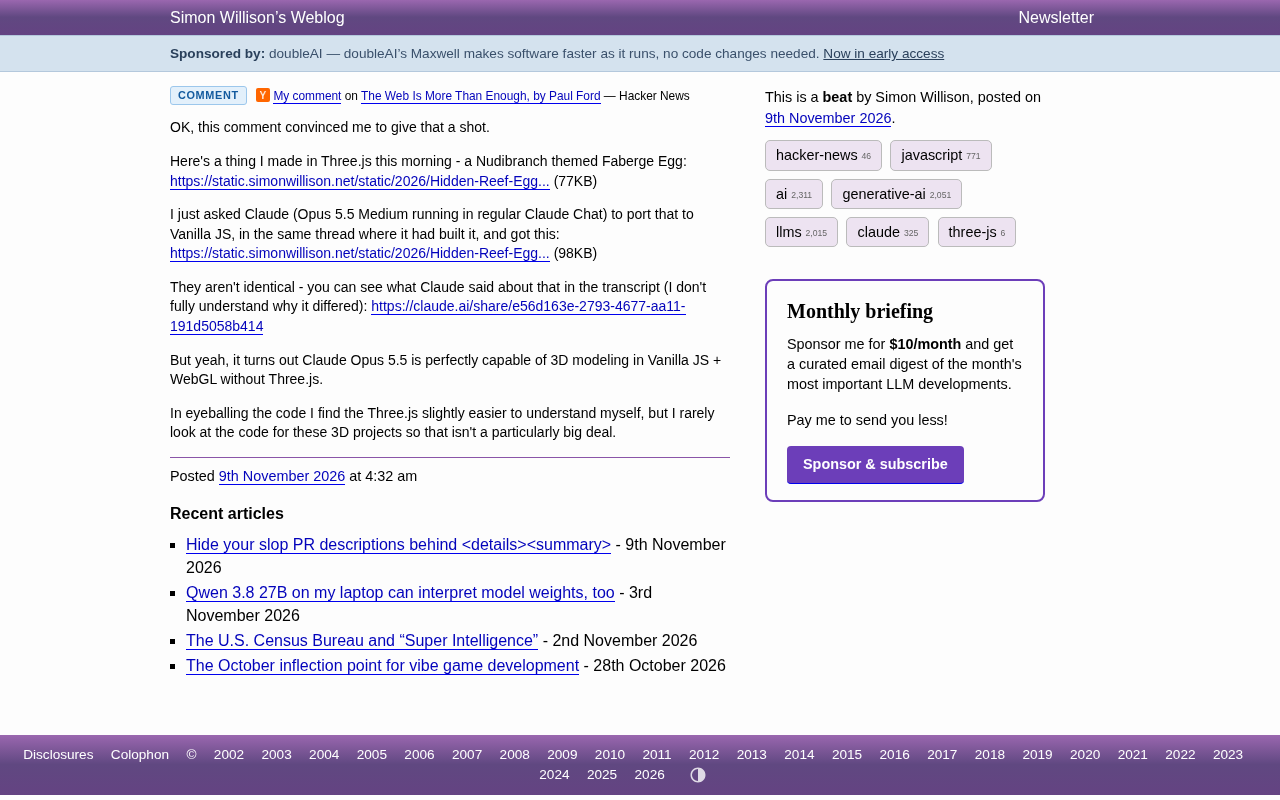
Claude Opus 5.5 Hands-On: Saying Goodbye to Three.js with Hand-Written 3D in Pure WebGL
Simon Willison had Claude Opus 5.5 port a Three.js 3D piece into Vanilla JS + WebGL, showing LLMs can do 3D modeling without 3D libraries, and probing code readability and the limits of native web capabilities.
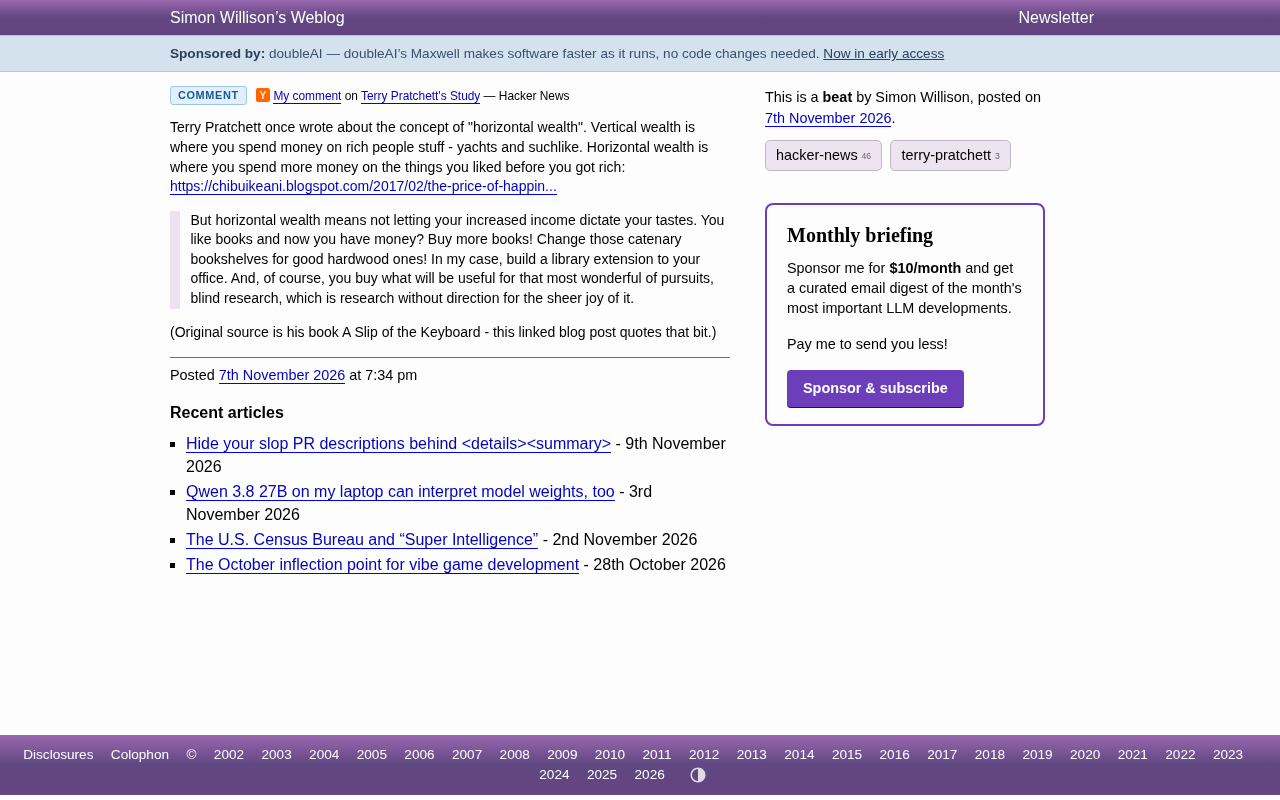
Terry Pratchett's 'Horizontal Wealth': Spend Money on What You Love
Terry Pratchett's 'horizontal wealth': spend new income not on yacht-style vertical consumption but on what you loved before getting rich—books, a library, 'undirected research.'
A Single AI Model Simulates the Motion of Everything: From Flowing Sand to Protein Folding
The WorldParticle system uses a single AI model to learn the laws of matter motion, simulating behaviors from sand grain sliding to protein folding, with potential to aid soft robotics and drug discovery.
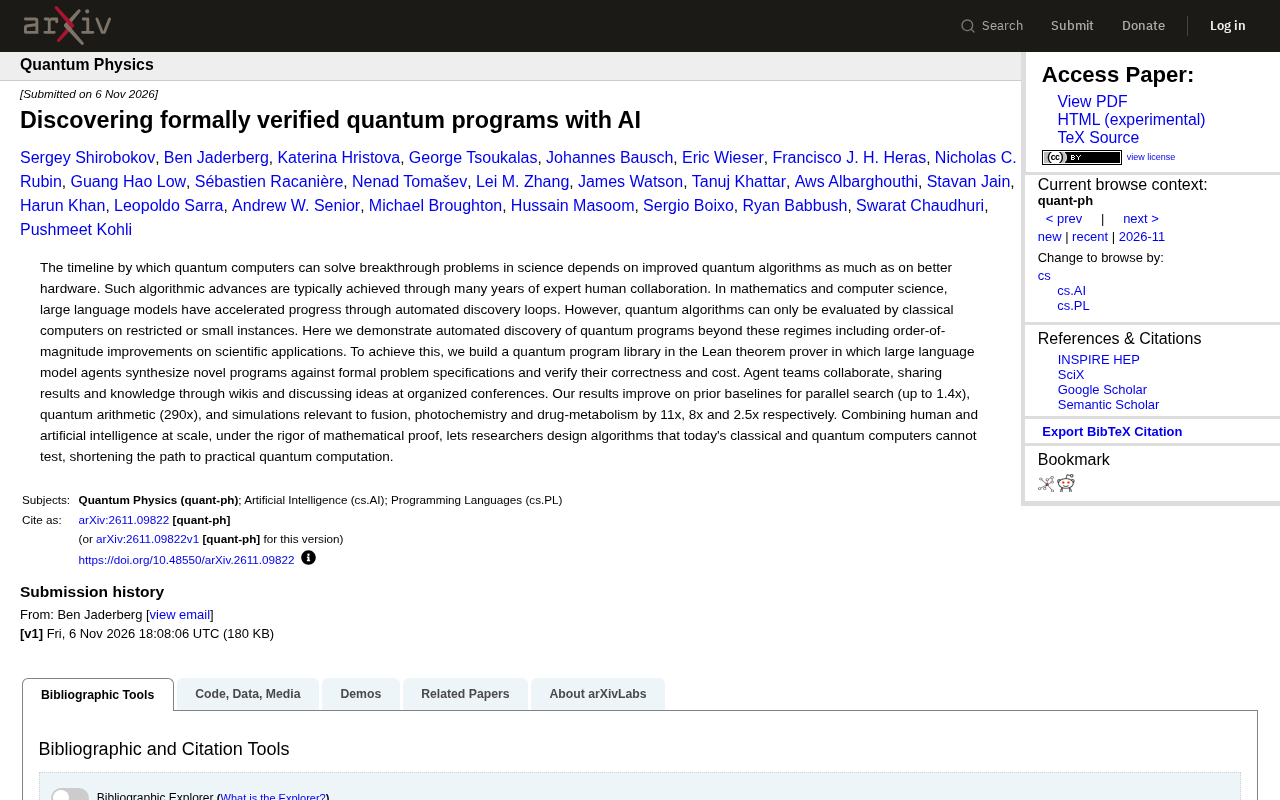
AI Automatically Discovers and Formally Verifies Quantum Programs in Lean, Substantially Outperforming Baselines on Multiple Metrics
A new study lets LLM agents automatically synthesize and formally verify quantum programs in Lean, achieving 290× gains in quantum arithmetic and 11×, 8×, and 2.5× in fusion, photochemistry, and drug metabolism simulations.
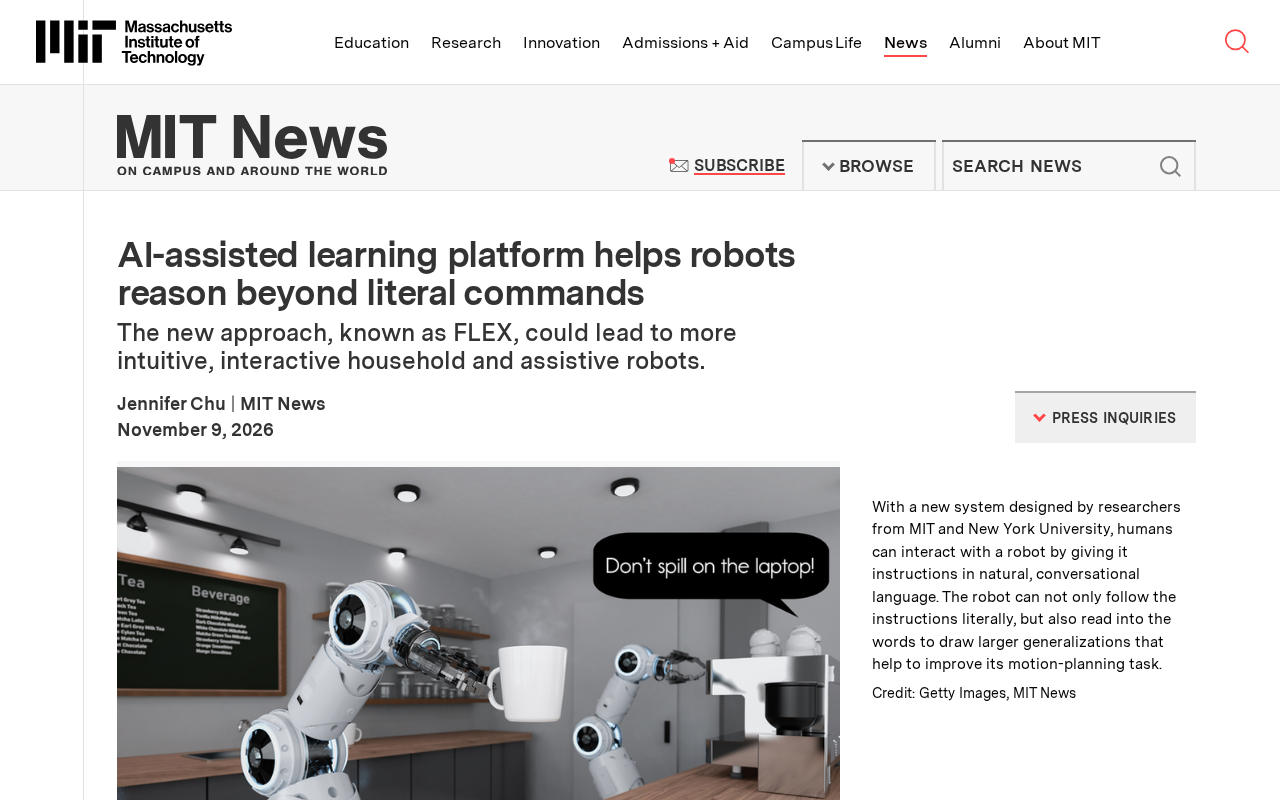
FLEX: Teaching Robots to Move Beyond Literal Instructions and Learn to Reason
FLEX is an AI-assisted learning platform designed to help robots go beyond literal instructions and gain reasoning and intent-understanding abilities, potentially advancing more intuitive, interactive home and assistive robots. This article explains its approach, significance, and open questions.

FlowAlign: A Flow Matching-Driven Approach for Target-Space Alignment
FlowAlign is a flow-guided target-space alignment method that uses conditional flow matching as a training signal while preserving global structure and instance-level correspondence, excelling in single-cell multi-omics and image-text alignment tasks.

Reference-Free Evaluation: Ensemble Learning Boosts Trustworthiness of LLM Code Summaries
An arXiv paper proposes an ensemble method to estimate confidence in LLM-generated COBOL code summaries without human references, using multi-model generation, LLM judge pairwise comparison, and calibrated aggregation.

Can Agentic Systems Bridge the Radiology Gap? Testing FDA-Approved Tools
A study proposes a radiology agent framework that simulates report generation with FDA-approved device tools, finding that clinical indications alone recover less than one-third of findings; tool availability and orchestration are complementary constraints, providing a benchmark for comprehensive AI-assisted radiology reporting.
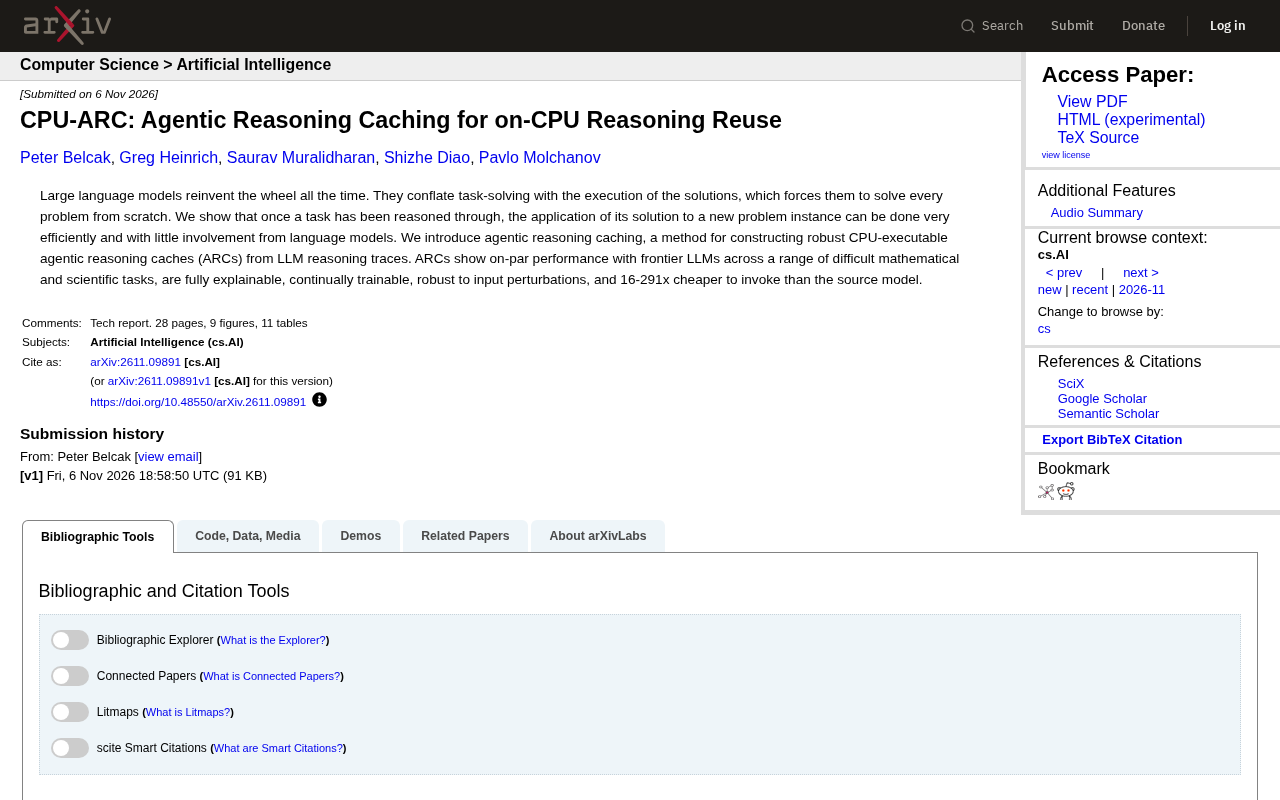
CPU-ARC: Reuse LLM Reasoning with Caching, Cutting Costs by Up to 291x
CPU-ARC turns LLM reasoning traces into CPU-executable caches, matching frontier models on math and science tasks at 16-291x lower cost, fully interpretable and robust.
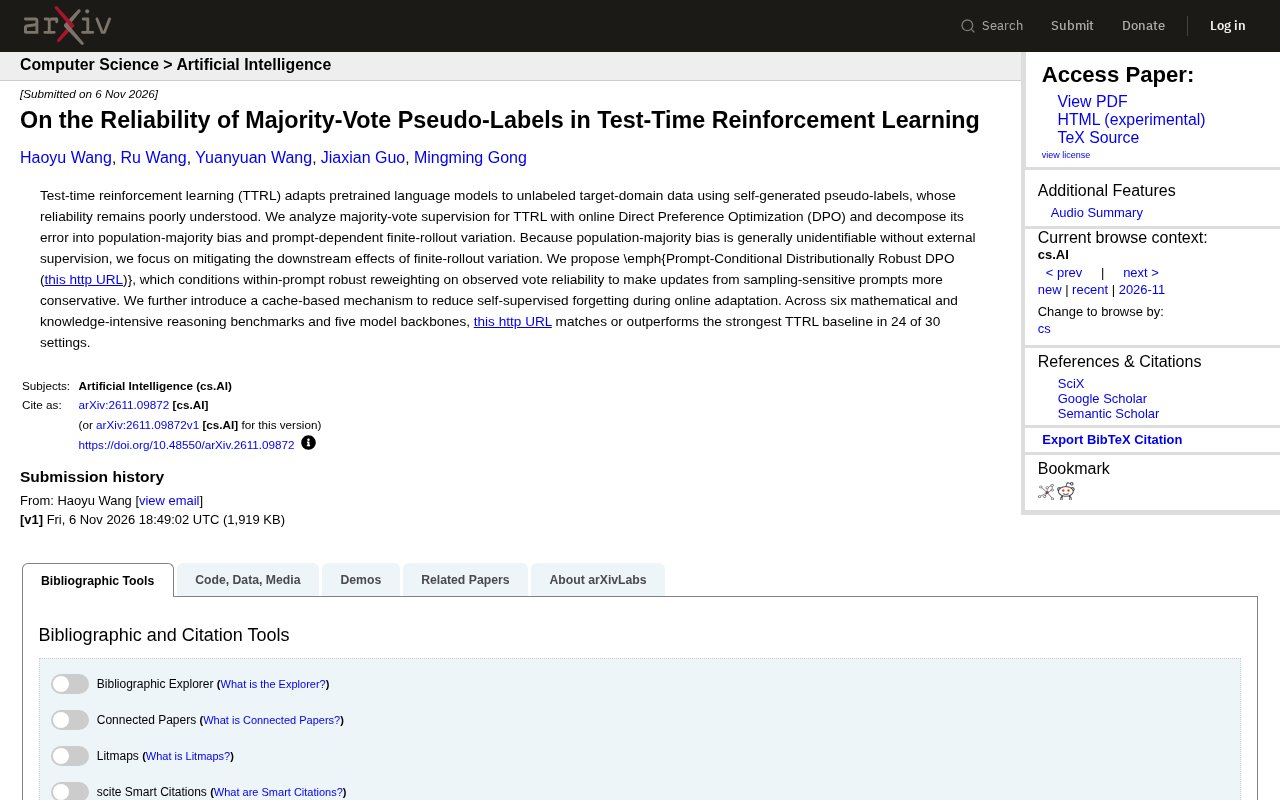
Is Majority-Vote Pseudo-Labeling Unreliable? PC-Dr.DPO Makes TTRL More Robust
This paper analyzes the reliability of majority-vote pseudo-labels in TTRL, decomposes error into population-majority bias and finite-rollout variation, and proposes PC-Dr.DPO with prompt-conditional robust reweighting and a cache mechanism to improve stability, outperforming baselines on multiple benchmarks.
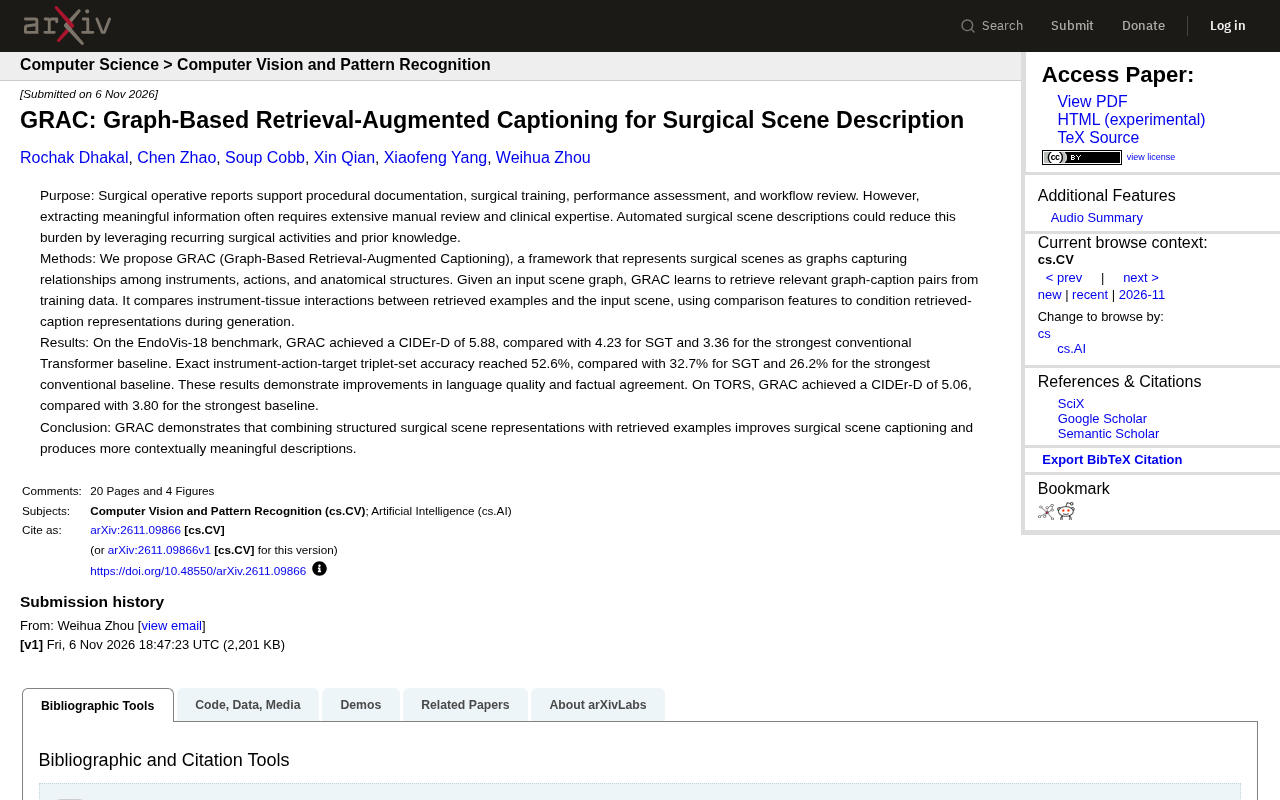
GRAC: A New Graph-Based Retrieval-Augmented Framework for Surgical Scene Captioning
The GRAC framework models surgical scenes as graphs and combines retrieval-augmented generation to improve captions. On EndoVis-18, it achieves 5.88 CIDEr-D and 52.6% triplet accuracy, significantly outperforming SGT and Transformer baselines.
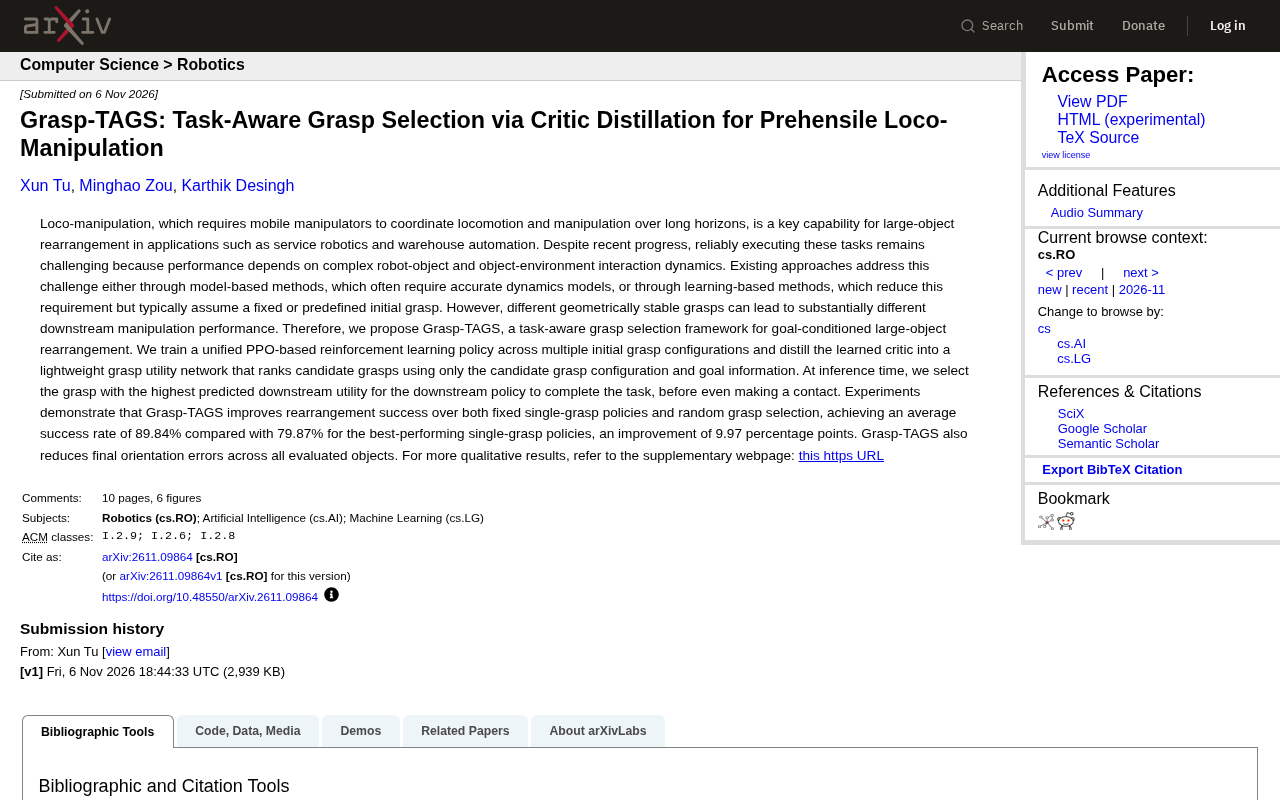
Grasp-TAGS: Critic Distillation Enables Task-Aware Grasp Selection
Grasp-TAGS is a task-aware grasp selection framework that learns a grasp utility network via critic distillation, boosting large-object rearrangement success to 89.84% in loco-manipulation—9.97 points above the best single-grasp strategy.
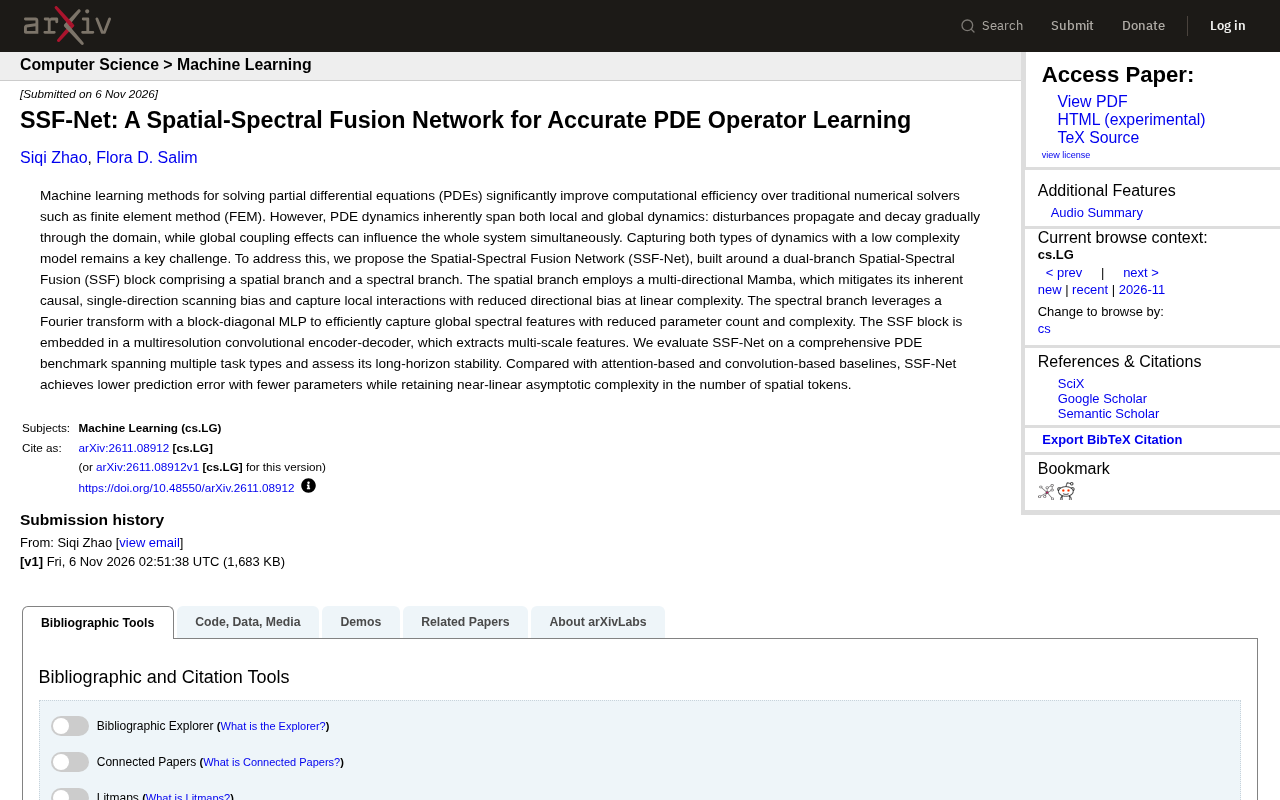
SSF-Net: A Spatial-Spectral Fusion Network for Accurate PDE Operator Learning
SSF-Net proposes a dual-branch spatial-spectral fusion block that uses multi-directional Mamba to capture local interactions and Fourier transforms plus block-diagonal MLPs to extract global features, achieving lower error with fewer parameters in PDE operator learning.
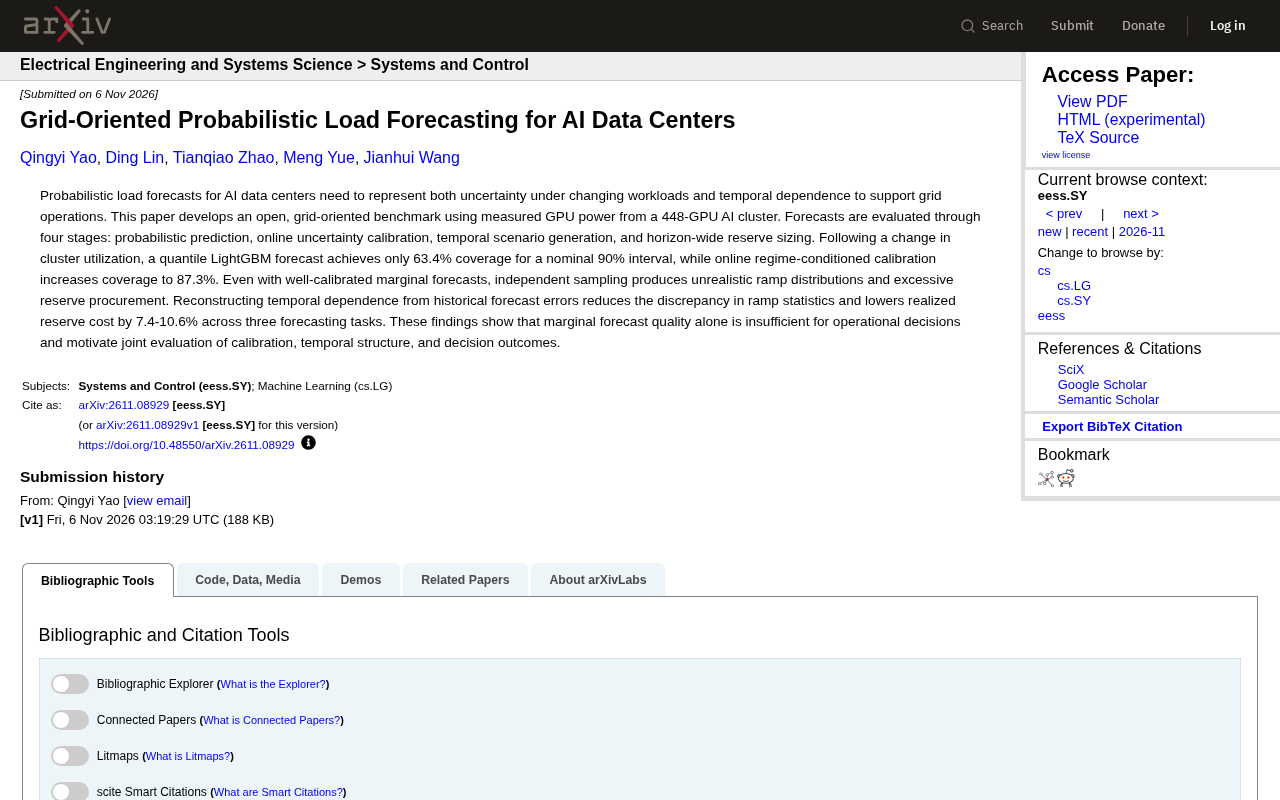
AI Data Center Load Forecasting: How Probabilistic Calibration and Temporal Structure Affect Grid Decisions
Measured data from 448 GPUs shows quantile LightGBM's nominal 90% interval covers only 63.4% after regime shifts; online calibration raises it to 87.3%, and rebuilding temporal structure cuts reserve costs by 7.4%-10.6%.
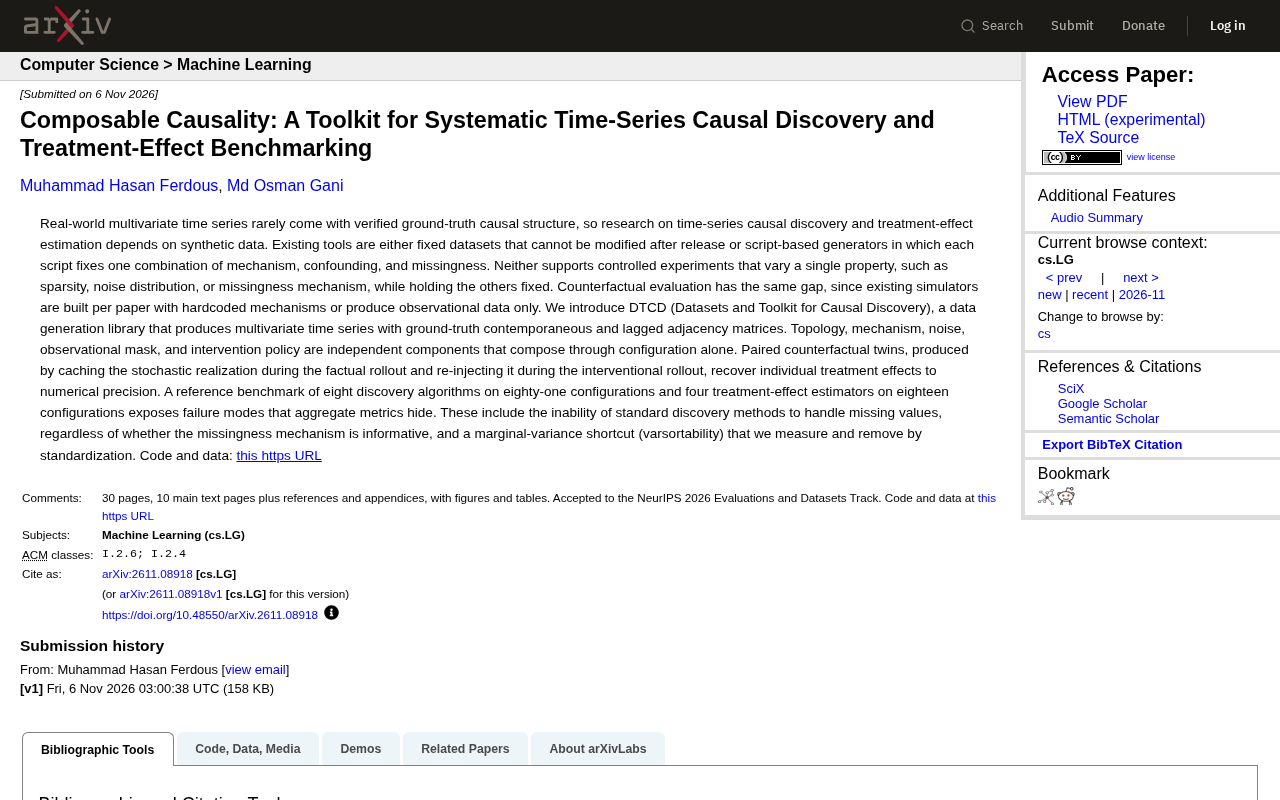
Composable Causality: A Benchmark Toolkit for Time-Series Causal Discovery and Intervention Effects
DTCD is a composable benchmarking toolkit for time-series causal discovery and intervention effects, combining topology, mechanisms, noise, missingness, and intervention policies via configuration to enable controlled experiments and paired counterfactual evaluation.