#AFK agent
49 related articles

·4 min
Claude Code Workflow in Practice: From Requirement Grilling to AFK Agent Auto-Coding
A detailed walkthrough of building real features with Claude Code: Grill Me requirement interrogation, auto-generated PRDs, AFK agent coding, and QA iteration loops with DDD and TDD strategies.
Read more →

·2 min
Moving State Out of Framework Memory: A Multi-Agent Architecture Refactoring Guide
Exploring how 70% of multi-agent memory is consumed by non-reasoning state, and a refactoring approach using email threads to replace framework memory for better token efficiency, auditability, and resilience.
Read more →

·3 min
The "200 OK" Trap: AI Agents' Most Dangerous Silent Failure Mode
Deep analysis of the dangerous disconnect between HTTP 200 OK and actual business outcomes in AI Agent workflows, with solutions for building reliable production-grade Agent systems.
Read more →

·3 min
The "200 OK" Trap: AI Agents' Most Dangerous Silent Failure Mode
Deep analysis of the dangerous disconnect between HTTP 200 OK and actual business results in AI Agent workflows, with solutions for building reliable production-grade Agent systems.
Read more →

·4 min
Infrastructure Architecture for Agent Applications: Four Core Patterns Explained
A deep dive into infrastructure architecture patterns for production-grade Agent applications, covering state persistence, sandbox isolation, LLM observability, and cost control.
Read more →

·4 min
Infrastructure Architecture for Agent Applications: Four Core Patterns Explained
Deep dive into infrastructure architecture patterns for production-grade Agent applications, covering state persistence, sandbox isolation, LLM observability, and cost control.
Read more →

·4 min
Burning Through 80 Billion Tokens: Why Vibe Coding Is Doomed to Fail
A creator spent 40 days and 80 billion tokens testing the real limits of Vibe Coding. This article dissects why AI programming crashes in production: complexity, context limits, and compression loss.
Read more →
·2 min
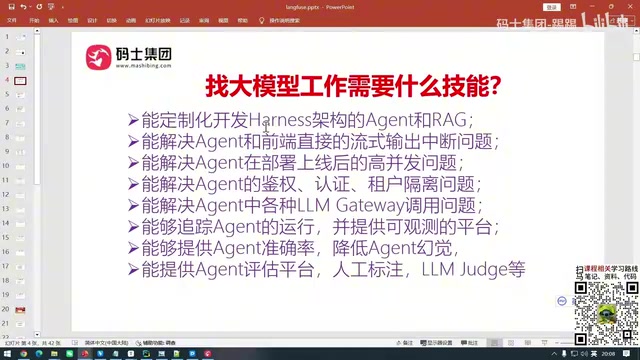
The New Bar for AI/LLM Roles: A Practical Guide to Agent Observability and Evaluation
Enterprise AI/LLM roles now demand engineering skills: streaming recovery, high concurrency, multi-tenancy, LLM gateways, Langfuse observability, and evaluation platforms. Master these 8 core competencies.
Read more →

·3 min
AI Agent Production Guide: Four Orchestration Patterns That Actually Work
Most AI agents never make it past the demo stage. This guide covers four production-grade agent patterns—workflow orchestration, policy-constrained execution, anomaly handling, and load routing—to help teams build reliable agent systems.
Read more →

·2 min
From Workflow Graphs to Distributed Protocols: Dissecting Multi-Agent System Architecture Paradigms
How does Cosmonapse replace LangGraph's graph structure with event-driven distributed protocols? A deep dive into two multi-agent architecture paradigms, their trade-offs, and when to use each.
Read more →

·3 min
Cosmonapse: A Decentralized Multi-Agent Framework Built on an Event Bus
Cosmonapse is an open-source multi-agent framework that replaces central orchestrators with peer nodes, using typed signals and an event bus to fully decouple tool calls, memory, and HITL. Supports Python and TypeScript under Apache 2.0.
Read more →

·2 min
AI Agent Out of Control? A Practical Guide to Building Traceable Multi-Agent Systems
Agent loops burning money, bills spiking unexpectedly? This article breaks down a traceable multi-agent system covering loop detection, behavior classification, cost prediction, and self-healing.
Read more →

·4 min
Agent Loop in Practice: A Guide to Building Self-Improving Automation with Guardrails
A deep dive into building verifiable, self-evolving Agent automation loops with Claude Code and Codex — covering Loop Contracts, four trigger types, three-phase execution architecture, and Evolve Loops.
Read more →
There's No Best Agent Framework — Only…
·2 min
There's No Best Agent Framework — Only the Right One for Your Needs: A Deep Comparison of Leading Options
LangGraph, PydanticAI, OpenAI Agents SDK, CrewAI — a senior developer's practical guide to choosing the right AI Agent framework for your project.
Read more →
Is Chasing the Latest AI Models Worth …
·2 min
Is Chasing the Latest AI Models Worth It? A Big Tech Engineer's Honest Question — and a Rational Answer
A 10-year big tech data engineer asks: why chase the latest AI models? This deep dive analyzes the three core motivations behind AI tool upgrades and helps you find the right model selection strategy.
Read more →

·3 min
The Deterministic Factual Substrate for Multi-Agent AI: A Deep Dive into Knowledge Kernel's Reproducible Grounding Design
A deep dive into how Knowledge Kernel builds a deterministic factual substrate for multi-agent AI through layered decoupling of reality, evidence, facts, and reasoning — with dataset_hash fingerprinting, atomic reloads, and observable telemetry.
Read more →

·2 min
Pylva: An Open-Source Usage Billing Platform Built for AI Agents
Pylva is an open-source, self-hosted AI Agent billing engine with full usage tracking, flexible per-customer billing rules, and automated invoicing. A deep dive into its features and the economics of the Agent era.
Read more →

·3 min
Multi-Agent Collaboration with Claude Code and Codex: A Guide to Architecture Design and State Management
A deep dive into Claude Code and Codex multi-Agent collaboration: architecture design, state-driven coordination, private/public zone division, and building efficient AI programming teams.
Read more →

·4 min
Why Do AI Agents Crash the Moment They Go Live? A Practical Guide to Harness Engineering for Runtime
A deep dive into the Claude Code source code, systematically analyzing the five-layer Harness Engineering architecture: environment, tool, control, memory, and evaluation. Build a stable runtime system for production AI Agents.
Read more →

·5 min
28 Enterprise-Grade AI Agent Projects: A Complete Guide That Even Beginners Can Deploy
A collection of 28 fully reproducible enterprise-grade AI Agent projects covering code debugging, financial analysis, customer service, and multi-agent collaboration—deployable even for beginners.
Read more →