#AI deployment
4380 related articles

·3 min
AI Agents from Writing Code to Deployment: Real-World Challenges and Solutions for Workflow Implementation
AI coding assistants excel at code generation, but a huge gap remains between writing code and deployment. This article analyzes the core challenges AI Agents face in deployment and explores practical solutions like GitOps and sandboxed execution.
Read more →

·2 min
Getting Started with Local AI Model Deployment: A Complete Guide from Downloading on Hugging Face to Running with llama.cpp
A beginner-friendly guide to local AI model deployment, covering secure model downloads from Hugging Face, running inference, exporting to GGUF format, and high-performance local execution with llama.cpp.
Read more →

·3 min
Laguna S 2.1 Release: How Multiple Deployment Options Are Reshaping AI Product Competition
Laguna S 2.1 launches with flexible deployment strategies supporting cloud API, on-premise, and managed services. Analysis of its deployment-first philosophy covering data sovereignty, cost control, and vendor lock-in.
Read more →

·2 min
AgentSky: One-Click Cloud AI Agent Deployment Supporting Any Framework and Model
AgentSky tops Product Hunt daily rankings, offering managed AI agent service supporting Claude Code, Codex, and multiple frameworks/models with full history, auto-recovery, and omnichannel access.
Read more →

·2 min
MiniMax H3 Local AI Video Generation: Deployment Methods, Hardware Requirements & Hands-On Analysis
In-depth analysis of MiniMax H3 local video generation capabilities, exploring hardware requirements, advantages, challenges, and the trend of AI video moving from cloud to local deployment.
Read more →

·3 min
Ollama + Qwen-Agent: Building a Local Private AI Assistant — From Deployment to Security Best Practices
A complete guide to building a local private AI assistant with Ollama and Qwen-Agent. Covers RAG knowledge integration, voice interaction, and permission isolation for a secure local AI Agent architecture.
Read more →

·2 min
NexaLibre Review: A One-Click Deployment and Hosting Platform for AI-Generated Code
NexaLibre is a one-click deployment platform for AI-generated code, featuring built-in HTTPS, auto backups, and custom domains. This review covers its features, positioning, and market potential.
Read more →

·3 min
Gemini Robotics 2 Explained: Full-Body Control, Multi-Robot Coordination, and On-Device Deployment
Google DeepMind releases Gemini Robotics 2, achieving humanoid full-body control, multi-step error recovery, multi-robot coordination, and on-device deployment with built-in safety mechanisms.
Read more →

·3 min
Gemini Robotics 2 Explained: Full-Body Control, Multi-Robot Coordination, and On-Device Deployment
Google DeepMind releases Gemini Robotics 2, a robot foundation model enabling humanoid full-body control, multi-step error recovery, multi-robot coordination, and on-device deployment.
Read more →
·2 min
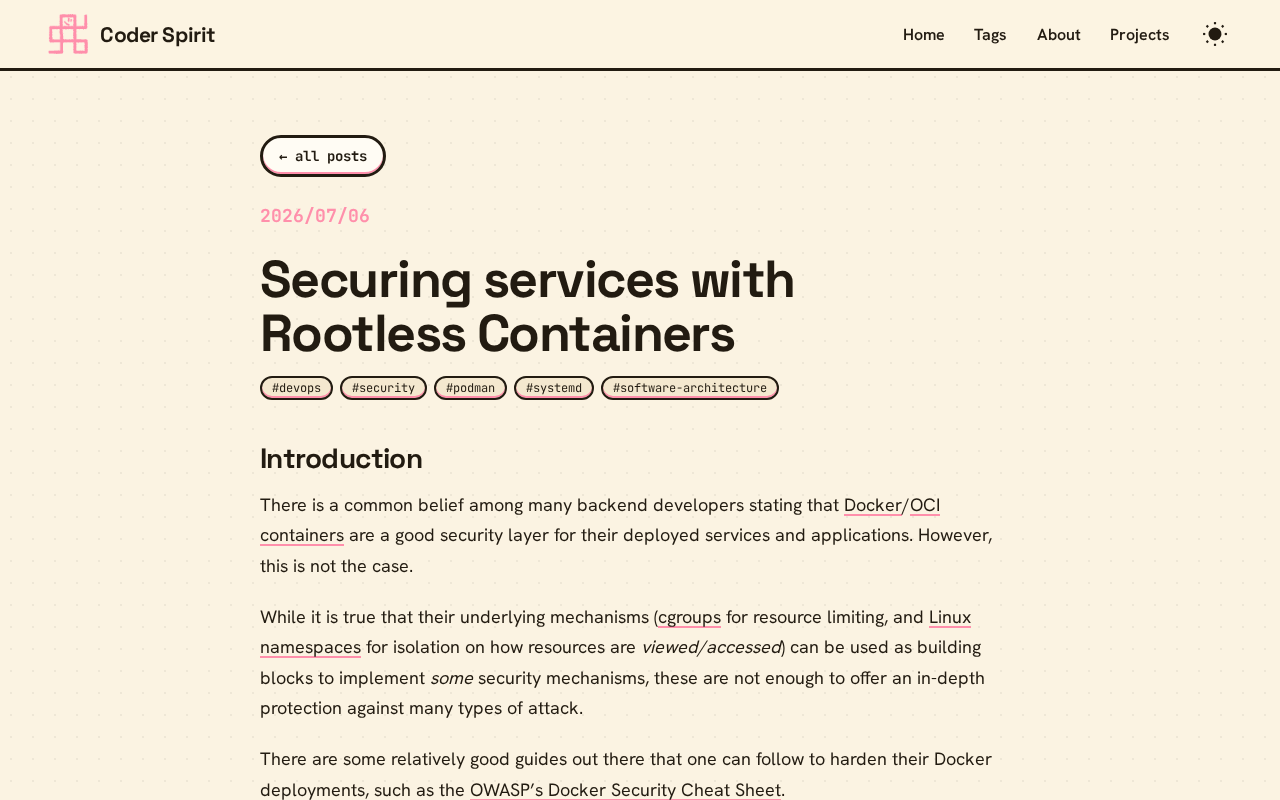
Rootless Containers: A Practical Guide to More Secure Service Deployment
A deep dive into Rootless Containers: technical principles, security advantages, and production practices. Learn how user namespaces and daemonless architecture reduce container escape risks.
Read more →
·2 min
Rootless Containers: A Practical Guide to More Secure Service Deployment
A deep dive into rootless containers: technical principles, security advantages, and production practices. Learn how user namespaces and daemonless architecture reduce container escape risks.
Read more →

·3 min
Kimi K3 Local Deployment Guide: Storage Requirements for q4 and q8 Quantization Explained
Detailed analysis of Kimi K3 quantization deployment options, comparing q4 vs q8 storage requirements, precision trade-offs, and hardware configurations for local self-hosting.
Read more →

·3 min
Getting Started with AI Agent Development: A Learning Path from Zero to Deployment
A systematic guide to the complete learning path for AI Agent development—covering prompt engineering, RAG knowledge bases, LangChain & LangGraph, fine-tuning, and multi-agent collaboration.
Read more →

·2 min
Getting Started with AI Agent Development: A Complete Guide from Zero to Deployment
A beginner-friendly guide to AI Agent development, covering the full learning path from LLM fundamentals, prompt engineering, and RAG to LangChain and multi-agent collaboration.
Read more →
·3 min
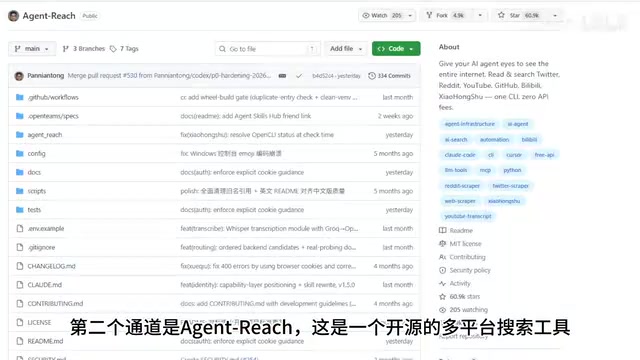
Open-Source Automated News Briefing Generator: A Zero-Technical-Barrier AI Deployment Analysis
An open-source automated news briefing system. No coding needed—just let an AI read the project docs to complete the entire deployment. Six-stage pipeline, four-channel search covering 16+ platforms, smart classification and dedup, daily auto-push to Feishu, completely free.
Read more →

·3 min
Open-Source Newsletter Auto-Generation System: A No-Code AI Deployment Breakdown
An open-source newsletter auto-generation system requiring no coding—just have AI read the project docs to complete deployment. Six-stage pipeline, four-channel search covering 16+ platforms, smart classification & deduplication. Completely free.
Read more →

·3 min
AI-Powered Bank-Enterprise Reconciliation in Practice: A Local Deployment Solution Where Data Never Leaves the Premises
Why is automated bank-enterprise reconciliation so hard to implement? This article explains how enterprises use AI Agents to handle fuzzy matching beyond hard rules, combining OCR with local all-in-one deployment for secure reconciliation where data never leaves the premises.
Read more →
·6 min
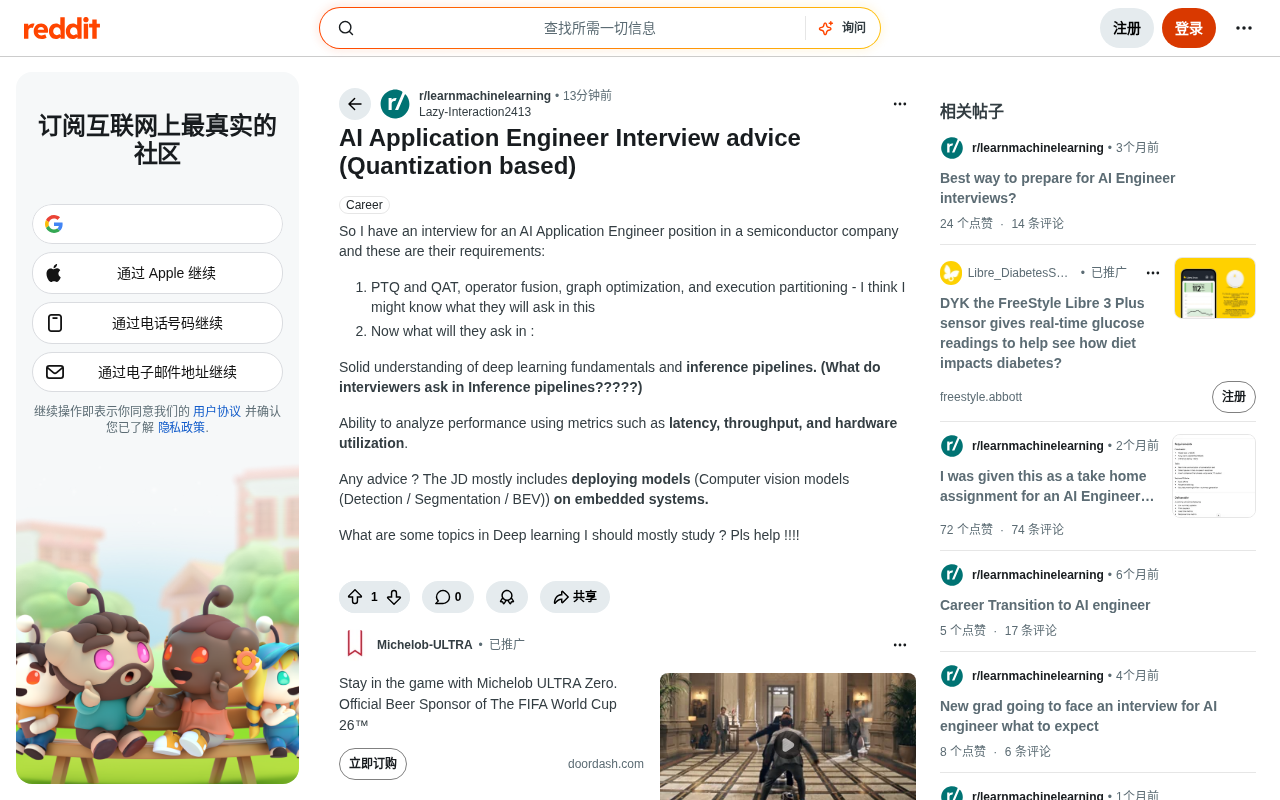
AI Application Engineer Interview Guide: Core Topics in Model Quantization and Inference Deployment
A systematic review of must-know topics for AI Application Engineer interviews: PTQ/QAT quantization, operator fusion, inference pipelines, latency/throughput analysis, and edge deployment of detection/segmentation/BEV models.
Read more →
·6 min
AI Application Engineer Interview Guide: Core Topics on Model Quantization and Inference Deployment
A systematic guide to must-know AI application engineer interview topics: PTQ/QAT quantization, operator fusion, inference pipelines, latency/throughput analysis, and edge deployment of detection/segmentation/BEV models.
Read more →

·6 min
Hands-On with Panel AI On-Premises Deployment: One-Click Enterprise Adoption and Unified Compute Cluster Scheduling
In-depth review of Panel AI v1.1.1: second-level installation, no-public-IP networking, batch compute cluster management. Learn how enterprise AI on-premises deployment barriers are dramatically lowered.
Read more →