#AI shader generation
93 related articles

·2 min
A Game With No Assets: Generating All Graphics and Sound Effects in Real-Time Using Sine Waves
Indie developer Zanzlanz built a game with zero asset files—all textures and sounds are generated in real-time using sine wave math functions. Exploring the tech behind procedural generation.
Read more →

·3 min
P.D.E Experiment Nº5: Deep Dive into the TouchDesigner Open-Source Multi-Source Video Playback System
Deep analysis of P.D.E Experiment Nº5 open-source multi-source video playback system, covering frame-accurate switching, multi-source scheduling, and TouchDesigner + generative AI workflows.
Read more →

·3 min
Korvix3D Deep Dive: Can a Subscription-Based 3D Model Platform Disrupt Traditional Asset Marketplaces?
Deep dive into Korvix3D's subscription-based 3D model marketplace, covering native plugin workflow integration, subscription model pros and cons, and comparison with TurboSquid and other competitors.
Read more →

·2 min
Ctruh Studio: A Deep Dive into the AI-Powered No-Code 3D & XR Creation Platform
Deep dive into Ctruh Studio, an AI-powered no-code 3D creation platform covering AI-generated 3D assets, immersive product showcases, virtual stores, and more for web-based 3D & XR experiences.
Read more →

·2 min
Running Local LLMs on a 24GB Mac Mini: Model Selection & Speed Optimization Guide
24GB Mac Mini too slow for local LLMs? Learn why 14B models struggle, get 3B-8B model recommendations for Home Assistant, and discover Ollama speed optimization tips.
Read more →

·2 min
Opus 5 Generates a Kart Racing Simulator from a Single Prompt: 3D Spatial Understanding Put to the Test
A developer tests Anthropic's Opus 5 model, generating a playable kart racing simulator from a single prompt. Deep analysis of its 3D spatial understanding and industry implications.
Read more →

·4 min
9 Hours, 4 Million Tokens: AI Creates a Stunning WebGPU Snow Rendering Masterpiece with Claude Code
Reddit user Noniv used Claude Code with the Opus model to build SNOWFLOW, a stunning WebGPU real-time snow renderer, in just 9 hours using 4 million tokens. A deep dive into prompt strategy, snow shaders, and performance optimization.
Read more →

·2 min
Running Manim in the Browser: Rebuilding 3Blue1Brown's Animation Engine with WebGPU
Explore how WebGPU brings 3Blue1Brown's Manim math animation engine to the browser, enabling zero-install, real-time mathematical visualization with interactive education potential.
Read more →
·3 min
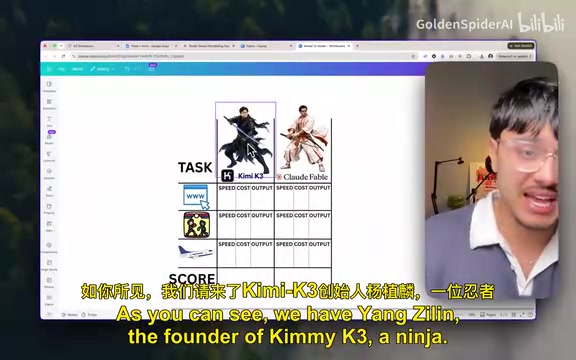
Kimi K3 vs Claude Real-World Test: Near-Equal Performance at 1/8 the Price
Real-world comparison of Kimi K3 vs Claude flagship across e-commerce pages, 3D fighting games, and flight simulators. Kimi K3 delivers 90% output quality at 1/8 the price with faster speeds and local deployment support.
Read more →

·3 min
Kimi K3 Real-World Testing in 3D Modeling & Game Development: Can Open-Source Models Overtake Closed-Source Giants?
In-depth testing of Kimi K3 in 3D modeling, physics simulation, animation rigging, and game development vs Fable 5 and GPT Solve 5.6. Open-source model delivers top-tier results at one-quarter the price.
Read more →

·3 min
Kimi K3 Hands-On: 3D Modeling & Game Development — Can an Open-Source Model Outperform Closed-Source Giants?
Hands-on testing of Kimi K3 in 3D modeling, physics simulation, animation rigging, and game development versus Fable 5 and GPT Solve 5.6. The open-source model delivers top-tier results at a quarter of the price.
Read more →

·2 min
RX 9060 XT vs RTX 5060 Ti: Which GPU to Pick for Local AI?
RX 9060 XT vs RTX 5060 Ti — both 16GB VRAM, but which is better for local AI? We compare CUDA ecosystem, ROCm compatibility, LLM inference, and real-world usability.
Read more →

·2 min
RX 9060 XT vs RTX 5060 Ti: How to Choose a GPU for Local AI
RX 9060 XT vs RTX 5060 Ti both offer 16GB VRAM — which is better for local AI inference? A full comparison of CUDA ecosystem, ROCm compatibility, LLM performance, and real-world usability.
Read more →

·3 min
Dear ImGui Deep Dive: Why This Immediate Mode GUI Library Has Won Over C++ Developers
Deep dive into Dear ImGui's immediate mode GUI design, technical features, and use cases. Covers immediate vs retained mode, backend support, game engine integration, and ecosystem extensions.
Read more →

·3 min
Sebastian Lague's Custom Graphics Library: A Complete Breakdown of Building a Renderer from Scratch
Deep dive into Sebastian Lague's experiment building a graphics library from scratch, covering rasterization, depth buffering, texture mapping, and the educational value of software renderers.
Read more →

·7 min
Qwen3 235B A22B in Practice: A 2.4-Trillion-Parameter Open Model Surpasses Claude Opus
Hands-on with Alibaba Tongyi Qianwen's strongest Qwen3: a 2.4-trillion-parameter open weight model scoring 81.25% on KingBench, ranking second and beating Claude Opus 4.8 with perfect scores in game dev, math, and agent tasks.
Read more →

·3 min
Qwen Next-Gen, DeepSeek V4, New GLM Spotted Simultaneously: China's LLM Race Accelerates
Qwen next-gen (KLab), DeepSeek V4 GA, and Zhipu GLM's new version are all in testing simultaneously. A deep dive into the latest developments and tech trends.
Read more →
Goku: A Browser-Based LLM Inference En…
·2 min
Goku: A Browser-Based LLM Inference Engine and Model Manager Built on WebAssembly
Goku is a browser-based LLM inference engine built on WebAssembly and wllama, enabling local AI inference, model management, and offline use — no cloud API needed.
Read more →
Running Gemma LLM in Godot with GDScri…
·2 min
Running Gemma LLM in Godot with GDScript and Vulkan: An Experimental Deep Dive
A developer runs the Gemma LLM inside Godot 4 using only GDScript and Vulkan compute shaders — no llama.cpp or external dependencies. A technical breakdown of how it works.
Read more →

·4 min
Hands-On with GPT-5.6: A Single Prompt Builds a Real-Time Voice Anime App
Hands-on with GPT-5.6 Sol: auto-generate real-time voice anime characters from one prompt, write physics engines from scratch, and build unfamiliar toolchains autonomously. In-depth review of coding, agentic tasks, benchmarks, and its hallucination weakness.
Read more →