#API pay-per-use
138 related articles

·3 min
Kopai: Turn Your Expertise into AI Agents and Earn Passive Income from Knowledge
Kopai is a no-code AI agent platform where experts upload knowledge to publish sellable AI agents, with per-message billing and 70% revenue share for creators.
Read more →

·2 min
Tau Open-Source AI Coding Assistant: Integrating 22 Providers for Low-Cost Programming
Tau is an open-source AI coding agent integrating 22 AI providers with free models and low-cost plans, compatible with Claude Code's Skills, Plugins, and MCP Server ecosystem.
Read more →

·3 min
Nommer.ai: Turning Recipes into 2-Player Cooperative Cooking Mode
Nommer.ai is an iOS recipe app that intelligently splits any recipe into 2-player cooperative mode, enabling two cooks to work in parallel and complete dishes together with seamless coordination.
Read more →
·2 min
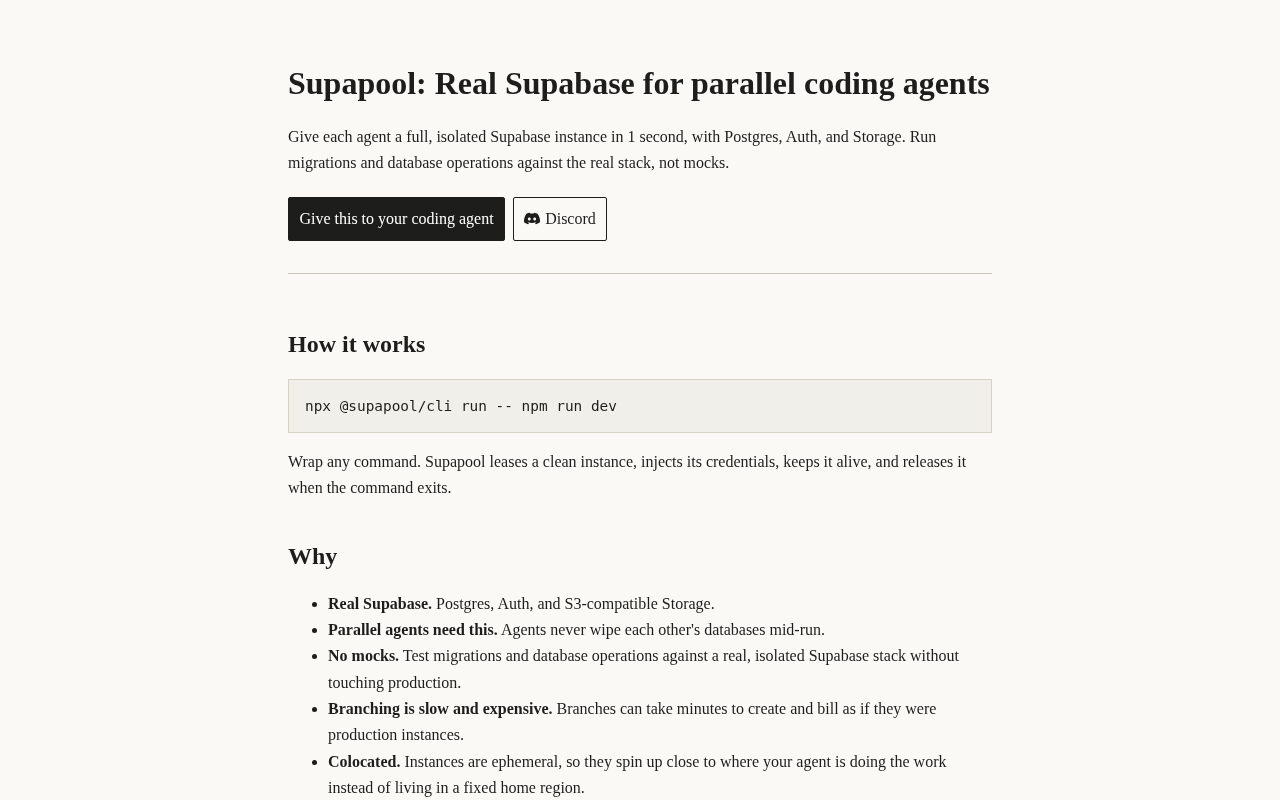
Supapool: Creating Isolated Databases for AI Coding Agents in 400 Milliseconds
Supapool uses pool prewarming to create isolated Supabase database instances in 400ms for AI coding agents like Claude, Cursor, and Devin, solving the database isolation challenge.
Read more →

·4 min
MCP-Billing: A One-Stop Solution for MCP Server Authentication, Billing, and Monetization
MCP-Billing is a self-hosted Next.js boilerplate providing OAuth 2.1 auth, Stripe usage billing, API key management, and Redis rate limiting for MCP servers—one-time €79 payment with no revenue share.
Read more →

·2 min
Maptoolkit.org: Free Vector Map Server with Zero-Cost Access, No API Key Required
Maptoolkit.org is a free vector tile server based on OpenStreetMap and MapLibre, featuring 3D terrain, hillshading, and outdoor styles—no signup, no API key, no request limits.
Read more →

·2 min
Behind the Open-Source Model Frenzy: Who Will Provide Cheap Inference Services?
Open-source LLM weights don't equal low-cost access for developers. This article analyzes the inference service gap in open-source AI and how providers like Together AI and Groq are addressing it.
Read more →

·2 min
Behind the Open-Source Model Frenzy: Who Will Provide Cheap Inference Services?
Open-source LLM weights don't mean developers can use them cheaply. This article examines the inference service gap in open-source AI and how providers like Together AI and Groq are addressing it.
Read more →

·3 min
Self-Hosting Kimi K3: Is Spending 20% More on Hardware Worth a 20% Improvement in Task Performance?
Analysis of whether spending 20% more on hardware for self-hosting Kimi K3 to gain 20% task performance improvement is worthwhile, covering inference precision, VRAM optimization, and tiered deployment.
Read more →

·2 min
Is a $200/Month AI Subscription Worth It? A Guide to Cost Anxiety and Rational Spending
More users are questioning whether $200/month AI subscriptions are worth it. This article analyzes the rise of open-source alternatives and provides a framework for evaluating AI subscription value.
Read more →

·3 min
Gemini Managed Agents API Update: Environment Hooks and Free Tier Fully Explained
Google Gemini Managed Agents API introduces environment hooks, model selection, free tier support, and default model upgrades—empowering AI Agent developers with stronger execution control and lower barriers to entry.
Read more →

·3 min
Is Perplexity Still Worth Renewing? Analyzing the Optimal Multi-Model Subscription Strategy
Deep analysis of whether Perplexity Pro remains the best multi-model subscription choice, comparing Poe, You.com, API solutions and more, with a decision framework to find your optimal AI subscription.
Read more →

·3 min
How to Elegantly Access Top AI Models Like GPT and Claude from China
Chinese users face registration, payment, and network barriers when accessing GPT, Claude, and other top AI models. This guide covers AI aggregation platforms as a one-stop solution.
Read more →

·3 min
Gemini 3.1 Pro Rate Limiting Exposed: Why Paying Users Can't Actually Use Their Full Quota
Deep analysis of Google Gemini 3.1 Pro's rolling window rate limiting, revealing the massive gap between paper quotas and actual usability for paying subscribers.
Read more →

·3 min
Gemini 3.1 Pro Rate Limiting Exposed: Why Paid Users Can Never Use Their Full Quota
Deep analysis of Google Gemini 3.1 Pro's rolling window rate limiting, revealing the gap between paper quotas and real usability for paid AI subscribers.
Read more →
·3 min
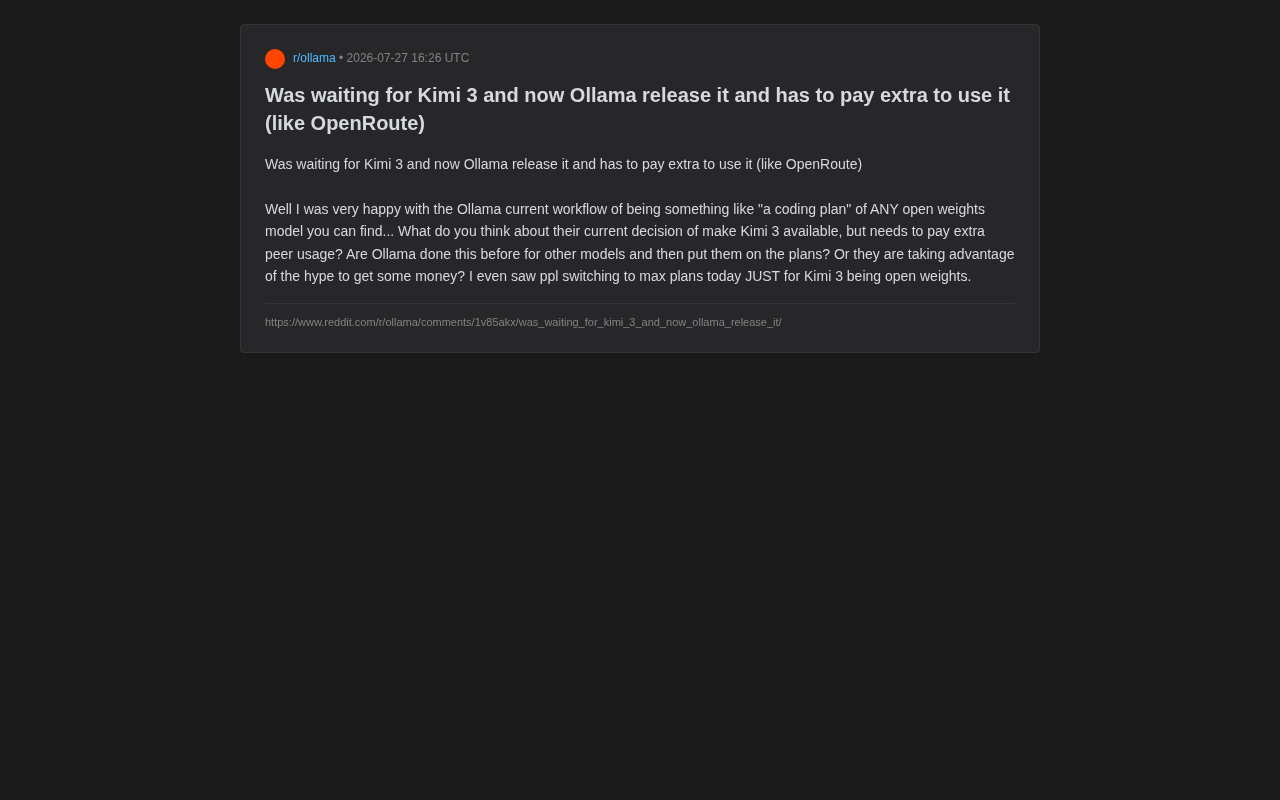
Ollama's Extra Charges for Kimi 3 Spark Community Controversy: Should Open-Source Models Be Free to Use?
Ollama lists Kimi 3 with extra pay-per-use fees, breaking subscription expectations and sparking debate over open-weight models and AI service pricing tiers.
Read more →

·5 min
Will Chinese Open-Source Models Burst the US AI Bubble? A Deep Dive into the Transmission Chain
Chinese open-source models like Kimi K3 and DeepSeek approach US closed-source performance at a fraction of the cost. This deep dive analyzes the transmission chain from price competition to valuation reassessment.
Read more →

·3 min
Is Ollama Pro Worth It? A Deep Comparison of the $20 Subscription vs. API Costs
Deep analysis of Ollama Pro's $20/month subscription value, comparing usage quotas, equivalent API costs, and ZDR privacy policy to help developers decide if it's worth it.
Read more →

·3 min
How to Assemble a Modern Email System with Off-the-Shelf Components: A Modular Architecture Guide
Learn how to assemble a modern email system using off-the-shelf services like Postmark, SendGrid, and Amazon SES, covering sending, receiving, authentication, and trade-offs around vendor lock-in and cost.
Read more →

·3 min
Anthropic Claude Pay-As-You-Go Model Explained: The Credit-Based Billing Revolution and Its Impact on Users
Anthropic is migrating Claude from subscriptions to pay-as-you-go credits. This deep dive explains the mechanics, rationale, industry impact, and user strategies for this billing revolution.
Read more →