#API pay-per-use
145 related articles

·4 min
AI Coding Tool Data Leakage Risks: A Security Guide for Protecting Quantitative Strategies
AI coding tools carry cloud data transmission risks, exposing quantitative trading strategies to leakage. This article analyzes AI tool data security and offers protection strategies.
Read more →

·2 min
Frugon: Local LLM Call Analysis That Pinpoints Cost-Reduction Opportunities
Frugon is an MIT-licensed, local LLM cost analysis tool that helps developers identify which API calls can be switched to cheaper models for data-driven cost reduction — no log uploads, full privacy.
Read more →

·4 min
Tencent Open-Sources Agent Memory: A Fully Local AI Long-Term Memory Solution with Zero External Dependencies
Tencent Cloud open-sources TencentDB Agent Memory — a fully local AI Agent memory system with a 4-tier progressive pipeline, zero external API dependencies, and 8,100+ GitHub Stars. Ideal for finance, healthcare, and privacy-sensitive use cases.
Read more →

·3 min
GLM-5.2 Coming Soon? Domestic GPU Code LLM MUSA Coder Goes Open Source
GLM-5.2 enters internal testing; Moore Threads open-sources MUSA Coder, China's first code LLM trained on domestic GPUs; Google backs Anthropic with $35B in guarantees.
Read more →

·7 min
GLM-5.2 Released: Open-Source Coding Capability Approaches Closed-Source Flagships for the First Time
GLM-5.2 tops open-weight models in coding with a 74.4 Frontiers-WE score, beating GPT-5.5. Its MIT license enables local deployment, and the gap with closed-source flagships is closing fast.
Read more →

·4 min
How to Subscribe to Claude in China Without Getting Banned: Registration, Payment, and API Guide
How can users in China safely subscribe to Claude and avoid getting banned? This guide covers email selection, phone verification, payment channels, refund requests, and using the official API as a long-term alternative to personal subscriptions.
Read more →

·6 min
10 Billion Tokens in Practice: An In-Depth Review of Codex's Long-Horizon Engineering Capabilities
Creator Ajiang burned 10B Tokens on Codex to migrate cc-haha from Tauri 2 to Electron. A deep dive into Codex's long-horizon engineering, Computer Use, costs, and practical advice for developers.
Read more →

·8 min
Free Top-Tier AI Models on Aggregator Platforms? A Sober Analysis and Pitfall Avoidance Guide
In-depth analysis of AI aggregator platforms claiming free access to GPT, DeepSeek, and Gemini. Reveals hidden data risks, business logic, and recommends legitimate alternatives like OpenRouter and Poe.
Read more →

·4 min
Is ChatGPT Pro Account Sharing Worth It? 3 Major Risks and 4 Safer Alternatives
An in-depth analysis of ChatGPT Pro account sharing risks — bans, privacy leaks, and service disruptions — plus four safer, budget-friendly alternatives to help you decide.
Read more →

·4 min
Is ChatGPT Pro Account Sharing Worth It? 3 Major Risks and 4 Safer Alternatives
An in-depth analysis of the ban, privacy, and service risks of ChatGPT Pro account sharing, plus four safer money-saving alternatives including Plus, API pay-as-you-go, and competing AI tools.
Read more →

·3 min
6-Week AI Agent Development Learning Roadmap: A Complete Guide from Zero to Project Deployment
A systematic 6-week AI Agent development roadmap covering core architecture, ReAct paradigm, multi-agent collaboration, RAG integration, and deployment for beginners to build production-ready agents.
Read more →

·3 min
Complete Guide to OpenAI Codex: From Installation & Configuration to Automation in Practice
Complete guide to OpenAI Codex covering installation, permission setup, project management, skills reuse, plugin extensions, and automation tasks to turn Codex into a true project collaborator.
Read more →

·4 min
Claude Code Beginner's Guide: From Installation and Configuration to Hands-On Projects
Complete Claude Code beginner's guide covering Git, VS Code setup, third-party model integration, permissions, Tools, Hooks, Skills, SubAgents, and a hands-on project walkthrough.
Read more →

·2 min
Are AI Aggregation Platforms Reliable? The Truth and Risks Behind One-Stop Access to Multiple LLMs
In-depth analysis of AI aggregation platforms: the truth behind free access to GPT, Gemini, Claude and other LLMs, hidden costs, privacy risks, and safer alternatives.
Read more →

·3 min
Cursor Pay-Per-Use Billing Explained: How Account Pool Scheduling Reduces Usage Costs
Deep analysis of Cursor's low-cost usage solution: clean account pool scheduling, 35% pay-per-use billing, and intelligent quota flow mechanisms to help developers evaluate third-party alternatives.
Read more →
·3 min
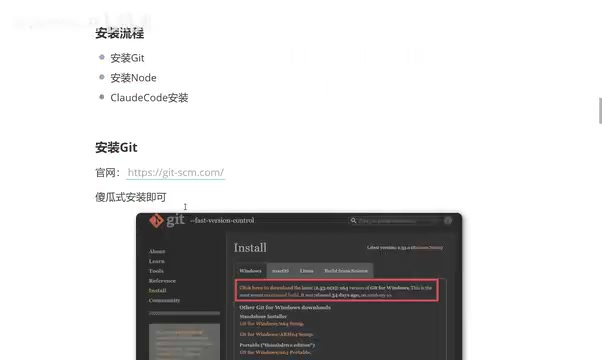
Claude Code Installation Guide: Setting Up an AI Programming Environment on Windows from Scratch
Step-by-step guide to installing Claude Code on Windows, covering Git and Node.js prerequisites, PowerShell installation commands, and common troubleshooting tips.
Read more →

·4 min
From Vibe Coding to Enterprise-Grade AI Programming: A Complete Progression Path with Practical Analysis
Deep analysis of Vibe Coding's limitations, comparison of Claude Code vs Codex, and a three-layer AI engineering methodology for progressing from casual AI coding to enterprise-grade development.
Read more →

·2 min
Free Full-Power GPT on AI Aggregation Platforms? The Risks and Truth Behind Shared Accounts
Deep analysis of AI aggregation platforms promoted on Bilibili, exposing privacy leaks and legal risks of shared account pools for free GPT and Claude access, plus safe alternatives like OpenRouter and DeepSeek.
Read more →

·4 min
Deep Dive into Cursor Refill Plugins: Pay-Per-Use Billing and Account Pool Scheduling Mechanisms
Deep analysis of Cursor refill plugin architecture: how clean account pool scheduling replaces cracking tools, the business logic of 35% pay-per-use pricing, and compliance risks developers should consider.
Read more →

·3 min
Hands-On Tutorial: Connecting Xiaomi MiMo V2.5 Pro to GitHub Copilot
Step-by-step tutorial on connecting Xiaomi MiMo V2.5 Pro to GitHub Copilot via custom endpoints, with token tuning tips and real coding test results.
Read more →