#API pricing comparison
583 related articles

·3 min
AI-Assisted Security Auditing: Finding 41 Vulnerabilities for $3,140 — A Practical Analysis
Analysis of an LLM-assisted security audit that found 41 vulnerabilities in GlobaLeaks for just $3,140, exploring AI security auditing's cost-effectiveness, methodology, and impact on open-source security.
Read more →

·3 min
GPT-5.6 Price Cut by 80%: The Deeper Game Behind the AI Model Price War
OpenAI announces GPT-5.6 Luna 80% cheaper, Terra 20% cheaper, targeting Gemini Flash. Analysis of the AI price war's business logic, Google's moat, Microsoft's hidden gains, and open-source impact.
Read more →

·2 min
GPT-5.6 Released: Redefining the Price-Performance Boundary of AI Models
OpenAI releases GPT-5.6, targeting the price-performance frontier. Analysis of how architectural optimization and inference efficiency reduce costs, and how LLM competition shifts from capability to cost efficiency.
Read more →

·6 min
Securely Exposing Self-Hosted Services via VPS: Architecture & Practical Guide
Learn how to securely expose self-hosted services via VPS using WireGuard tunnels, Pangolin, and reverse proxies — enabling client-free access to Plex, Immich, and more while hiding your home IP.
Read more →

·2 min
LangWatch Open-Source Tool: Making Every Token Cost in Claude Code Crystal Clear
LangWatch launches an open-source tool for Claude Code usage tracking — one command to trace token consumption, cache breakdowns, call chains, and terminal replay to optimize AI coding costs.
Read more →

·2 min
Moving State Out of Framework Memory: A Multi-Agent Architecture Refactoring Guide
Exploring how 70% of multi-agent memory is consumed by non-reasoning state, and a refactoring approach using email threads to replace framework memory for better token efficiency, auditability, and resilience.
Read more →

·3 min
Carolina Cloud Pays SOFR Interest on Idle Prepaid Credits: A New Approach to Cloud Computing Billing
Carolina Cloud pays SOFR interest on unused prepaid credit balances, breaking cloud industry norms. We analyze the business logic, community debate, and implications for cloud services.
Read more →

·2 min
Grok 4.5 Released: A Next-Gen AI Model Targeting Coding and Agentic Tasks
Grok 4.5 is officially released, purpose-built for coding, agentic tasks, and knowledge work. A deep dive into its core positioning, efficient reasoning, three key use cases, and value for developers.
Read more →

·2 min
Wisprkey: A Free Tool That Enables Voice Input in Any Mac App
Wisprkey is a free Mac voice input tool with a global shortcut for voice-to-text in any app, claiming 98% accuracy and 31-language support.
Read more →

·2 min
Google Releases Three New Gemini Models: Faster, Cheaper, and More Specialized
Google launches Gemini 3.6 Flash, 3.5 Flash-Lite, and 3.5 Flash Cyber—three new models targeting quality-cost balance, extreme affordability, and cybersecurity specialization for AI Agent use cases.
Read more →

·2 min
Why Top AI Startups Are No Longer Publishing Research: The Deep Reasons Behind the Shift from Openness to Secrecy
Exploring why top AI startups shifted from open research to secrecy, analyzing how commercial competition and talent pressure drive this change, and its impact on academia, innovation, and open source.
Read more →

·3 min
Object Storage vs Cloud Drives: Cost, Reliability, and Strategy for Long-Term Backups
In-depth comparison of object storage (BackBlaze B2, OVH) vs cloud drives (Google Drive) for long-term backup cost, reliability, and convenience, with guidance on implementing the 3-2-1 backup rule.
Read more →

·3 min
Lessons from Claude Code's 80% Prompt Reduction: Less Is More in Prompt Engineering
Anthropic cut Claude Code's system prompt by 80% and got better performance. Learn why verbose prompts hurt, how to streamline them, and key takeaways for AI developers.
Read more →

·3 min
Gemini 2.5 Flash Deprecation: A Practical Migration Guide for Image Understanding Models
Gemini 2.5 Flash will be deprecated in October 2026. Learn how to choose between gemini-3.1-flash-lite and gemini-3.5-flash-lite for image understanding tasks with migration evaluation methods and architecture tips.
Read more →

·3 min
Lessons from Claude Code's 80% Prompt Reduction: Less Is More in Prompt Engineering
Anthropic cut Claude Code's system prompt by 80% and got better results. Learn why verbose prompts hurt performance, how to streamline them, and key lessons for AI developers.
Read more →

·3 min
Turn Old Hard Drives into Useful Backup Storage: A Practical Guide to Low-Cost DIY Backup Solutions
Got old hard drives lying around? This guide analyzes the hidden costs of building arrays from salvaged drives and offers practical low-cost backup solutions including USB enclosures and software storage pools.
Read more →

·2 min
Gemini 3.6 Flash Hands-On: Upgrades in Both Quality and Token Efficiency
In-depth analysis of Google Gemini 3.6 Flash's core upgrades including output quality improvements and token consumption optimization, with developer migration advice.
Read more →

·2 min
Gemini 3.5 Flash-Lite: A Low-Cost, High-Throughput Powerhouse for Scaling AI
A deep dive into Google's Gemini 3.5 Flash-Lite model. Designed for high-frequency repetitive tasks like ticket sorting and data extraction, it tackles the core cost challenge of enterprise AI scaling through ultra-low pricing and high throughput.
Read more →
·3 min
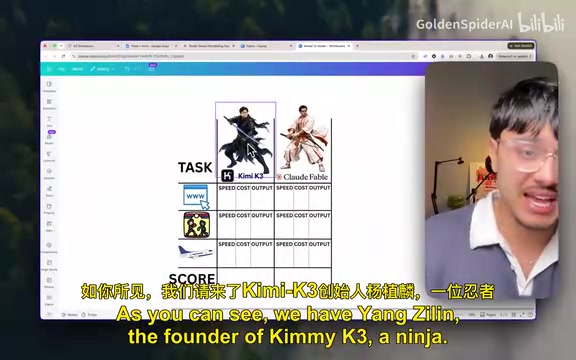
Kimi K3 vs Claude Real-World Test: Near-Equal Performance at 1/8 the Price
Real-world comparison of Kimi K3 vs Claude flagship across e-commerce pages, 3D fighting games, and flight simulators. Kimi K3 delivers 90% output quality at 1/8 the price with faster speeds and local deployment support.
Read more →
·3 min
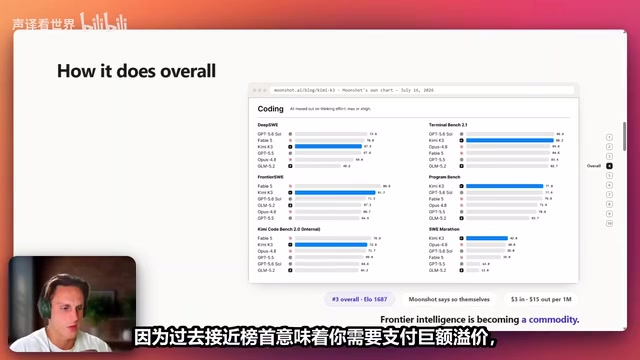
Kimi K3 Hands-On Tutorial: Claude Code Sub-Agent Configuration & GPT-5.6 Comparison Test
Complete guide to configuring Kimi K3 as a Claude Code sub-agent, including API setup, YFlow workflow building, and head-to-head comparison with GPT-5.6 and Claude Fable 5.
Read more →