#ASSERT EXPECT
140 related articles

·2 min
The Technical Reality of Sports Betting Prediction Models: How Developers Should Rationally Evaluate Collaboration Opportunities
Starting from an MLB betting model job post on Reddit, this article examines the technical feasibility of sports betting prediction models, the statistical bar for a genuine edge, and the risks developers must understand before joining such projects.
Read more →

·3 min
Adversarial RL: Why Are Critic Attacks Stronger in Multi-Agent Environments?
The classic Zhang et al. paper says Critic attacks are weaker than Actor attacks, but an experimenter observed the opposite in multi-agent PPO. This article dives into SA-MDP, continuous action spaces, and multi-agent non-stationarity in adversarial RL.
Read more →

·5 min
The Rise of AI Slop Code: How Teams Can Tackle the "Vibe Coding" Crisis
When an intern uses AI to generate professional-looking slop code, stand-ups balloon from 15 to 45 minutes. This article dissects why AI slop is hard to spot and offers practical team solutions.
Read more →
·5 min
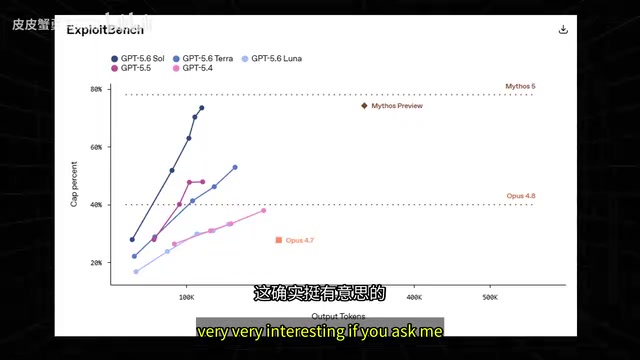
GPT-5.6 Released: Outperforms Rivals but Halted by Government—Cybersecurity Capabilities Trigger Regulatory Red Line
OpenAI releases GPT-5.6 (Sol/Terra/Luna), beating Anthropic on Terminal Bench at ~40% lower cost. But its cybersecurity capabilities hit danger thresholds, limiting access to trusted partners at government request.
Read more →

·2 min
Can AI Really Solve Hard Math Problems? A Rational Look at LLM Research Breakthroughs
Claims that GPT solved "unsolved math problems" keep going viral, but do they hold up? A deep dive into LLMs' real problem-solving ability, hallucinations, and verification standards.
Read more →
Devin Integrates GPT-5.6: A Dual Break…
·2 min
Devin Integrates GPT-5.6: A Dual Breakthrough in Coding Agent Performance and Cost Efficiency
Devin integrates GPT-5.6, achieving top-tier coding agent performance and exceptional token cost efficiency. Explore how this reshapes the AI coding ecosystem.
Read more →

·3 min
What a Gemini User Post Reveals About Building Long-Term Trust in AI Products
A Reddit user's positive post about Gemini reveals the core logic of building user trust in AI. This article analyzes Gemini's trajectory, emotional loyalty, and how AI products win long-term users.
Read more →

·7 min
Base44 in Practice: How Claude Code Powered Rapid Scaling from 1 to 80 People
How Base44's product team scaled from a single founding engineer to an 80-person team with Claude Code. Covers AI-assisted onboarding, code review, user evaluation, and QA automation.
Read more →

·2 min
Hands-On with OpenAI's New Voice Model: Real-Time Interruption, Simultaneous Translation, and Emotion Detection Tested
Hands-on test of OpenAI's new voice model: real-time interruption, simultaneous translation, emotion switching, code review, and comparison with Doubao.
Read more →

·6 min
Is AI Really Smart? The Future Directions and Capability Boundaries of Next-Generation Artificial Intelligence
Are large language models truly intelligent? This article analyzes core AI limitations — pattern matching, hallucinations, reasoning deficits — and explores next-gen directions like inference-time compute, neuro-symbolic AI, and embodied intelligence.
Read more →

·6 min
GPT-5.6 Released: Codex Officially Integrated into ChatGPT, Ushering in a New Era of AI Programming
OpenAI releases GPT-5.6 and integrates Codex directly into ChatGPT, letting developers invoke code generation and debugging within conversations. A deep dive into the product logic and ecosystem impact.
Read more →
·6 min
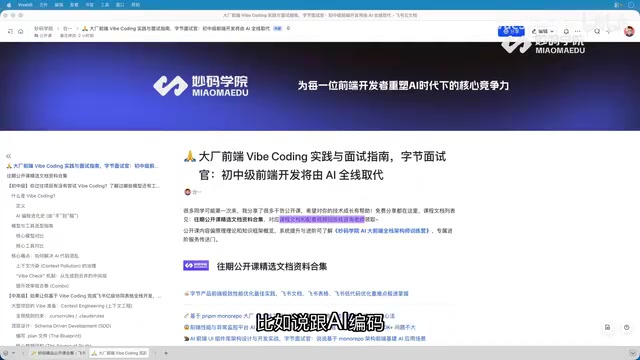
Vibe Coding in Practice at Big Tech: How Frontend Engineers Can Avoid Being Replaced in the AI Era
A big-tech interviewer reveals: junior/mid frontend dev is being replaced by AI. This article breaks down 3 core Vibe Coding interview questions to help you master key skills for the AI-assisted coding era.
Read more →

·7 min
21-Day Python Automation Testing Crash Course: A Complete Breakdown of the Three-Stage Learning Path
Learn automation testing from scratch! This article breaks down a three-stage path: Selenium/Appium tools, Requests+PyTest API testing, performance testing and CI/CD, with real projects—build a complete skill set in 21 days.
Read more →

·7 min
Previewing the AI Engineer Summit: Industry Signals of AI Engineering Reaching Maturity
An exclusive look at the AI Engineer Summit dress rehearsals, decoding the paradigm shift from research to production. A deep dive into AI Engineer challenges, RAG, agent systems, and AI engineering as a distinct discipline.
Read more →

·6 min
Playwright E2E Builder: Engineering AI-Driven Web Automation Testing
Playwright E2E Builder is an AI Skill installed in Cursor that transforms UI automation from throwaway scripts into sustainable engineering assets through a four-step workflow, with built-in locator health checks.
Read more →

·7 min
Spec-Driven Development: Andrew Ng Teaches You to Master AI Coding Agents Efficiently
Andrew Ng partners with JetBrains on a new course systematically teaching Spec-Driven Development. By writing high-quality specs, developers can precisely control AI coding agents, eliminate context decay, and boost intent fidelity.
Read more →

·6 min
A Practical Guide to Removing the AI Flavor from Fiction: Three Techniques to Make Your Writing More Human
Why does AI-written fiction always have an "AI flavor"? This article breaks down its two root causes and offers three practical techniques—reduce atmospheric padding, drive emotion through events, and control action steps—to write more natural, human fiction.
Read more →

·7 min
TypeScript + Zod: Dual Insurance for Type Safety in AI Agent Development
An in-depth look at the division of labor between TypeScript and Zod in AI Agent development: TypeScript handles compile-time static type checking, Zod handles runtime validation, forming a dual defense.
Read more →

·6 min
The Seven Core Components of Building Long-Running AI Agents
An in-depth look at the seven core components for building long-running AI agents: Goal, Evaluator, Verifier, Outer Loop, Orchestration, Observability, and Memory. Master this control system for reliable autonomous agents.
Read more →

·4 min
IBM Sub-1nm Chip Breakthrough: How GAA Architecture Is Reshaping the Future of Semiconductors
IBM claims a sub-1nm chip breakthrough using GAA and nanosheet architecture, potentially boosting AI chip compute density and efficiency. A deep dive into the technology, commercialization challenges, and impact on TSMC, Samsung, and Intel.
Read more →