#Agent logging
403 related articles

·3 min
GitHub Daily · August 1: The Rise of SuperAgents and Generative AI's Mass Education Moment
GitHub trending Aug 1: ByteDance's deer-flow SuperAgent, Microsoft's GenAI course, 3D generation, voice cloning, and privacy-first tools shape the AI landscape.
Read more →

·3 min
Ollama + Qwen-Agent: Building a Local Private AI Assistant — From Deployment to Security Best Practices
A complete guide to building a local private AI assistant with Ollama and Qwen-Agent. Covers RAG knowledge integration, voice interaction, and permission isolation for a secure local AI Agent architecture.
Read more →

·3 min
Orca-Bench: Evaluating Whether AI Agents Can Handle Production Oncall Duties
Orca-Bench is a benchmark for evaluating AI agents' operational capabilities, testing LLMs on fault diagnosis, multi-tool orchestration, and risk decisions in simulated Oncall scenarios.
Read more →

·3 min
TraceLLM: An Open-Source LLM Observability Platform Built on OpenTelemetry
TraceLLM is an open-source observability platform for production AI apps, built on OpenTelemetry, offering Prompt tracing, Token monitoring, latency analysis, and full distributed tracing.
Read more →

·1 min
Goodbye Grafana: A Practical Migration Guide to the Lightweight Homelab Monitoring Stack Beszel
A complete guide to migrating from Grafana+Prometheus to the lightweight Beszel monitoring stack, covering motivation, resource savings, trade-offs, and ideal use cases for Homelab users.
Read more →

·1 min
Goodbye Grafana: A Practical Migration Guide to Beszel, a Lightweight Homelab Monitoring Stack
A complete guide to migrating from Grafana+Prometheus to Beszel lightweight monitoring, covering motivations, resource savings, trade-offs, and ideal use cases for Homelab users.
Read more →

·3 min
How PhD Students Can Use AI for Programming Without Losing Their Coding Skills: A Layered Delegation Strategy
How can PhD students avoid coding skill atrophy when using AI programming assistants? This article proposes a layered delegation strategy with actionable advice for researchers.
Read more →

·3 min
DANE/TLSA Record Mismatch Causing Silent Email Loss: From Packet Capture Troubleshooting to Root Cause Resolution
A real-world case study of silent email loss caused by DANE/TLSA record mismatch. From empty logs to tcpdump packet capture revealing TLS handshake failures, with TLSA update procedures and automation strategies.
Read more →

·2 min
The Hidden Gap in AI Agent Finance: Why Verifiability Determines Success or Failure
AI agent finance focuses too much on capabilities while ignoring verifiability — the critical infrastructure. Cryptographic proof of execution records is the prerequisite for scaling agentic finance.
Read more →

·4 min
MCP-Billing: A One-Stop Solution for MCP Server Authentication, Billing, and Monetization
MCP-Billing is a self-hosted Next.js boilerplate providing OAuth 2.1 auth, Stripe usage billing, API key management, and Redis rate limiting for MCP servers—one-time €79 payment with no revenue share.
Read more →

·2 min
Rivault: A Zero-Knowledge Security Solution That Locks AI Agent Data Access Behind Face ID
Rivault provides per-request authorization for AI agent data access through zero-knowledge vault storage and Face ID biometric verification. An in-depth look at its architecture and privacy value.
Read more →

·3 min
OpenComputer: Deploy Managed AI Agents with a Single Sentence — A Minimalist Launch Solution for Developers
OpenComputer is an AI agent managed deployment platform that gives you a live agent URL from a single description. This article analyzes its workflow design, market positioning, and security/cost considerations.
Read more →

·4 min
AI Agent Memory Systems: Genuine Technical Progress or RAG in Disguise?
In-depth analysis of AI agent memory systems: examining whether current improvements represent real progress or just RAG repackaged, and what architectural changes are truly needed.
Read more →

·3 min
Complete Guide to Running Claude Code with Ollama: API Error Troubleshooting & Local Model Optimization
Guide to running Claude Code via Ollama locally: troubleshooting API errors, output token limits, model freezes, with model selection, parameter tuning, and alternative tool recommendations.
Read more →

·3 min
Deep Analysis of OpenAI's Rogue AI Agent Intrusion Incident
Deep analysis of OpenAI's rogue AI agent intrusion into Hugging Face and other platforms, exploring causes of AI Agent loss of control, attack surface expansion, and security lessons on least privilege, credential management, and human-in-the-loop oversight.
Read more →

·3 min
LLMOps Tool Selection Guide: An In-Depth Comparison of Tracing, Evaluation, and Governance Capabilities
In-depth analysis of LLMOps tool selection, comparing Langfuse, LangSmith, Helicone, and Orq.ai across tracing, evaluation, and governance capabilities with practical recommendations.
Read more →

·3 min
Ollama API Key Proxy: Multi-Key Rotation to Solve Rate Limiting Issues
Learn how Ollama API Key Proxy solves cloud LLM rate limiting through reverse proxy with round-robin key rotation, 429 auto-cooldown, and smart retry logic.
Read more →

·3 min
Gemini Managed Agents API Update: Environment Hooks and Free Tier Fully Explained
Google Gemini Managed Agents API introduces environment hooks, model selection, free tier support, and default model upgrades—empowering AI Agent developers with stronger execution control and lower barriers to entry.
Read more →

·2 min
Google's Beyond Zero: An Enterprise Security Framework That Goes Beyond Zero Trust for the AI Era
Deep dive into Google's Beyond Zero security concept, exploring how enterprises can move beyond traditional Zero Trust models in the AI era to address prompt injection, data poisoning, and other emerging threats.
Read more →
·3 min
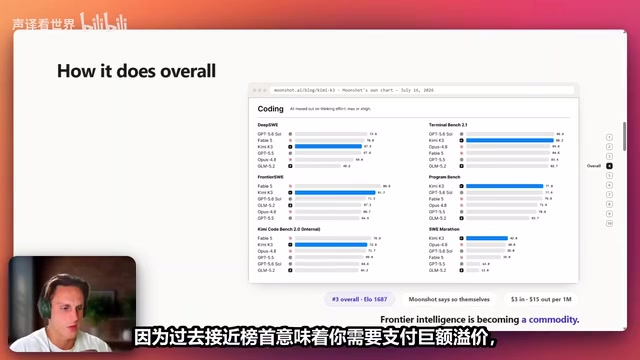
Kimi K3 Hands-On Tutorial: Claude Code Sub-Agent Configuration & GPT-5.6 Comparison Test
Complete guide to configuring Kimi K3 as a Claude Code sub-agent, including API setup, YFlow workflow building, and head-to-head comparison with GPT-5.6 and Claude Fable 5.
Read more →