#Claude Artifacts alternative
30 related articles

·2 min
Ante: A Deep Dive into the Single-Binary Offline Programming AI Assistant
Ante is a fully offline single-binary programming AI agent requiring no internet or API keys. Deep analysis of its zero-dependency deployment, privacy protection, and cost advantages.
Read more →

·3 min
Why Anthropic Never Open-Sources Claude: Safety Concerns or Commercial Moat?
Anthropic has never open-sourced Claude's model weights. As OpenAI, Meta, and Google embrace open source, is Anthropic's AI safety stance genuine caution or a commercial moat? A deep dive into the debate.
Read more →

·3 min
AI Companies Are Destroying Rare Books to Obtain Training Data
AI companies are using destructive scanning to shred physical books—including rare editions—for training data. This article examines the efficiency logic, cultural costs, and copyright gray areas.
Read more →

·4 min
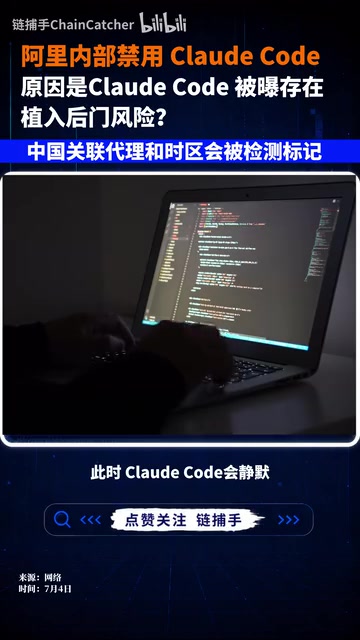
The Claude Code Covert Tagging Scandal: The AI Trust Crisis Behind Alibaba's Ban
Anthropic's Claude Code is accused of covert tagging via Unicode punctuation encoding, prompting Alibaba to ban its use. A deep dive into the reverse-engineering findings, distillation allegations, and the AI-era battle over compute monopoly and developers' right to know.
Read more →
·5 min
Alibaba Bans Claude Code: Invisible Fingerprints and the AI Tool Trust Crisis
Alibaba has banned Claude Code as high-risk software. Reverse engineering revealed a covert environment-identification mechanism hiding user fingerprints in punctuation via prompt steganography. A deep dive into the incident and AI tool trust.
Read more →

·6 min
Fable 5 vs GPT-5.6 Sol: Cost-Efficiency Redefines the Frontier AI Landscape
An in-depth analysis of the head-to-head between Anthropic's Fable 5 and OpenAI's GPT-5.6 Sol: the performance gap, the logic behind pricing strategies, and the concentration-of-power concerns raised by U.S. government involvement.
Read more →

·7 min
Complete Guide to Claude Code Desktop: Access DeepSeek Domestic Models Without an Account
Step-by-step guide to installing Claude Code Desktop, enabling developer mode for account-free use, integrating DeepSeek via CC Switch, Chinese localization, and custom Skills in ten minutes.
Read more →

·7 min
Inside the AI Fraud Industry Chain: Deepfakes and Identity Deception Revealed Through the Lily Jay Incident
The Lily Jay incident exposes the AI fraud industry chain: how deepfakes, image synthesis, and content automation create fake identities. Practical methods for identifying false content in the AI era.
Read more →

·7 min
Claude Sonnet 5 Released: The Most Powerful Agent-Capable Mid-Tier AI Model
Anthropic releases Claude Sonnet 5, its most agentic mid-tier model with planning, browser/terminal tool use, and autonomous execution—bringing flagship Agent capabilities at significantly lower cost.
Read more →

·7 min
Claude Sonnet 5 Released: The Most Capable Agent Model at Mid-Tier Pricing
Anthropic releases Claude Sonnet 5, its most agentic Sonnet model yet. With planning, browser/terminal tool use, and autonomous execution, it brings flagship Agent capabilities to mid-tier pricing.
Read more →

·4 min
AI Weekly: Top Coding Model Returns, Google's New Flash Checkpoint, and the Video Generation Race
This week in AI: Anthropic's flagship coding model returns globally with new safety classifiers, Google tests a new Gemini Flash checkpoint, video generation heats up, and Figure AI robots enter BMW factories.
Read more →

·3 min
MiniMax M3 Coding Benchmark: 1/765th the Price of Opus, but Better Code Quality?
Real-world coding tests compare MiniMax M3 vs Cursor Composer 2.5 across three tasks. At 1/765th the price of Claude Opus, M3 delivers better code quality, tests, and project structure.
Read more →
·2 min
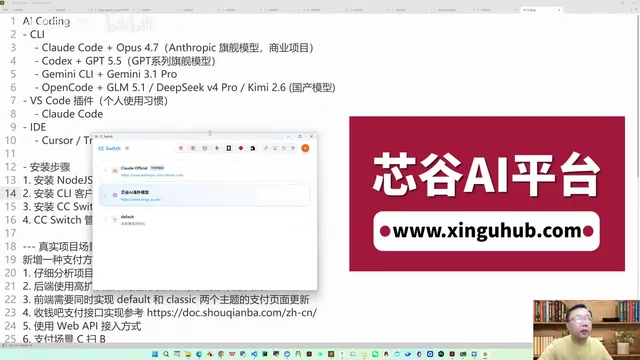
Claude Code Practical Guide: From Installation & Configuration to Production-Grade Project Delivery
Complete guide to Claude Code + Opus for production projects: CC Switch setup, engineering-minded prompting, and a real case study delivering a complex payment system in 4 hours.
Read more →
 Product Reviews
·3 min
Claude Code v2.1.143 Update: Plugin Dependency Chain Management & Background Session State Persistence
Claude Code v2.1.143 brings intelligent plugin dependency chain management, background session model parameter persistence, Agent mode parameterized configuration, and critical Windows/macOS bug fixes.
Read more →
 Tutorials
·3 min
The Complete Guide to Using O3 Mini for Free: 5 Zero-Cost Solutions
Discover 5 free ways to use OpenAI's O3 Mini model, including AnyChat unlimited access, GitHub Models API, and Aider clipboard mode for zero-cost AI experience.
Read more →
 Tutorials
·4 min
Vibe Coding in Practice: From Idea to Deployment in Just Five Steps
A detailed guide to the complete Vibe Coding workflow: design UI with Google Stitch, generate frontend with AI Studio, build backend with AntiGravity—go from idea to deployed app in five steps with zero coding experience.
Read more →
 Tutorials
·4 min
Claude Opus 4.5 Tutorial: Real-World Coding Tests + How to Access from China Without a VPN
Hands-on review of Claude Opus 4.5's coding, writing, and data visualization capabilities. Includes two methods for accessing it from China without a VPN, plus real demos of bug fixing and dashboard development.
Read more →
 Product Reviews
·2 min
Open Design: An Open-Source AI Design Framework That Connects to Your Existing Coding Agents
Open Design is a local-first Apache 2.0 open-source design framework connecting Claude Code, Cursor, Gemini CLI and other coding agents, with 19 composable skills and 71 Design.md systems.
Read more →
 Tutorials
·2 min
Claudia Open-Source Desktop GUI Tool: A Complete Guide to Visual Management for Claude Code
Claudia is an open-source desktop GUI for Claude Code with visual project management, custom agents, cost tracking, and MCP Server management. Full guide on features, architecture, and setup.
Read more →
 Product Reviews
·4 min
LibreChat: Complete Guide to the 36K Star Open-Source ChatGPT Alternative
In-depth guide to LibreChat, the open-source AI chat platform with 36K+ Stars. Covers multi-model aggregation, MCP protocol, Agents, Code Interpreter, Docker self-hosting, and comparisons with alternatives.
Read more →