#Code Harness architecture
264 related articles

·3 min
Deep Dive into Claude Code's Source Architecture: Harness Engineering and Seven Core Mechanisms
Deep analysis of Claude Code's leaked source architecture, covering TypeScript stack choices, Harness architecture's seven core mechanisms, tool call management, and context optimization.
Read more →

·2 min
Agenta: A Detailed Look at the Open-Source Self-Hosted Claude Cowork Alternative
Agenta is an open-source AI Agent collaboration platform supporting self-hosted models and any Agent framework, positioned as an open-source Claude Cowork alternative.
Read more →
·4 min
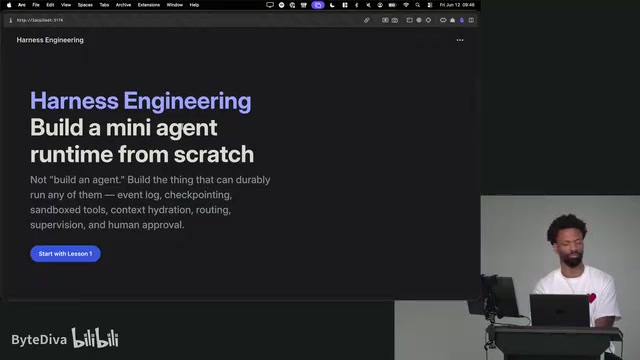
Harness Engineering: The Core Infrastructure for Taking AI Agents from Demo to Production
Deep dive into Harness Engineering: why AI Agents need memory management, durable execution, guardrails & approvals to go from demo to production.
Read more →

·3 min
Claude Code vs Codex: Hands-On Comparison and Installation Guide for AI Programming Tools
In-depth comparison of Claude Code and Codex AI programming tools covering accuracy, installation, and network setup tips to help developers choose the best solution.
Read more →

·4 min
Harness Engineering: The Core Infrastructure for Taking AI Agents from Demo to Production
Deep dive into Harness Engineering: why AI Agents need memory management, durable execution, guardrails & approvals to reach production. Based on Scott Moss's workshop.
Read more →

·6 min
Harness Engineering: From Context Engineering to the Third Phase of AI Programming
Explore Harness Engineering: the next evolution beyond context engineering for AI programming. Learn how to build enterprise-grade Skill systems and deliver real projects with mid-tier models.
Read more →

·4 min
LangChain Guardrails Explained: Building Safe and Controllable AI Agents
A detailed guide to LangChain Guardrails covering layered ecosystem architecture, middleware implementation, deterministic and model-driven protection for building production-grade secure AI Agents.
Read more →
·3 min
Deep Dive into Inkling: The First Frontier Open-Source Multimodal LLM from the West
Thinking Machines releases Inkling, an open-source multimodal LLM with near-trillion MoE parameters, 1M token context, Apache 2.0 license. Deep dive into architecture, benchmarks, and pricing.
Read more →

·4 min
Laguna S 2.1 Deep Dive: Hands-On Local Deployment of a 118B Parameter Coding Model
In-depth review of Poolside's Laguna S 2.1 open-source coding model: MoE architecture, RL training, DGX Spark local deployment, and real-world agentic coding tests with 8B active parameters.
Read more →

·5 min
Running GPT-5.6 Inside Claude Code: Best Practices for Subagent Orchestration and System Prompts
Deep dive into running OpenAI GPT-5.6 inside Claude Code: comparing Codex vs Claude Code on subagent orchestration, workflow design, and system prompt quality, revealing how harness engineering determines model output.
Read more →

·3 min
How to Choose an AI Agent Platform for Your Team: 5 Evaluation Dimensions & Decision Framework
Choose an AI Agent platform by evaluating model flexibility, observability, tool integration, security compliance, and total cost. A complete decision framework to avoid vendor lock-in.
Read more →

·5 min
A Beginner's Guide to Prompt Engineering: From One-Off Instructions to a Systematic Methodology
A beginner's guide to prompt engineering covering the four functions of prompts, the key differences from prompt engineering, a six-step systematic workflow, and critical technical and practical limitations.
Read more →
·3 min
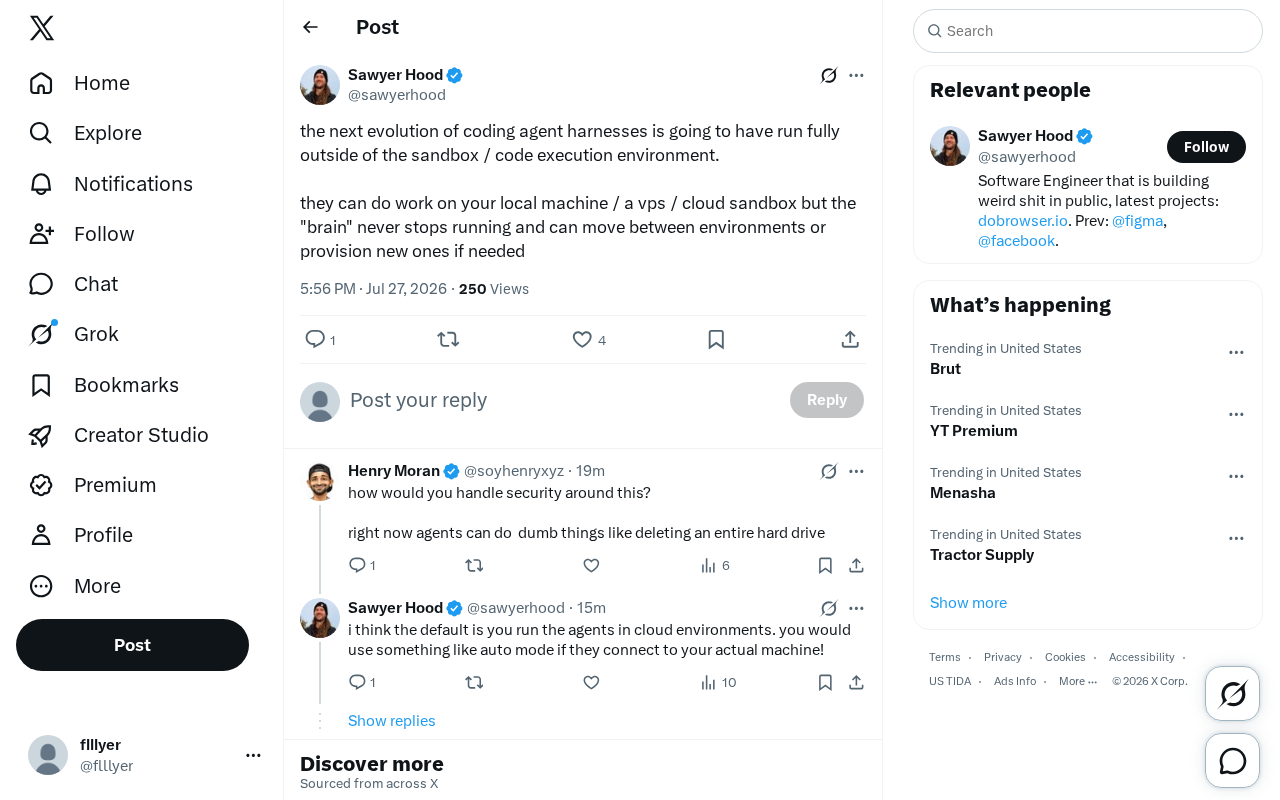
The Next Evolution of Coding Agents: Letting the Brain Break Free from the Sandbox
Exploring the key evolution in coding agent architecture: separating the reasoning core from code execution environments to decouple control and execution planes.
Read more →

·2 min
Efficient Development with Copilot: Why Your Workflow Framework Matters More Than the Tool Itself
GitHub's official four-stage Copilot workflow framework covering prototyping, planning, implementation, and review helps developers build systematic AI-assisted development practices for real productivity gains.
Read more →
·3 min
The Next Evolution of Coding Agents: Letting the Brain Escape the Sandbox
Exploring the next evolution in coding agent architecture: decoupling the reasoning core from code execution environments to separate control and execution planes.
Read more →

·3 min
Claude Opus 5 High Reasoning Mode: The Concerns and Insights of Overthinking
Claude Opus 5's high+ reasoning mode has been jokingly called an "anxious overthinker." This article analyzes why LLMs over-reason, the diminishing returns tipping point, and how to balance reasoning intensity.
Read more →

·3 min
GitHub Daily · July 27: AI Agent Skill Ecosystem Explodes, Claude's Capability Boundaries Keep Expanding
GitHub Trending July 27: AI Agent Skills explode as claude-video, impeccable, and last30days-skill extend model capabilities without modifying models themselves.
Read more →

·3 min
Copilot Now Charges at API Prices — What Are You Actually Paying For?
With GitHub Copilot now billing at API rates, model costs match raw APIs. This article analyzes Copilot's real value in workflow integration, enterprise governance, and harness engineering.
Read more →

·4 min
AI Coding Tools in Practice: Which Ones Actually Stuck with the Team?
A 12-person product team shares real-world experiences with Cursor, Codex, Claude Code, and CodeRabbit—exploring efficiency plateaus, scenario matching, and selection criteria for AI coding tools that actually stick.
Read more →

·5 min
From Chat to Agent: Automating Your Entire Business Workflow with AI Agents
Veteran AI practitioner Remy breaks down the leap from chat models to AI agents: how agents work, the three pillars of context, tools, and skills, MCP connections, and hands-on architecture to make you a 100x employee.
Read more →