#Computer Use setup guide
132 related articles
 Product Reviews
·3 min
Codex Computer Use Hands-On Review: Setup Guide, How It Works, and Security Risks Explained
Hands-on review of OpenAI Codex Computer Use: step-by-step setup guide, WeChat demo, screenshot-based core principles, and analysis of three major security risks including privacy leakage and current limitations.
Read more →

·3 min
Reconstructing Meshes from a Single Normal Map: A Weighted Approach to the Depth Discontinuity Problem
Exploring the core challenge of reconstructing 3D meshes from normal maps—handling depth discontinuities. Learn how per-pixel weights enable natural surface breaks and examine unresolved issues in fine structure reliability and absolute scale calibration.
Read more →

·3 min
Reconstructing Meshes from a Single Normal Map: A Per-Pixel Weight Approach to Depth Discontinuities
Exploring depth discontinuity handling in 3D mesh reconstruction from normal maps. Learn how per-pixel weights let surfaces naturally break apart, avoiding geometric errors from forced integration.
Read more →

·3 min
ID-V2V: A Video Stylization Technology That Captures the Performance First and Redesigns the Look Later
ID-V2V by Eyeline Labs enables identity-preserving video-to-video stylization by editing keyframes to reshape scene lighting and style while preserving faces, expressions, and motion.
Read more →

·4 min
Fable 5 vs GPT-5.6: An In-Depth Head-to-Head Comparison of Two Top-Tier Coding Models
In-depth comparison of Fable 5 vs GPT-5.6 (Sol) for AI coding. Covering token efficiency, code quality, design, cost, and safety based on $10K+ real usage data.
Read more →

·4 min
Fable 5 vs GPT-5.6: An In-Depth Head-to-Head Comparison of Two Top-Tier Coding Models
In-depth comparison of Fable 5 vs GPT-5.6 (Sol) for AI coding. Real-world data on token efficiency, code quality, design capability, and cost from $10K+ testing.
Read more →

·3 min
Flux 3 Hands-On: Generating Dual-Camera Synchronized Video from a Single Prompt — How Good Is It?
Flux 3 demo generates dual-camera synchronized video from one complex prompt, featuring fluid dynamics, multi-view consistency, and precise temporal control.
Read more →
·6 min
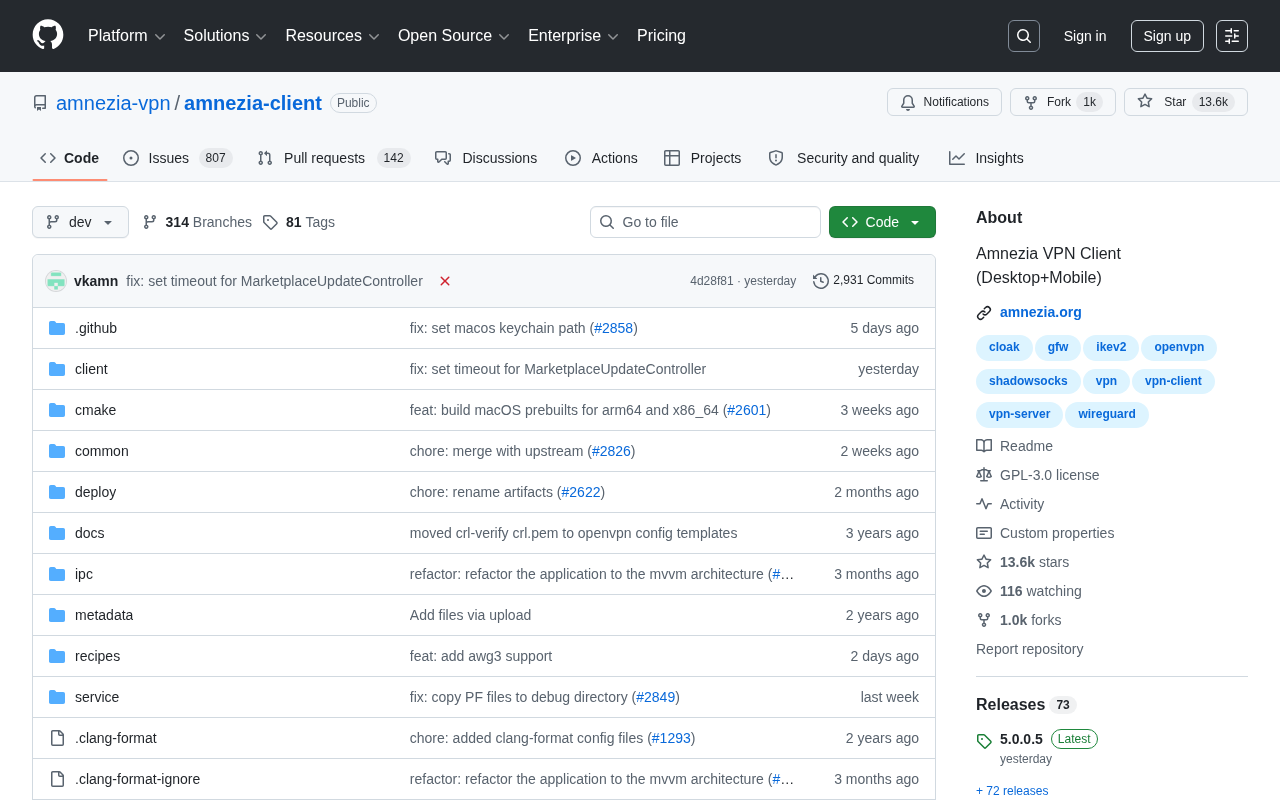
AmneziaVPN Deep Dive: The Open-Source Powerhouse for Self-Hosted, Censorship-Resistant VPN
Deep dive into the AmneziaVPN open-source client: AmneziaWG anti-DPI obfuscation, self-hosted VPS deployment, multi-protocol support, and cross-platform privacy.
Read more →
·3 min
Flux 3 Hands-On: Generating Dual-Camera Synchronized Video from a Single Prompt — How Good Is It?
Flux 3 demo generates dual-camera synchronized video from a single complex prompt, featuring fluid dynamics, multi-view consistency, and precise temporal control.
Read more →

·3 min
Zero-Cost QQ Group Minesweeper Bot in 6 Minutes with DeepSeek
Step-by-step guide to using DeepSeek with the OICQ framework to generate a runnable QQ group Minesweeper bot Python script in 6 minutes — zero cost, real pitfalls included.
Read more →

·7 min
The Complete AI Character LoRA Training Workflow: Hands-On Multi-Character Consistency Generation with Local Deployment
A detailed guide to a complete local AI character generation workflow: from the five golden rules of LoRA training and automated ComfyUI dataset construction to hands-on comparisons of Crea2, Ideogram4, and Wan for multi-character same-frame interaction—all running free on personal hardware.
Read more →

·6 min
The Complete Codex Guide: From Beginner to Pro with the All-in-One AI Assistant
OpenAI Codex is more than a coding tool—it's an AI agent that writes code, makes slides, and operates browsers. This guide covers its four versions, permission modes, plugins, automation, and six best practices.
Read more →

·3 min
Zero-Code AI Financial Mini Program: A Complete Non-Programmer's Guide
Can't code? Learn how to build a WeChat Mini Program financial management system from scratch using AI coding tool Codex — covering tool selection, OCR invoicing, iteration, and publishing.
Read more →

·3 min
Zero-Code Research: Using AI Agents to Run Complete Machine Learning Experiments
No coding required: use AI agents like Codex and Claude Code to complete full ML experiments via natural language. A real case study with a heart disease dataset.
Read more →

·3 min
Cherry Studio + MCP: A Practical Guide to Building AI Agents with Local Deployment
Learn how to build an automated AI agent using Cherry Studio, MCP protocol, and locally deployed models — covering DeepSeek integration, web scraping, and private knowledge base setup.
Read more →

·3 min
MCP + Skills AI Reverse Engineering Toolchain: Technical Capabilities and Compliance Boundaries
A technical deep-dive into AI-assisted reverse engineering: how MCP, Skills libraries, and Frida toolchains work together, their real capability limits, and the legal boundaries of iOS/Android/Web reverse analysis.
Read more →

·3 min
Cherry Studio + MCP + Ollama: The Complete Guide to Building a Local AI Agent and Private Knowledge Base
A hands-on guide to building a local AI agent and private knowledge base using Cherry Studio, MCP, and Ollama — with web scraping, report generation, and terminal control.
Read more →

·3 min
A $120 Robot Arm Learns to Actively Search: How Squint Breaks the Field-of-View Barrier
Squint open-source research enables a $120 SO-101 arm to search beyond its camera FOV using 16×16 pixel input, achieving 100% success in 24 min on an RTX 4060.
Read more →

·4 min
No-Code Guide to Claude Code: Building Your Personal AI Automation OS
No coding needed: master Claude Code workflows with folder structure, sub-agents, third-party connectors, and scheduled routines to build your own AI automation OS.
Read more →

·4 min
Agent Loop in Practice: A Guide to Building Self-Improving Automation with Guardrails
A deep dive into building verifiable, self-evolving Agent automation loops with Claude Code and Codex — covering Loop Contracts, four trigger types, three-phase execution architecture, and Evolve Loops.
Read more →