#Consensus MCP
72 related articles

·5 min
The Complete OpenCode Tutorial: Installation, Commands, and Advanced Practice
Systematically learn the OpenCode AI programming tool: covering both desktop and WSL installation, core commands, model and rule configuration, MCP integration, and Agent Skills.
Read more →
·6 min
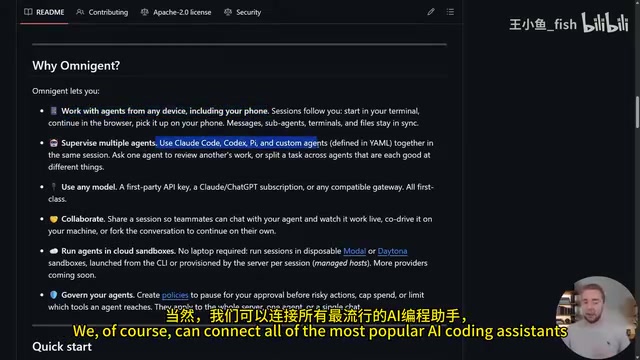
Omnigent Open-Sourced: A Meta-Harness for AI Coding Agents Built by Databricks
Databricks open-sources Omnigent, a Meta-Harness for orchestrating Claude Code, Codex, and more AI coding assistants together—with built-in guardrails, cross-model workflows, and real-time collaboration. Get started in 10 minutes.
Read more →

·7 min
Previewing the AI Engineer Summit: Industry Signals of AI Engineering Reaching Maturity
An exclusive look at the AI Engineer Summit dress rehearsals, decoding the paradigm shift from research to production. A deep dive into AI Engineer challenges, RAG, agent systems, and AI engineering as a distinct discipline.
Read more →

·3 min
GPT-5.6 Three-Tier Model Lineup Leaked, OpenAI May Delay IPO to Next Year
OpenAI previews GPT-5.6 models Sol, Terra, Luna; Codex launches on mobile; SenseTime develops U1 Pro rivaling GPT Image; Gemini enters Android Auto; OpenAI IPO may slip to next year.
Read more →

·3 min
Fortress: The Stealth Browser Built for AI Agents to Bypass Anti-Bot Detection
Fortress is an open-source stealth Chromium built for AI Agents. It eliminates automation fingerprints to bypass Cloudflare and other anti-bot systems.
Read more →

·3 min
Build an AI Agent Framework from Scratch: A Full Walkthrough of Function Call and MCP
Build an AI Agent framework from scratch — no LangGraph or Swarm. Deep dive into Function Call, MCP mirroring, dual-model dispatch, and short-term memory management.
Read more →

·7 min
Agentic AI Development in Practice: Evaluation and Error Analysis Are the Real Competitive Edge
Cut through the Agentic AI hype to see the real value of agentic applications. Based on Andrew Ng's course, learn why Evals and error analysis—not framework choice—separate top developers.
Read more →

·7 min
Kontext: One-Click AI Conversation Context Migration, Breaking Down Multi-Model Switching Barriers
Kontext is a context migration tool for multi-AI users, enabling one-click transfer of full conversation history between ChatGPT, Claude, and Gemini to solve the context silo problem.
Read more →

·7 min
Claude Code Command Orchestration: One-Click Content Research and Auto-Publishing
Learn how to orchestrate Claude Code custom commands to chain content research and social media publishing agents into a fully automated workflow with one command.
Read more →

·4 min
Spotify's AI in Practice: How 3,000 Engineers Are Reinventing R&D with Agents
Spotify's real engineering story: 99% of engineers use AI coding tools, PR frequency up 76%, 2.5M automated maintenance PRs merged. How Honk, FleetShift, and Backstage work together to drive AI Agent adoption at scale.
Read more →

·8 min
MCP Server or Agent Skills? A Clear Guide to Architecture Decision-Making
MCP Server vs Agent Skills: how to choose? This article systematically outlines an AI Agent architecture decision framework across three dimensions—essential differences, applicable scenarios, and judgment criteria.
Read more →

·6 min
Agent Studio: A Unified Platform for Authoring AI Roles and Skills
Agent Studio unifies AI Agent role definition (Subagents) and Skills on one platform, enabling coordinated orchestration through a shared MCP endpoint, progressive disclosure, and moderated community publishing.
Read more →

·7 min
Linked Context: How AI Agent Skills Can Point to the Entire Open Web
Deep dive into Skill Studio's "Linked Context" mechanism—skill files become real-time URL fetches instead of pre-loaded copies, extending AI Agent progressive disclosure to the entire open web.
Read more →

·7 min
AI Agent Practical Guide: The Complete Path from Building to Production Deployment
A deep dive into AI Agent architecture and engineering practices, covering tool design, ReAct execution patterns, Vercel deployment, and production considerations to bridge the prototype-to-production gap.
Read more →

·3 min
Building AI Agents from Scratch: LangGraph Architecture and Practical Guide
A deep dive into AI agent principles and development practices, covering agent definitions, leading products (Deep Research, ChengPian, Manus), and the complete LangGraph + LangChain + MCP architecture.
Read more →

·3 min
Agent Skills Architecture Explained: A New Paradigm for Modular AI Agent Development
A deep dive into Agent Skills architecture: core concepts, components, and how it works. Clarifies common misconceptions about Skills vs. MCP, and compares Skills with Multi-Agent architecture.
Read more →

·4 min
Cursor's Three Major Announcements: Mobile App, Git Platform, and In-House Frontier Model
Cursor unveils three major updates: Cursor Mobile, Origin platform challenging GitHub, and a frontier in-house LLM trained from scratch. A deep dive into Cursor's strategy.
Read more →

·3 min
Agent Harness: A New AI Agent Paradigm from Prompt Engineering to Execution Environment Orchestration
Deep dive into Agent Harness Engineering: how loop execution and context isolation overcome the bottlenecks of prompt and context engineering in modern AI coding agents like Cursor.
Read more →

·3 min
The Complete Guide to Vibe Coding: Turn Ideas into Products with AI — No Coding Required
A complete guide to Vibe Coding: from idea to PRD, UI design, and working code using AI tools like Gemini, Figma Make, and Cursor — no coding skills needed.
Read more →

·3 min
Cursor Composer 2.5: The Secret Behind an Open-Source Model's Reinforcement Training to a Top-3 Coding Benchmark Ranking
Cursor built Composer 2.5 on Kimi K2 open-source model, ranking 3rd on coding benchmarks and surpassing K2.6. Deep dive into Cursor's data flywheel, product architecture, and pricing.
Read more →