#CrewAI Dify
136 related articles

·3 min
Cosmonapse: A Decentralized Multi-Agent Framework Built on an Event Bus
Cosmonapse is an open-source multi-agent framework that replaces central orchestrators with peer nodes, using typed signals and an event bus to fully decouple tool calls, memory, and HITL. Supports Python and TypeScript under Apache 2.0.
Read more →

·3 min
OpenCode In-Depth Review: Can This Open-Source Coding Agent Replace Claude Code?
OpenCode is an open-source terminal coding agent with 180K+ GitHub stars, supporting hundreds of models and a dual-layer agent architecture — completely free. See how it compares to Claude Code.
Read more →

·2 min
AI Agent Development Roadmap: A Four-Stage Guide from Zero to Production
A four-stage AI Agent development roadmap: from core theory and ReAct paradigm to multi-agent collaboration and production deployment. Covers DeepSeek, Coze, Dify, and more.
Read more →

·3 min
Coze Deep Dive: Multi-Agent Collaboration Platform Architecture and Usage Guide
Deep dive into Coze's three core capabilities: multi-person multi-AI collaboration, customizable agents, and cross-platform project management. Covers credits, Dify comparison, and a practical learning path.
Read more →

·4 min
Loop Engineering in Practice: Designing and Deploying a Multi-Agent Collaborative Development System
A deep dive into Loop Engineering: how multi-agent collaborative dev systems achieve automated coding loops through workflow scheduling, step isolation, and validation.
Read more →

·3 min
Waku Agent Deep Dive: The Four Core Pillars of a Local-First AI Assistant
A deep dive into Waku Agent's four pillars: Loop Engineering, three-tier Memory system, Eval assessment, and the Harness scaffold. Full walkthrough of a local-first AI assistant from task execution to memory consolidation.
Read more →

·3 min
Can Small Local Models Become Software Domain Experts? A RAG Architecture Deep Dive
Can small local models (1.5B–3B) become software domain experts? This article breaks down CPT, SFT, RAG, and Agent architectures, with a layered RAG-centric design for CPU-only local deployment.
Read more →
PlanWright: A Control Plane and Multi-…
·2 min
PlanWright: A Control Plane and Multi-Agent Orchestration Layer for AI Coding Agents
PlanWright is a control plane for AI coding agents, drawing on Kubernetes orchestration principles to tackle multi-agent task assignment, state tracking, and collaboration conflicts.
Read more →

·3 min
Complete AI Agent Development Learning Path: From Core Principles to Enterprise Deployment
A structured AI Agent learning path covering core principles, prompt engineering, tool use, multi-agent systems, and frameworks like LangChain, CrewAI, and Dify for enterprise deployment.
Read more →

·2 min
The Complete AI Agent Development Roadmap: A Four-Stage Guide from Zero to Production
A complete four-stage AI Agent development roadmap: from LLM fundamentals and core modules, to ReAct/CoT paradigms, multi-agent collaboration, and real-world projects.
Read more →

·2 min
AI Agent Development in Practice: A Complete Guide to Framework Selection, Tool Calling, and Production Deployment
A comprehensive guide to AI Agent development: covering Agent vs. Chatbot differences, framework selection, tool calling design, RAG pipeline setup, and production deployment best practices.
Read more →

·3 min
AgentScope 2.0 Deep Dive: Six Core Upgrades for Production-Grade Multi-Agent Development
AgentScope 2.0 by Alibaba's Tongyi Lab delivers six major upgrades: typed event streaming, dangerous instruction interception, human-in-the-loop, concurrent execution, workspace system, and agent-as-a-service for production-grade multi-agent development.
Read more →

·3 min
AI Agent Learning Roadmap: From Zero to Building Your Own Intelligent Agents
A structured AI Agent learning roadmap covering fundamentals (Agent principles, Prompt engineering), advanced topics (RAG, multi-agent collaboration), and three hands-on projects — ideal for beginners.
Read more →

·4 min
Hands-On with GPT-5.6: A Single Prompt Builds a Real-Time Voice Anime App
Hands-on with GPT-5.6 Sol: auto-generate real-time voice anime characters from one prompt, write physics engines from scratch, and build unfamiliar toolchains autonomously. In-depth review of coding, agentic tasks, benchmarks, and its hallucination weakness.
Read more →

·3 min
Generate a Mini-Game from a Single Prompt? Testing the Cocos AI Agent Plugin
Deep dive into the Cocos Creator AI Agent Plugin: three-level context compression, tool approval, multi-agent parallelism, and DeepSeek-powered Mario scene building — all in one test.
Read more →

·4 min
A Deep Dive into Claude Cookbooks: A Guide to the Official 47K-Star Hands-On Code Repository
Anthropic's open-source Claude Cookbooks project offers runnable Jupyter Notebook examples covering RAG, Tool Use, multimodal processing, and more—helping developers master Claude API best practices.
Read more →

·4 min
The Complete AI Agent Development Learning Path: From Zero to Enterprise-Grade Practice
A systematic AI Agent development learning path covering fundamentals, prompt engineering, tool calling, multi-agent collaboration, and hands-on practice with LangChain, CrewAI, and Dify.
Read more →

·3 min
APA: A New Enterprise-Grade Automation Approach Merging Agents with RPA
APA (Agentic Process Automation) merges LLM agents into RPA, supporting natural language, operation manuals, and video recording to generate scripts—paired with financial-grade security and three-layer protection for enterprise automation.
Read more →

·3 min
The Complete AI Agent Development Workflow: A Seven-Step Guide from Requirements Analysis to Deployment
Want to build an AI Agent but don't know where to start? This guide covers the complete seven-step workflow—from requirements analysis, platform selection, prompt engineering, data storage, and UI building to testing and deployment.
Read more →
·5 min
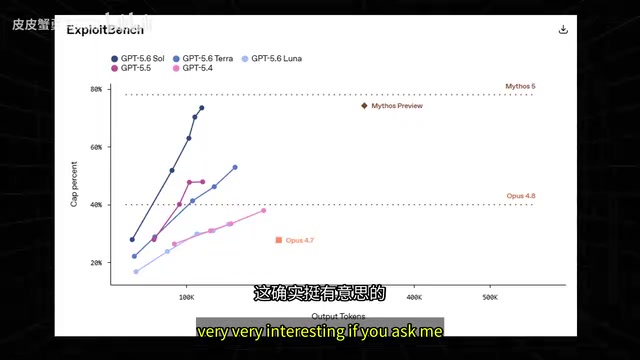
GPT-5.6 Released: Outperforms Rivals but Halted by Government—Cybersecurity Capabilities Trigger Regulatory Red Line
OpenAI releases GPT-5.6 (Sol/Terra/Luna), beating Anthropic on Terminal Bench at ~40% lower cost. But its cybersecurity capabilities hit danger thresholds, limiting access to trusted partners at government request.
Read more →