#Cursor SDK
147 related articles

·4 min
Stop Shipping Skills Blindly! A Google DeepMind Engineer's Hands-On Guide to Agent Evaluation
Google DeepMind engineer Philip reveals: almost everyone uses coding agent Skills, yet almost no one writes evals for them. A deep dive into Skill evaluation methods, 8 actionable tips, and a real Gemini API case study.
Read more →

·4 min
Self-Healing Agent Loops: Using AI to Automatically Discover and Fix Programming Language Bugs
How Boundary built a self-healing AI Agent loop that automatically writes BAML code, discovers bugs, and generates fix PRs — a practical software factory with deduplication, human-in-the-loop leverage points, and extensible multi-loop design.
Read more →
PostHog Deep Dive: The Open-Source All…
·2 min
PostHog Deep Dive: The Open-Source All-in-One Platform for Product Analytics and AI Observability
PostHog is an open-source all-in-one platform combining product analytics, session replay, feature flags, A/B testing, and AI Observability. Supports self-hosting and MCP protocol.
Read more →

·2 min
Cursor + Appium: Building a Full Mobile Automation Testing Workflow with AI
Learn how to combine Cursor AI with Appium in a 4-step workflow—environment check, test planning, project generation, and reporting—to build mobile automation fast.
Read more →
·3 min
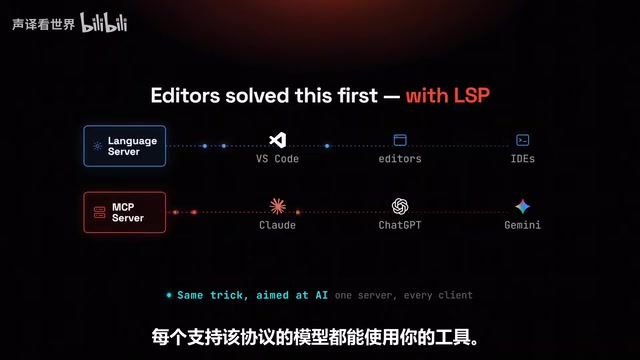
Build an MCP Server in 10 Minutes: Let AI Call Your Code Directly
MCP (Model Context Protocol) is the open standard for AI tool integration. Build your own MCP server with ~20 lines of Python. Learn tools, resources, prompts, and both local and remote deployment.
Read more →
GitHub Daily · July 17: AI Coding Infr…
·3 min
GitHub Daily · July 17: AI Coding Infrastructure Explodes — From Context Graphs to Vector Indexes
AI coding infrastructure explodes on GitHub: context management, code graphs, and vector indexes become the new battleground as the community shifts from apps to underlying capabilities.
Read more →

·3 min
Getting Started with Agent Skills: Structure, Principles, and Practical Usage
A deep dive into Agent Skills: learn the file structure (SKILL.md, references, scripts, assets), core principles, and how they differ from prompts. Build your own AI skill bundle from scratch.
Read more →

·4 min
MCP Protocol Deep Dive: Its Relationship with Function Calling and Agents, Plus a Practical Guide
Deep dive into MCP (Model Context Protocol): clarifying the three-layer relationship between MCP, Function Calling, and Agents, covering protocol roles, call flows, transport choices, and production security for AI developers.
Read more →

·5 min
How Can Working IT Professionals Learn AI Efficiently? A Practical Learning Path from Zero to Real-World Projects
Limited time but want to learn AI systematically? This guide maps out a practical learning path for working IT pros—from AI application engineering and prompt engineering to RAG and Agents.
Read more →

·3 min
Decoding Databricks' AI Strategy: The Omnigents Orchestration Platform and LTAP Unified Storage Architecture
An in-depth look at the AI strategy of Databricks co-founders Matei Zaharia and Reynold Xin: the open-source Agent platform Omnigents, the unified storage architecture LTAP, and how Dream Engine reshapes data and intelligence.
Read more →

·3 min
In-Depth Testing of GPT-5.6's Three Models: A Full Analysis of Soul/Terra/Luna Capabilities and Experience
GPT-5.6 launched three models at once—Soul, Terra, and Luna. Flagship Soul dazzled with a Vision Pro drum kit and reviving an old tablet, but the new Work app's frequent errors and export failures dragged down the experience.
Read more →

·3 min
Building a Claude Code Skill from Scratch: Let AI Auto-Generate Daily News Reports
A detailed guide on building a custom Claude Code Skill to auto-fetch, filter, and generate daily AI news reports—covering execution logic, task decomposition, HTML visualization, and source tracing.
Read more →

·6 min
The Eight-Step Method for Agent Development: A Practical Path from Pitfalls to Production
Many enterprises fail at AI Agents due to choosing the wrong tools and lacking methodology. This article outlines an eight-step Agent development method—from cognitive foundations, scenario selection, hand-writing ReAct, and structured output to Tool Use, RAG, evaluation sets, and production fallback.
Read more →

·4 min
Tencent Open-Sources Agent Memory: A Fully Local AI Long-Term Memory Solution with Zero External Dependencies
Tencent Cloud open-sources TencentDB Agent Memory — a fully local AI Agent memory system with a 4-tier progressive pipeline, zero external API dependencies, and 8,100+ GitHub Stars. Ideal for finance, healthcare, and privacy-sensitive use cases.
Read more →

·7 min
GitHub Copilot in Practice: The Capability Boundaries of AI Programming and the Irreplaceable Value of Humans
A developer's real case of building a dental clinic management system with GitHub Copilot and Azure SQL, revealing AI coding limits in cloud security config and how Human-in-the-Loop breaks through.
Read more →

·4 min
Notion Meets Cursor: A New Workflow for Dispatching Coding Tasks Directly from Docs
Cursor launches deep Notion integration via the Cursor SDK — @mention Cursor in any Notion doc to trigger a cloud Agent that automatically opens a PR. We break down the workflow, product logic, and real-world limitations.
Read more →

·4 min
OpenAI Build Week Kicks Off: Turning Your Ideas Into Reality with Codex
OpenAI launches Build Week, a global developer event centered on Codex AI coding tool, featuring live sessions and community events to help developers ship ideas fast.
Read more →

·6 min
Vibe Coding in Practice at Big Tech: How Frontend Engineers Can Avoid Being Replaced in the AI Era
A big-tech interviewer reveals: junior/mid frontend dev is being replaced by AI. This article breaks down 3 core Vibe Coding interview questions to help you master key skills for the AI-assisted coding era.
Read more →

·7 min
Demystifying Claude Code's Harness in 60 Lines of Python: The Core of AI Coding Tool Performance Differences
The same model scores 77% in Claude Code but jumps to 93% in Cursor—the only variable is the Harness. This article dissects how AI coding tools work in 60 lines of Python.
Read more →

·7 min
Fable AI Coding in Practice: Optimizing Reasoning Levels and Multi-Model Collaboration to Save Money
Hands-on guide: Use Anthropic's Fable model to optimize AI coding workflows — control reasoning levels, leverage Claude-Codex multi-model collaboration, and cut costs from thousands to $150.
Read more →