#DeepSeek coding
980 related articles

·3 min
GPT-5.6 Luna Review: Outperforms Google's Flagship at a Lower Price
GPT-5.6 Luna tops Google's flagship on the Artificial Analysis Intelligence Index while priced below Google's entry-level model. A deep dive into what this performance-cost breakthrough means.
Read more →

·3 min
DeepSeek V4 Flash Analysis: The Three-Dimensional Balance of Intelligence, Performance, and Price
Deep analysis of DeepSeek V4 Flash 0731 across intelligence, performance, and price dimensions, exploring how this Chinese LLM delivers extreme cost-performance to reshape the AI industry.
Read more →

·3 min
GPT-5.6 Slashes Prices by 80%: The Industry Logic Behind the AI Price War and Opportunities for Developers
OpenAI's GPT-5.6 series sees massive price cuts—Luna drops 80% to $0.20/M input tokens. Deep analysis of the AI price war's tech drivers, competitive landscape, and impact on developer costs and model selection.
Read more →

·3 min
GPT-5.6 Price Cut of 80%: The Industry Logic Behind the AI Price War and Opportunities for Developers
OpenAI's GPT-5.6 series sees major price cuts with Luna dropping 80% to $0.20/M input tokens. Analysis of the AI price war's technical drivers, competitive landscape, and impact on developer costs.
Read more →

·2 min
GPT-5.6 Price Cut of 80%: How OpenAI Reclaims the AI Price-Performance Throne
OpenAI launches GPT-5.6 with 80% price cuts on its Luna model series, surpassing DeepSeek on the price-performance curve. Analysis of the tech logic, developer impact, and AI price war trends.
Read more →

·2 min
GPT-5.6 Price Cut of 80%: How OpenAI Reclaims the AI Price-Performance Throne
OpenAI releases GPT-5.6 with 80% price cuts on Luna models, overtaking DeepSeek on price-performance. Analysis of the tech logic, developer impact, and AI pricing trends.
Read more →

·3 min
LLM Inference Speed Formula: Memory Bandwidth Determines Your tokens/sec
Why memory bandwidth (GB/s), not VRAM size, determines local LLM inference speed. Includes tokens/sec formula, GPU bandwidth comparison, and a practical card selection framework.
Read more →

·3 min
LLM Inference Speed Formula: Memory Bandwidth Determines Your tokens/sec
Learn why memory bandwidth (GB/s)—not VRAM size—determines local LLM inference speed. Get the tokens/sec formula, GPU bandwidth comparisons, and a practical card selection hierarchy.
Read more →

·4 min
G.I.A.ac: An AI Architect That Generates Working Apps from a Single Sentence
G.I.A.ac (General Intelligence Architect) is an AI architect tool that generates runnable apps from a single sentence. Deep dive into its positioning, competitive landscape, target users, and core challenges.
Read more →

·2 min
Grok 4.5 Released: A Next-Gen AI Model Targeting Coding and Agentic Tasks
Grok 4.5 is officially released, purpose-built for coding, agentic tasks, and knowledge work. A deep dive into its core positioning, efficient reasoning, three key use cases, and value for developers.
Read more →

·3 min
Is LLM Inference Really That Expensive? Breaking Down the Cost Reduction Logic of GPU Compute and Inference Frameworks
Analyzing real LLM inference costs: from B200 GPU compute gains, vLLM framework optimization to MTP multi-token prediction, explaining why serving costs are widely overestimated.
Read more →

·3 min
Self-Hosting Kimi K3: Is Spending 20% More on Hardware Worth a 20% Improvement in Task Performance?
Analysis of whether spending 20% more on hardware for self-hosting Kimi K3 to gain 20% task performance improvement is worthwhile, covering inference precision, VRAM optimization, and tiered deployment.
Read more →

·3 min
Is LLM Inference Actually Profitable? Breaking Down the Cost Structure and Business Logic of Large Model Inference
A deep dive into LLM inference cost structure and profitability models—from GPU throughput, MoE architecture, and KV Cache to scale effects—revealing the business logic behind API price wars.
Read more →

·2 min
Is a $200/Month AI Subscription Worth It? A Guide to Cost Anxiety and Rational Spending
More users are questioning whether $200/month AI subscriptions are worth it. This article analyzes the rise of open-source alternatives and provides a framework for evaluating AI subscription value.
Read more →

·3 min
Moonshot AI Open-Sources FlashKDA: A Deep Dive into High-Performance CUDA Kernels for KDA Attention
Moonshot AI open-sources FlashKDA, providing high-performance CUDA kernels for Kimi Delta Attention. Learn about its technical principles, performance gains, and value for long-context training and inference acceleration.
Read more →

·3 min
Moonshot AI Open-Sources FlashKDA: A Deep Dive into High-Performance CUDA Kernels for KDA Attention
Moonshot AI open-sources FlashKDA, providing high-performance CUDA kernels for Kimi Delta Attention. Explore its technical principles, performance gains, and value for long-context training and inference.
Read more →

·2 min
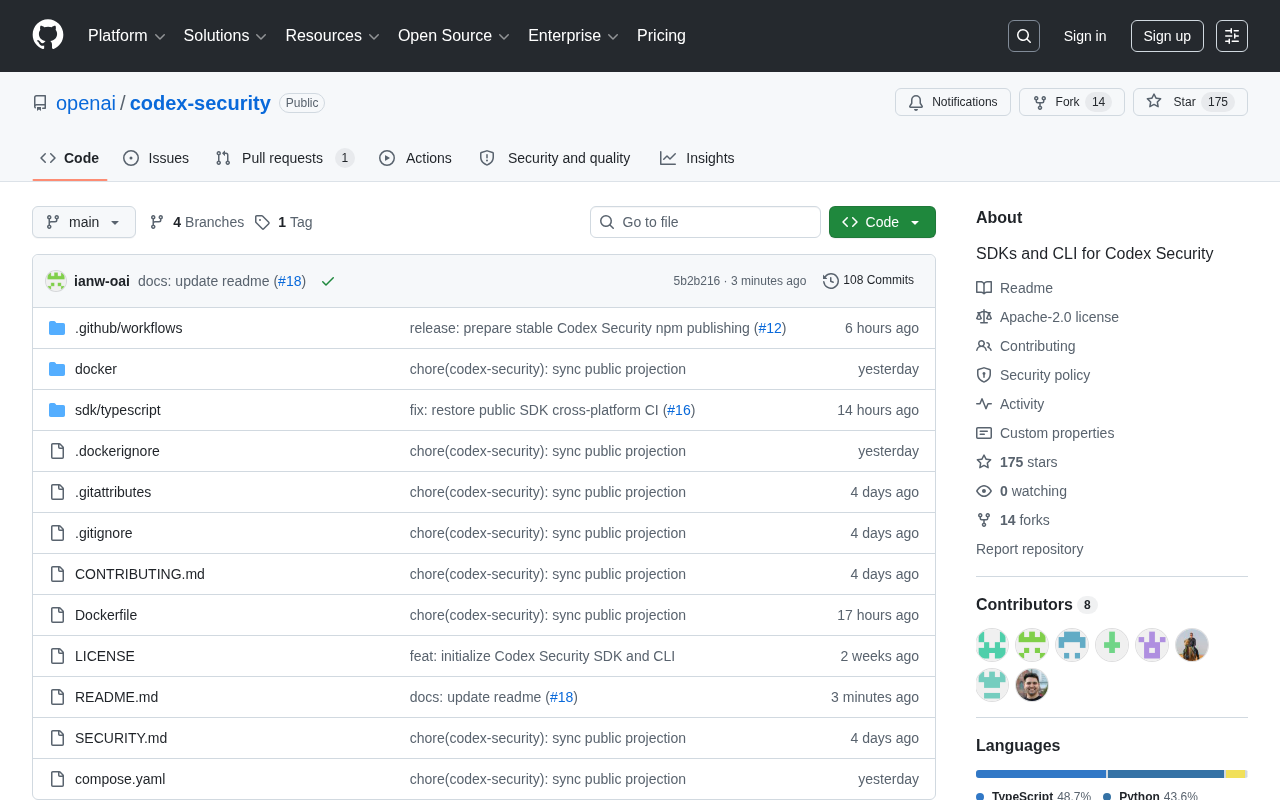
OpenAI Open-Sources Codex Security Components: Setting a New Standard for AI Coding Safety
OpenAI open-sources Codex Security components, bringing automated security detection to AI code generation. Analysis of its strategic value, developer impact, and the industry shift from capability to security.
Read more →
·2 min
OpenAI Open-Sources Codex Security Components: Setting a New Standard for AI Coding Safety
OpenAI open-sources Codex Security components, bringing automated security detection to AI code generation. Analysis of its strategic significance and industry impact.
Read more →

·4 min
Getting Started with Claude Code: Environment Setup, Common Commands, and Git Workflow in Practice
A detailed guide to Claude Code installation, domestic model switching, project analysis commands, and Git workflow practice to help developers quickly master this AI programming collaboration tool.
Read more →

·4 min
GPT-6 Reportedly Completed, Claude Opus 5 Leaked: The AI Model Race Accelerates
GPT-6 may be completed, Anthropic's Claude Honeycomb appears to be an early Opus 5 version, Kimi K3 is imminent, and Google Gemini faces further delays. Deep analysis of the latest AI model competition.
Read more →