#Docker MCP deployment
92 related articles

·6 min
Coze from Scratch: A Complete Guide to Building Multi-Agent Collaboration
A detailed guide to Coze's core features: cross-platform interoperability, the Skills system, multi-agent collaboration, and workflow building. Compare Coze and Dify to build practical AI apps with zero coding.
Read more →

·7 min
Electron + LangGraph in Practice: Building an AI Agent Visual Orchestration App from Scratch
A hands-on guide to building an enterprise-grade AI Agent workflow orchestration app with Electron Forge and LangGraph, covering local LLM deployment (Qwen3-0.6B), node-based visual canvas design, and full Function Calling integration.
Read more →

·5 min
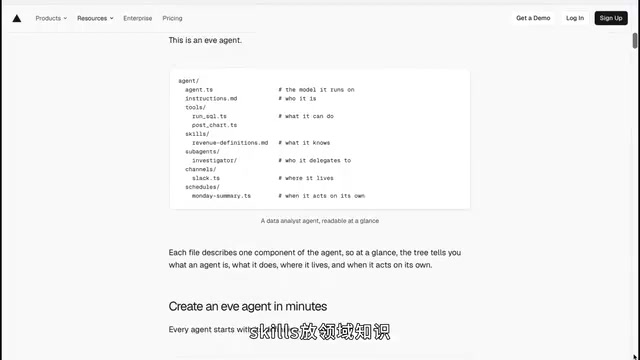
Deep Dive into Vercel's eve Framework: How AI Agents Are Becoming an Entirely New Form of Software
Vercel's Chief of Software Andrew Qu explains the eve Agent framework's design philosophy, covering Skills modularity, Sandboxes security, and agent-readable websites—revealing the paradigm shift from instruction-driven to goal-driven software.
Read more →

·5 min
Cursor Reshapes AI Programming: Cloud Agents, the Origin Platform, and a Custom-Built Foundation Model
Cursor launches three major products: cloud agents on mobile, Origin — an agent-native Git platform challenging GitHub, and a custom foundation model with 10-20x compute. AI coding enters the Agent-First era.
Read more →

·6 min
Gas Town: A Multi-Agent Workspace Manager Built in Go
Gas Town is an open-source multi-agent workspace manager built in Go with 16,000+ GitHub Stars. This article analyzes its architecture, Go language advantages, and typical multi-agent collaboration scenarios.
Read more →

·3 min
Harness Engineering in Practice: A Guide to Enterprise-Grade Multi-Agent System Architecture
A deep dive into Harness Engineering architecture: building an AI procurement assistant on ERP systems, covering multi-agent orchestration, MCP protocol, ASGI deployment, and sandbox isolation.
Read more →

·5 min
The Complete Guide to OpenCode: Installation, Configuration, and Advanced Usage
A comprehensive guide to OpenCode, the open-source AI coding tool — covering installation (desktop/WSL), model config, rules files, custom commands, MCP extensions, and Agent SQL capabilities.
Read more →

·7 min
Complete Guide to OpenCode: Installation, Configuration, and Custom Commands in Practice
A systematic guide to OpenCode, the open-source terminal AI coding tool: installation methods (including WSL), model configuration, rules files, Agent types, custom commands, and MCP tool extensions.
Read more →

·7 min
Agent Loop Explained: The Core Runtime Mechanism and Think-Act Cycle of AI Agents
Deep dive into Agent Loop mechanics: the think-act cycle, how agents differ from LLMs, termination conditions, and design principles for building autonomous AI Agent systems.
Read more →

·6 min
Dify Self-Hosted Deployment in Practice: Building an Enterprise-Grade AI Application Platform from Scratch
A complete guide to self-hosting Dify, the open-source AI platform: environment setup, Docker Compose deployment, LLM integration, and app building. Runs on just 2 cores and 4GB RAM.
Read more →

·6 min
Agent Studio: A Unified Platform for Authoring AI Roles and Skills
Agent Studio unifies AI Agent role definition (Subagents) and Skills on one platform, enabling coordinated orchestration through a shared MCP endpoint, progressive disclosure, and moderated community publishing.
Read more →

·7 min
Cloudflare Natively Supports the x402 Protocol: How Micropayments Are Reshaping Web Monetization
Cloudflare announces native x402 HTTP payment protocol support, enabling developers to charge stablecoin micropayments for API calls without accounts or keys. Deep dive into how x402 works and its impact on AI Agent economics.
Read more →

·4 min
Dify Beginner's Guide: Interface Overview & Complete Docker Self-Hosted Deployment Guide
Complete guide to Dify's four core modules (Explore, Studio, Knowledge Base, Tools) with step-by-step Docker self-hosted deployment instructions for building production-grade AI apps.
Read more →

·4 min
The Four Stages of AI Engineering Evolution: From Prompt to Loop Engineering Explained
A systematic breakdown of the four stages of AI engineering: Prompt Engineering, Context Engineering, Runtime Environment Engineering, and Loop Engineering — with core logic, bottlenecks, and real-world use cases.
Read more →

·4 min
7-Step Framework for Deploying Commercial AI Agents: From Requirements to Production
A detailed 7-step guide to building commercial AI Agents, covering requirements, platform selection (Coze/Dify/FastGPT), prompt engineering, databases, UI, testing, and deployment.
Read more →

·3 min
Building AI Agents from Scratch: LangGraph Architecture and Practical Guide
A deep dive into AI agent principles and development practices, covering agent definitions, leading products (Deep Research, ChengPian, Manus), and the complete LangGraph + LangChain + MCP architecture.
Read more →

·3 min
SkillSpector: NVIDIA's Open-Source Security Scanner for AI Agent Skills
SkillSpector is NVIDIA's open-source AI Agent Skill security scanner that detects data exfiltration, malicious commands, and overly broad permissions before installation.
Read more →

·2 min
sakana-mcp: Driving AI Scientist Autonomous Research Cycles via MCP Protocol
sakana-mcp wraps Sakana AI Scientist v2 as an MCP server, letting Claude and Cursor act as research directors to orchestrate autonomous research cycles.
Read more →
·4 min
Deep Dive into Six AI Development Tools: Loop Recipe Library, Vercel Agent Framework, and More
Deep analysis of Loop workflow recipes, Vercel's open-source Agent framework, Pyker AI-native project management, Arrow P2P tool, DBX database client, and NVIDIA's Skill Spectre security tool.
Read more →

·3 min
The Complete Guide to OpenAI Codex CLI: From Installation and Configuration to Enterprise-Level Practice
In-depth guide to OpenAI Codex CLI: covering installation, agents.md design, multi-agent collaboration, MCP protocol integration, and a RAG customer service project.
Read more →