#ECC framework
63 related articles

·4 min
OpenAI Reveals Agent Sandbox Cloud: Design Philosophy from microVMs to Global Orchestration
A deep dive into OpenAI's Agent sandbox cloud architecture: the security evolution from Fork and containers to gVisor and microVMs, plus copy-on-write snapshots and global orchestration.
Read more →
Smart Proxy: The Key Architecture for …
·3 min
Smart Proxy: The Key Architecture for Running AI Coding Agents Safely and Autonomously
Too much AI permission is risky; too little kills productivity. A smart proxy acts as a controllable middleware layer — intercepting, auditing, and policy-gating AI agent actions in tools like Claude Code and Cursor for safe autonomous operation.
Read more →

·2 min
GPT-5.6 Used 64 Sub-Agents to Tackle a Graph Theory Conjecture — How Far Are We from a Real Proof?
GPT-5.6 Soul Ultra used 64 parallel sub-agents to generate a proof draft for the Cycle Double Cover Conjecture in one hour. We break down the multi-agent pipeline and explain what's still missing before this counts as a real mathematical result.
Read more →
Cross-Platform MicroVM Sandbox: Runnin…
·3 min
Cross-Platform MicroVM Sandbox: Running AI-Generated Code Safely in Isolated Environments
Explore cross-platform MicroVM sandbox technology supporting Windows/Mac/Linux with a built-in policy engine for fine-grained access control in AI Agent and multi-tenant code execution scenarios.
Read more →
Ghostcommit Attack Explained: How Mali…
·2 min
Ghostcommit Attack Explained: How Malicious PNGs Bypass AI Code Review
Ghostcommit is a new supply chain attack targeting AI coding tools that hides malicious instructions in PNG pixels, bypassing automated code review to steal .env secrets via indirect prompt injection.
Read more →

·5 min
DCTS: A Deep Dive into an Open-Source Self-Hosted E2EE Encrypted Communication Platform
DCTS is an open-source, self-hosted instant messaging platform led by an individual developer, integrating E2EE and decentralized architecture across desktop and mobile.
Read more →

·4 min
How Background AI Agents Can Automatically Maintain All Your Repositories on a Schedule
OpenInspect's Multi-Repo Automations lets AI coding agents maintain up to 10 repositories on a schedule simultaneously — isolated sessions, independent PRs, and fault-tolerant execution for security sweeps, dependency upgrades, and framework migrations.
Read more →

·7 min
Codex Direct Connection Configuration Guide for China: Complete GPT Agent Setup Tutorial
Complete guide for configuring OpenAI Codex Agent in China, covering installation, API key setup, permission modes, reasoning intensity, and security considerations for third-party relay services.
Read more →

·3 min
Claude Code Auto-Submitting PRs: Three Guardrails Every Team Must Lock Down First
Claude Code can auto-modify code and submit PRs, but this brings risks around permissions, review gaps, and unclear accountability. Learn the three governance guardrails every team must establish.
Read more →

·5 min
Postgres Is Enough More Often Than You Think: Stop Piling On Your Tech Stack
Many teams add message queues, search engines, and caches before they ever need them. This article maps out what Postgres can cover—task queues, full-text search, JSON storage—and when you actually need Redis, Kafka, or Elasticsearch.
Read more →

·5 min
Real-World Comparison of 6 Open-Source LLMs for On-Premise Deployment: A Selection Guide to Avoid Pitfalls
A hands-on comparison of 6 open-source LLMs (DeepSeek, Qwen3, Zhipu GLM, Kimi K2, MiniMax M3, Tencent Hunyuan 3) for on-premise deployment—covering hardware cost, inference efficiency, and deployment difficulty.
Read more →

·3 min
Files over Tools: Rethinking AI Agent Architecture with a Virtual Filesystem
Why give AI Agents a virtual filesystem and bash instead of more tools? A deep dive into the "Files over Tools" design philosophy, tool bloat, Unix principles, security sandboxing, and hybrid architectures.
Read more →
·6 min
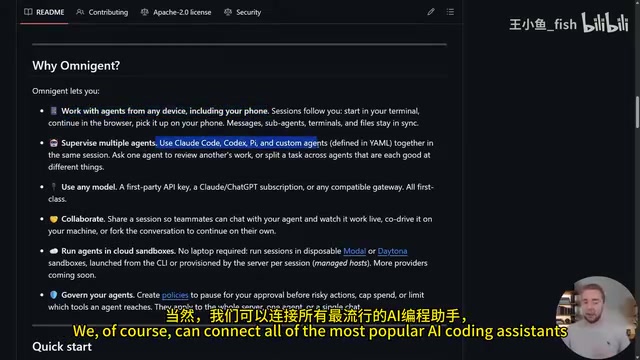
Omnigent Open-Sourced: A Meta-Harness for AI Coding Agents Built by Databricks
Databricks open-sources Omnigent, a Meta-Harness for orchestrating Claude Code, Codex, and more AI coding assistants together—with built-in guardrails, cross-model workflows, and real-time collaboration. Get started in 10 minutes.
Read more →

·6 min
Rising RAM Prices Push Up Gaming Laptop Costs? A Value-Focused Buying Guide
Rising RAM and storage prices have eroded gaming laptop value. This guide breaks down the causes, cost pass-through, and offers practical buying advice plus MSI value picks.
Read more →
·5 min
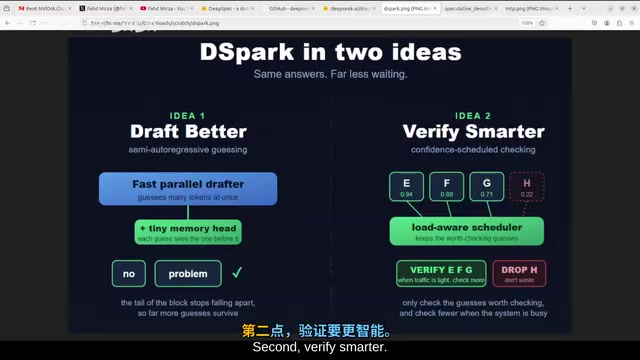
DeepSeek DSpec Hands-On: How Speculative Decoding Accelerates LLM Inference by 6x
Hands-on report on DeepSeek's open-source inference acceleration toolkit DSpec: draft model + smart scheduling delivers lossless speedup, hitting acceptance length 6 on GSM8K and reproducing official data.
Read more →
Skill Engineering: Why AI Design Can't…
·2 min
Skill Engineering: Why AI Design Can't Rely on 'One-Shot' Generation
Paul Bakaus debunks the one-shot AI myth. Learn how Skill Engineering and loopmaxxing reshape human-AI collaboration for better design outcomes.
Read more →

·6 min
From Firefox to Android Root: Deep Analysis of a Browser Privilege Escalation Attack Chain
Deep analysis of a complete mobile exploit chain: how attackers start from Firefox, escape the sandbox, exploit kernel vulnerabilities, and achieve Android Root. Security insights for developers.
Read more →

·5 min
Nonuniform Tensor Parallelism: NVIDIA's New Fault-Tolerance Approach to Boost LLM Training Goodput
NVIDIA introduces Nonuniform Tensor Parallelism, letting GPUs bear different compute loads so training can continue without checkpoint rollback during hardware failures—boosting LLM training Goodput and fault tolerance at scale.
Read more →

·7 min
Exfiltrating Data from Air-Gapped Systems via Apple's Find My Network: Attack Mechanics and Defense Insights
Security research reveals how attackers can abuse Apple's Find My network as a covert exfiltration channel, disguising sensitive data from air-gapped systems as location beacons. A deep dive into the attack chain, stealth advantages, and defense insights.
Read more →

·6 min
Post-Quantum Cryptography in Python: A Deep Dive into the ML-KEM Key Encapsulation Mechanism
NIST has officially standardized the ML-KEM (CRYSTALS-Kyber) post-quantum algorithm. This article covers ML-KEM principles, Python ecosystem implementation, hybrid deployment strategies, and critical challenges like constant-time execution and memory safety.
Read more →