#Fair Code
758 related articles

·4 min
The Truth About Silicon Valley's No-Poach Agreements: From Jobs' Emails to Antitrust Lawsuits
A fake Cook-to-Altman email screenshot leads to the real Silicon Valley history of secret no-poach agreements. This article analyzes the antitrust lawsuits of Apple, Google, and others, revealing compliance red lines in the AI-era talent war.
Read more →

·6 min
DeepSeek Builds Its Own AI Chips: The Strategic Logic and Challenges Behind Compute Independence
DeepSeek is entering AI chip development, targeting compute autonomy. This article analyzes its motivations, software-hardware synergy, chip R&D challenges, and impact on China's AI vertical integration.
Read more →

·5 min
Multi-Model Tiered Deployment: Is an AI Gateway Worth Adopting?
More teams are adopting multi-model tiered scheduling. AI gateways solve cross-vendor API management, automatic fallback, and cost tracking — but add a new abstraction layer. Learn when a gateway is worth it.
Read more →

·2 min
Krea 2 Emotion Expression Test: Turbo vs Raw+LoRA Head-to-Head Review
An in-depth review of how Krea 2 Turbo and Raw+LoRA differ in emotional scenarios. Using a variable-controlled workflow and the same random seed, comparing 11 emotional scenarios, with auxiliary LoRA and prompt tips.
Read more →

·2 min
Gemini 3.5 Pro's Repeated Delays: The Real Logic Behind the LLM Race
Gemini 3.5 Pro's latest delay sparks community debate. This article dives deep into the technical causes, safety review pressures, and expectation-management challenges behind frequent LLM delays.
Read more →
·5 min
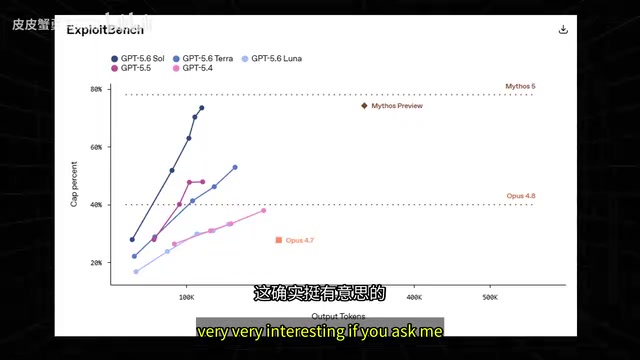
GPT-5.6 Released: Outperforms Rivals but Halted by Government—Cybersecurity Capabilities Trigger Regulatory Red Line
OpenAI releases GPT-5.6 (Sol/Terra/Luna), beating Anthropic on Terminal Bench at ~40% lower cost. But its cybersecurity capabilities hit danger thresholds, limiting access to trusted partners at government request.
Read more →

·4 min
Hands-On Test of GPT Real-Time Voice: A Comprehensive Review of Dialect Recognition, Emotional Expression, and Role-Play
An in-depth hands-on test of GPT's real-time voice feature, covering Cantonese and Sichuanese dialect recognition, emotional tone switching, complex role-play, and cross-voice contextual memory—objectively presenting the true level and remaining gaps of AI voice interaction.
Read more →

·5 min
Hands-On Test of GPT-5.6's Three Models Sol/Terra/Luna: How Good Are Their Coding Skills?
OpenAI released three GPT-5.6 models—Sol, Terra, Luna—and merged ChatGPT with Codex to launch Work mode. This hands-on review tests coding, game dev, and PPT creation, revealing one-click deployment wins alongside aesthetic and efficiency flaws.
Read more →

·4 min
AI Coding Tool Data Leakage Risks: A Security Guide for Protecting Quantitative Strategies
AI coding tools carry cloud data transmission risks, exposing quantitative trading strategies to leakage. This article analyzes AI tool data security and offers protection strategies.
Read more →
·5 min
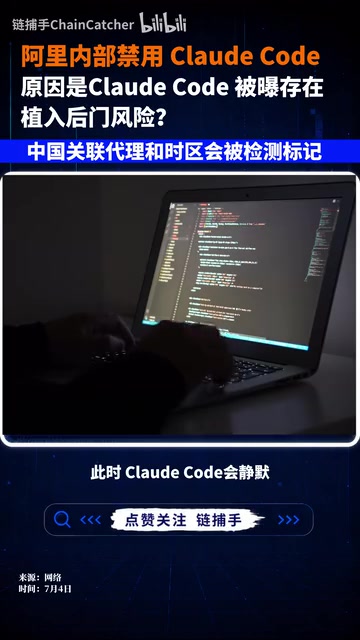
Alibaba Bans Claude Code: Invisible Fingerprints and the AI Tool Trust Crisis
Alibaba has banned Claude Code as high-risk software. Reverse engineering revealed a covert environment-identification mechanism hiding user fingerprints in punctuation via prompt steganography. A deep dive into the incident and AI tool trust.
Read more →
·5 min
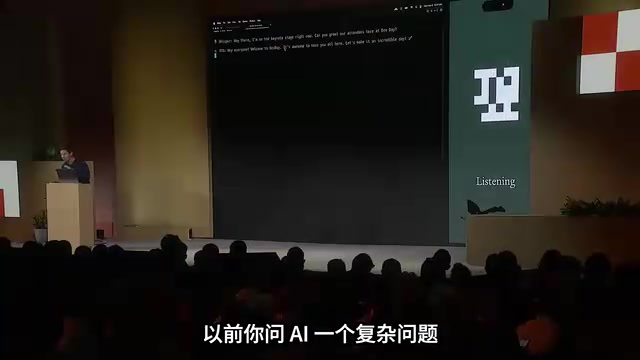
GPT-5.6 Triple Launch: Understanding the Positioning and Key Differences of Sol, Terra, and Luna
OpenAI released three GPT-5.6 models—Sol, Terra, and Luna—covering everything from flagship reasoning to lightweight speed. A deep dive into their positioning, performance differences, pricing, and industry signals.
Read more →
·4 min
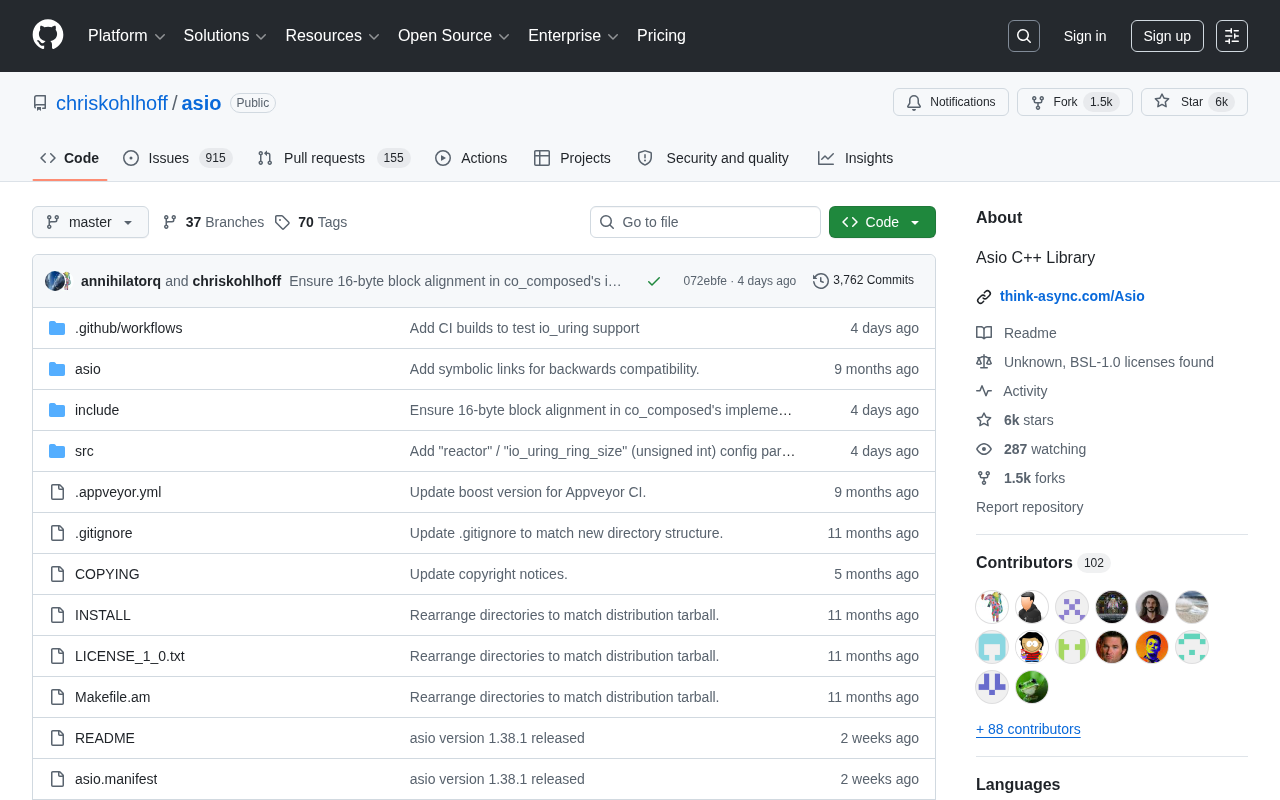
Deep Dive into Asio: The De Facto Standard and Core Design of C++ Asynchronous Network Programming
A comprehensive analysis of Asio (Boost.Asio) covering its Proactor async model, completion token mechanism, C++20 coroutine support, and cross-platform I/O abstraction for high-performance C++ networking.
Read more →

·2 min
Does Yelling at AI Make It Smarter? Breaking Down LLM Behavior and Prompting Techniques
Why does yelling at AI sometimes seem to work? This article breaks down LLM behavior using technical principles and offers actionable prompt engineering tips.
Read more →

·3 min
Is Perplexity Pro Worth Subscribing To? A Practical Comparison Guide for Major AI Tools
Is Perplexity Pro worth paying for? This guide compares ChatGPT Plus, Claude Pro, and Google Gemini across research, writing, and coding to help you choose the right AI subscription.
Read more →

·6 min
A Deep Dive into the vLLM Inference Framework: Core Principles of Throughput Optimization and Interview Guide
An in-depth analysis of the vLLM inference framework's core principles: from the meaning of throughput (tokens/s), to the bottlenecks of autoregressive generation, to KV Cache, PagedAttention, and continuous batching.
Read more →

·6 min
Grok 4.5 Hands-On: A Faster, Cheaper Coding Dark Horse — Can It Replace Opus and GPT?
In-depth Grok 4.5 hands-on review: priced at a fraction of Opus 4.8, twice the token efficiency of peers, and coding ability in the top tier. A real-project breakdown of its strengths, highlights, and shortcomings.
Read more →
Can AI Prove Mathematical Conjectures?…
·5 min
Can AI Prove Mathematical Conjectures? The Truth Behind the GPT-5.6 Incident and the Limits of Large Language Models
A PDF claiming GPT-5.6 Sol Ultra proved the Cycle Double Cover Conjecture sparked debate on Hacker News. We unpack the truth and the limits of LLMs in math proofs.
Read more →

·2 min
Open Source as Critical Infrastructure: How Should Governments Spend Their Money Effectively?
Governments frequently label open source software as critical infrastructure, but the real test is whether budgets flow to maintainer time, infrastructure, and incident response—not just surface-level audit reports.
Read more →
·5 min
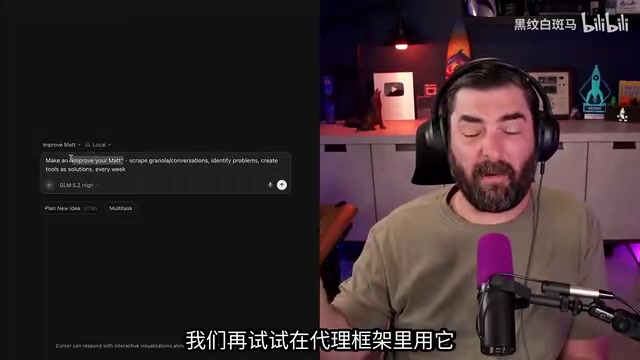
GLM-5.2 Hands-On Review: A 753B-Parameter Open Model That Beats GPT and Claude on Value
In-depth hands-on review of Zhipu AI's flagship GLM-5.2: a 1M-token context window and API pricing just one-fifth of GPT/Claude. Covers website building, Chrome extensions, 3D game cloning, and agentic workflows.
Read more →

·6 min
Nothing Phone 4B Announced: The First B-Series Phone, Once Again Skipping the US Market
Nothing officially launches its first B-series phone, the Phone 4B, blending 4A and 4A Pro design elements for the entry-level market. It continues the strategy of skipping the US, focusing on price-sensitive markets like India and Europe.
Read more →