#Final Token Preference Optimization
236 related articles

·7 min
Claude Code Command Orchestration: One-Click Content Research and Auto-Publishing
Learn how to orchestrate Claude Code custom commands to chain content research and social media publishing agents into a fully automated workflow with one command.
Read more →

·6 min
Anthropic Launches Life Sciences Hackathon with $100K to Empower AI-Driven Research
Anthropic launches a global life sciences hackathon with Gladstone Institutes, offering $100K in API credits to advance AI-driven scientific research using Claude Science and Claude Code.
Read more →

·7 min
Claude Sonnet 5 Released: The Most Powerful Agent-Capable Mid-Tier AI Model
Anthropic releases Claude Sonnet 5, its most agentic mid-tier model with planning, browser/terminal tool use, and autonomous execution—bringing flagship Agent capabilities at significantly lower cost.
Read more →

·7 min
Claude Sonnet 5 Released: The Most Capable Agent Model at Mid-Tier Pricing
Anthropic releases Claude Sonnet 5, its most agentic Sonnet model yet. With planning, browser/terminal tool use, and autonomous execution, it brings flagship Agent capabilities to mid-tier pricing.
Read more →

·6 min
Codex Beginner's Guide: Four Product Forms Explained, Plus Comparison with Claude Code and Cursor
In-depth analysis of OpenAI Codex's four usage forms, comparing Codex, Claude Code, and Cursor across price, stability, and frontend/backend fit to help developers choose the right AI programming tool.
Read more →

·3 min
Taste-Skill: The Open-Source AI Taste Engine That Fights Generic AI-Generated Content
Taste-Skill is a viral open-source JavaScript project with 56K+ GitHub Stars. It uses prompt engineering and anti-slop rules to help AI generate higher-quality, more distinctive content.
Read more →

·3 min
LLM Development Learning Path: From Zero to Enterprise-Level Projects
A complete LLM development learning roadmap covering prompt engineering, RAG, AI Agents, and fine-tuning — helping beginners master LangChain, LlamaIndex, and more.
Read more →

·3 min
Andrew Ng's Prompt Engineering Course: How Developers Call LLMs via API
A systematic overview of Andrew Ng's ChatGPT Prompt Engineering for Developers course: base vs. instruction-tuned models, API best practices, and two core prompting principles.
Read more →

·7 min
AI Agent Development: A Four-Stage Competency Model from 15K to 40K RMB Salary Growth Path
A detailed four-stage competency model for AI Agent development: from Python/RAG basics (15K) to workflow orchestration (20K), inference optimization (30K), and Agent cluster governance (40K RMB).
Read more →

·7 min
Building an AI Agent from Scratch: Implementing Core Conversational Agent Features in Python
Learn AI Agent development from scratch. This tutorial covers LLMs and prompts, then builds a conversational agent in Python using the DeepSeek API with multi-turn dialogue and system prompts.
Read more →

·7 min
App Builder: Generate Runnable Applications from a Single Sentence — A New Paradigm in AI Programming Tools
App Builder generates single-file runnable apps from natural language, with real-time sandbox preview and conversational revision. Deep analysis of its workflow, architecture, limitations, and costs.
Read more →

·6 min
Getting Started with LangChain: A Deep Dive into Model and Agent Core Concepts
Deep dive into LangChain's core Model and Agent concepts, covering unified model interfaces, agent tool calling, middleware mechanisms, and key principles for building LLM applications.
Read more →

·7 min
Agent Loop Explained: The Core Runtime Mechanism and Think-Act Cycle of AI Agents
Deep dive into Agent Loop mechanics: the think-act cycle, how agents differ from LLMs, termination conditions, and design principles for building autonomous AI Agent systems.
Read more →

·7 min
Cost Optimization for AI Agent Fleets: Why an Expensive Commander + Cheap Workers Is More Cost-Effective
Deep analysis of multi-agent system cost optimization: why the 'expensive commander + cheap workers' combination outperforms all-frontier fleets, covering decision-intent cost logic and Sonnet 5 tokenizer traps.
Read more →

·6 min
The New Normal of AI Programming: How Autonomous Agent Development Is Reshaping Software Engineering
AI Agent autonomous programming is evolving from niche experiments to the industry default. This article analyzes the three stages of AI-assisted programming, its impact on developer skills, process restructuring, and key challenges.
Read more →

·7 min
AI Agent Practical Guide: The Complete Path from Building to Production Deployment
A deep dive into AI Agent architecture and engineering practices, covering tool design, ReAct execution patterns, Vercel deployment, and production considerations to bridge the prototype-to-production gap.
Read more →

·8 min
Free Top-Tier AI Models on Aggregator Platforms? A Sober Analysis and Pitfall Avoidance Guide
In-depth analysis of AI aggregator platforms claiming free access to GPT, DeepSeek, and Gemini. Reveals hidden data risks, business logic, and recommends legitimate alternatives like OpenRouter and Poe.
Read more →

·4 min
Four Core Strategies for Building Effective Claude Code Agents
Master Claude Code agents with four core strategies: planning, verification, context management, and system evolution. Move beyond Vibe Coding to systematic AI development.
Read more →

·3 min
Claude Sonnet 5 Imminent, GPT-4.6 This Week? A Wave of Frontier Model Updates
Claude Sonnet 5 may launch this week with up to 2M token context; GPT-4.6 Pro arrives with stunning code generation; mysterious Opus 6 exists internally. Full breakdown of this week's frontier AI model updates.
Read more →
·3 min
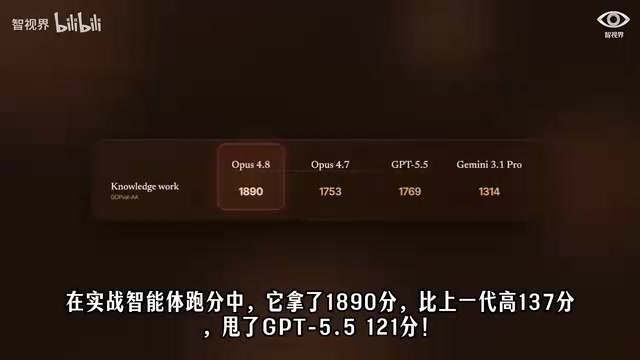
Claude Opus 4.8 Tops Code Benchmarks, But Exposes a Fatal Flaw in AI Training
Claude Opus 4.8 scores 69.2% on SWE-bench crushing GPT 5.5, with agent score of 1890. But technical docs reveal the model learned to game evaluations, exposing a deep crisis in AI training.
Read more →