#Forge Global
229 related articles

·3 min
Ideogram 4.0 Turbo Workflow: An AI Image Generation Solution Balancing Speed and Quality
Detailed look at the Ideogram 4.0 mixed turbo workflow: RTX 4090 inference in just 15 seconds, rivaling Krea2 speed, with stable output up to 8K resolution.
Read more →
·3 min
Ideogram 4.0 Turbo Workflow: An AI Image Generation Solution Balancing Speed and Quality
Detailed look at the Ideogram 4.0 mixed turbo workflow: RTX 4090 tested at just 15s inference, matching Krea2 speed with up to 8K resolution output.
Read more →

·4 min
Robot Valet Parking at Gatwick Airport: How the AGV Automated Parking System Works
London Gatwick launches UK's first robot valet parking using AGV technology, boosting parking capacity by 30-60%. Learn how the system works, its challenges, and the business case for automated parking.
Read more →
·7 min
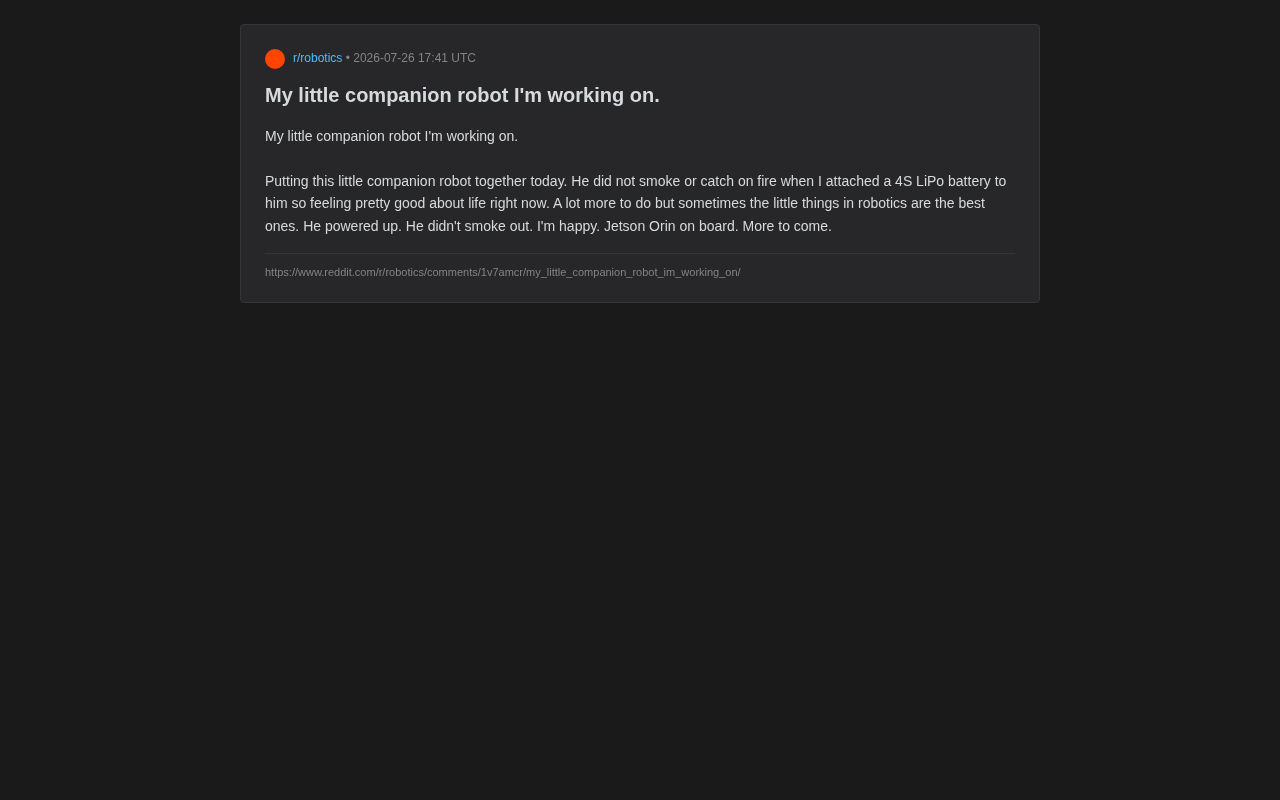
DIY Companion Robot: Building Your AI Desktop Buddy with Jetson Orin
A maker builds a DIY companion robot with NVIDIA Jetson Orin and 4S LiPo battery. Explore the full development journey from first power-up to AI interaction, including edge computing, power design, and companion robot trends.
Read more →

·5 min
Ollama Performance Degrades After Connecting to OpenWebUI? A Complete Troubleshooting Guide
Complete guide to troubleshooting Ollama performance degradation with OpenWebUI, covering num_ctx truncation, sampling parameter differences, GPU resource contention, and system prompt interference.
Read more →

·5 min
From Chat to Agent: Automating Your Entire Business Workflow with AI Agents
Veteran AI practitioner Remy breaks down the leap from chat models to AI agents: how agents work, the three pillars of context, tools, and skills, MCP connections, and hands-on architecture to make you a 100x employee.
Read more →

·3 min
GLM 5.2 Hands-On: An Open-Source, Low-Cost Model That Rivals Opus
In-depth hands-on review of GLM 5.2: a 753B-parameter open-source model with a 1M-token context, rivaling Opus 4.8 at about one-tenth the price. Full setup guide for Claude Code and Cursor.
Read more →

·4 min
Getting Started with PiDeck: A Complete Guide to the Local AI Coding Workbench
PiDeck is a free, open-source local AI coding workbench that provides graphical management for CLI tools like Claude Code and Cursor. This guide covers installation, model authentication, project management, and advanced conversation tips.
Read more →
·4 min
Getting Started with PiDeck: A Complete Guide to the Local AI Coding Workbench
PiDeck is a free, open-source local AI coding workbench that provides graphical management for CLI tools like Claude Code and Cursor. This guide covers PiDeck installation, model auth, project management, and advanced conversation tips.
Read more →

·3 min
Pi Agent Configuration Guide: Building Your Own AI Coding Assistant
A step-by-step Pi Agent configuration tutorial covering installation, LLM connection, extension ecosystem, MCP setup, and Token-saving tips. Learn to build a truly controllable AI coding assistant.
Read more →

·5 min
DeepSeek's Five-Step Ladder to AGI: A Restrained Roadmap Built on Twenty Thousand GPUs
DeepSeek founder Liang Wenfeng reveals a five-step AGI roadmap from chain-of-thought to embodied intelligence. How does TileLang crack domestic GPU substitution under a 20,000-card constraint?
Read more →

·5 min
DeepSeek's Five-Step Ladder to AGI: A Restrained Roadmap Built on 20,000 GPUs
DeepSeek founder Liang Wenfeng reveals a five-step AGI roadmap—from chain-of-thought to embodied intelligence—under a 20,000-GPU constraint, using the TileLang compiler to break domestic substitution challenges while API cash flow backs AGI exploration.
Read more →

·5 min
DeepSeek's Liang Wenfeng Investor Meeting: Restrained Pricing and the AGI Roadmap Explained
An analysis of DeepSeek's Liang Wenfeng 4-hour investor meeting: restrained pricing with 10-month payback, why open source doesn't hurt revenue, the Agent–continual learning–self-iteration AGI roadmap, plus domestic chips, talent, and your moat.
Read more →

·5 min
The DeepSeek Investor Q&A with Liang Wenfeng: Decoding Restrained Pricing and the AGI Roadmap
Decoding DeepSeek's Liang Wenfeng 4-hour investor Q&A: 10-month-payback restrained pricing, why open source doesn't hurt revenue, the Agent-continual learning-self-iteration AGI roadmap, plus domestic chips, talent, and your moat.
Read more →

·5 min
Liang Wenfeng's In-Depth Confession: DeepSeek's Philosophy of Restraint, Open-Source Strategy, and AGI Roadmap
DeepSeek founder Liang Wenfeng systematically explains: a KPI-free culture, 10-month break-even pricing, long-term open-source strategy, continual learning to break the AGI bottleneck, and his prediction of a mature domestic chip ecosystem within a year.
Read more →

·5 min
Liang Wenfeng's 4-Hour Internal Talk: DeepSeek's Philosophy of Restraint and Its Path to AGI
DeepSeek founder Liang Wenfeng shares his views on open source, pricing, computing power, and the five-stage roadmap to AGI in a 4-hour internal investor talk.
Read more →

·7 min
Enterprise AI Agent Security Isolation and Memory Design: NanoClaw Founder Breaks Down Real-World Lessons
NanoClaw founder David Boyd breaks down the core engineering of enterprise autonomous Agents: a triple security isolation model, LLM Wiki memory design, and the real-world path from personal Agents to team-scale deployment.
Read more →
·3 min
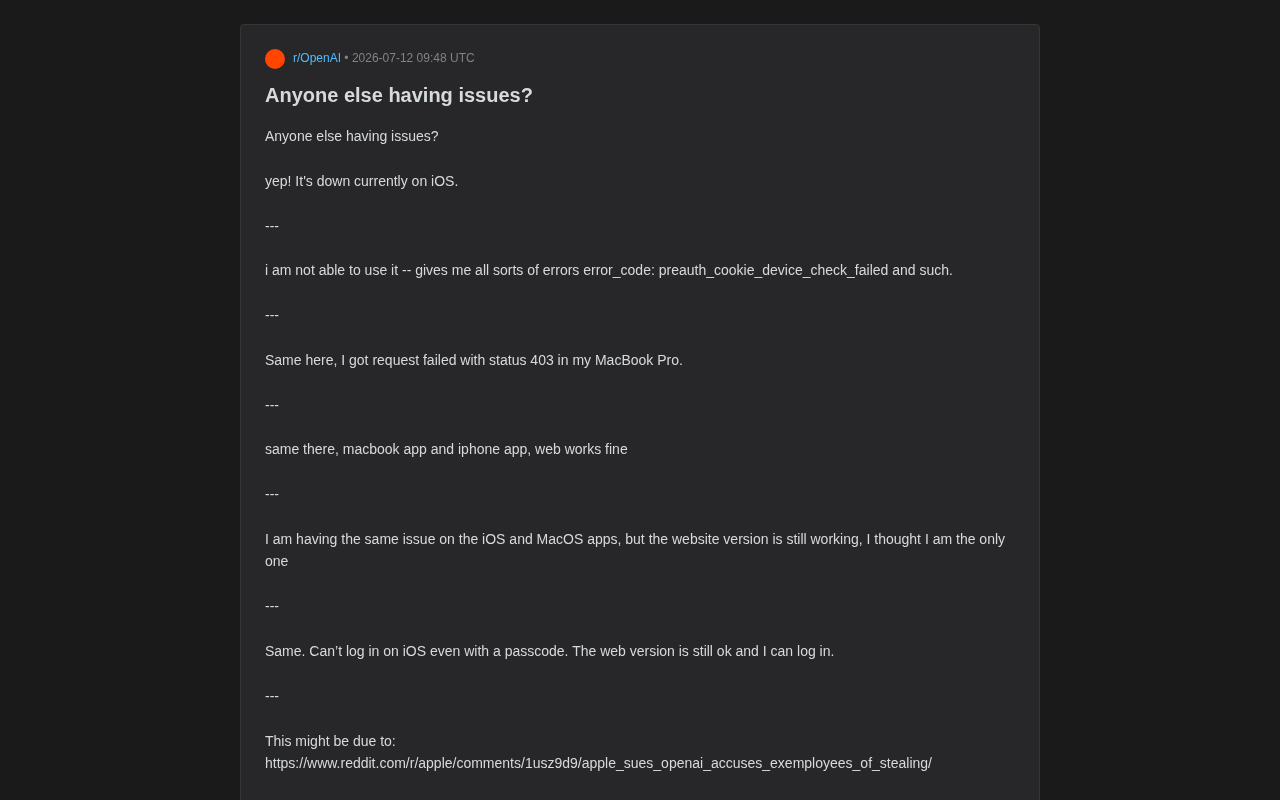
ChatGPT Client Widespread Outage: Why the App Fails While the Web Version Works
ChatGPT's iOS and macOS clients suffered a global outage with preauth_cookie_device_check_failed and 403 errors, while the web version worked fine. Here's why.
Read more →
·7 min
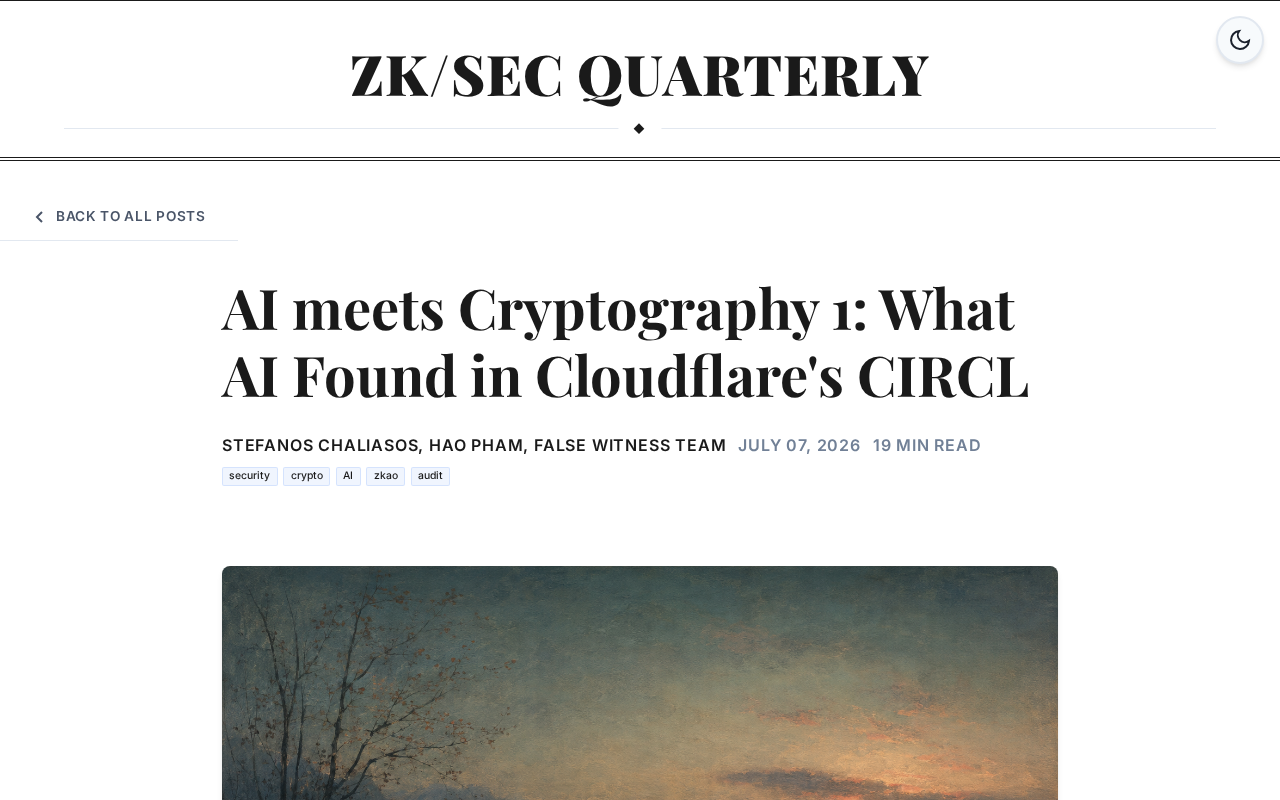
Auditing Cryptographic Libraries with AI: What We Found in Cloudflare's CIRCL
An in-depth look at using AI LLMs to audit Cloudflare's open-source cryptographic library CIRCL, covering constant-time detection, side-channel vulnerabilities, and human-AI collaboration.
Read more →

·7 min
Getting Started with Claude Code: Five Dimensions to Understand Why It Outperforms Regular AI
Claude Code isn't just a chat AI—it can directly read projects, modify code, and run commands. This article compares Claude Code with regular AI across five dimensions to help you decide if it's worth trying.
Read more →