#Gemini prompt framework
849 related articles

·3 min
Gemini Image Compositing in Practice: Photobashing Prompt Framework & Techniques
Learn how to use Gemini for Photobashing image compositing, including core prompt structures, clothing-body combination templates, lighting consistency tips, and multi-turn iteration methods.
Read more →

·4 min
What Is AI Governance? A Complete Guide from Concept Definition to Enterprise Implementation
A deep dive into AI governance: core definitions, key pillars, and implementation methods. Covers transparency, fairness, security, and accountability with a complete path from building governance organizations to automated tooling.
Read more →

·3 min
BaoMiao AI Manager Hands-On Review: An All-in-One Efficiency Platform for Managing Overseas AI Tools
Hands-on review of BaoMiao AI Manager's four core features: one-click AI Agent installation, Token quota monitoring, Skill & MCP management, and unified conversation archiving for overseas AI tools.
Read more →

·3 min
From ML to AI Engineer: A Pragmatic Transition Learning Roadmap
A detailed guide on the core differences between ML and AI engineers, with a complete learning roadmap covering engineering fundamentals, LLM app development, and production deployment including RAG systems and agent development.
Read more →

·2 min
Mole: An Open-Source Deep Research Agent That Runs in Your Terminal
Mole is an open-source deep research agent that runs in the terminal, supporting multi-round retrieval, cross-verification, and structured reports. Explore its features and key considerations.
Read more →

·2 min
Grok 4.6 High Pricing Inversion: Why High Is Cheaper Than Auto
Grok 4.6 High's double-credit promotion creates a pricing inversion, processing 3M tokens per dollar vs Auto's 2.7M. Analysis of causes and developer strategies.
Read more →

·4 min
Hands-On Testing Meta's Open-Source Muse Glimmer: A Lopsided Agent-Specific Model
Hands-on testing of Meta's open-source 30B Muse Glimmer model across vision, reasoning, and full-stack tasks. Excellent vision but weak logic, D-Spark gives 3x speed at quality cost, 128K context is the biggest limitation.
Read more →

·3 min
Claude Code Enables Auto Mode by Default: The Era of Autonomous AI Coding Has Arrived
Anthropic enables Auto Mode by default in Claude Code, shifting AI coding from collaboration to autonomous execution. Analysis of Sandboxes security, DeepSeek's Harness team, and token cost management.
Read more →

·2 min
Grok 4.6 vs. Sol 5.6: Interpreting Benchmark Rankings and Their Limitations
Artificial Analysis Arena rankings show Grok 4.6 and Sol 5.6 performing comparably. This article explores what this benchmark conclusion means, the value and limitations of third-party evaluations.
Read more →

·4 min
Prompt Caching in Practice: Save 90% on AI Coding Token Costs
Deep dive into how Prompt Caching works—caching inputs, not outputs. Practical tips to maximize cache hit rates in AI coding agents and cut token costs by up to 90%.
Read more →

·4 min
Vibe Coding Architecture Explained: The Trinity of Cognition, Execution, and Orchestration
Deep dive into Vibe Coding's three-layer architecture: how the Cognition Layer (LLMs), Execution Layer (local Agents), and Orchestration Layer (workflow frameworks) work together for reliable AI programming.
Read more →

·2 min
Terminal Bench 3 Released: An Uncontaminated AI Terminal Capability Benchmark
Terminal Bench 3 is a newly released AI terminal capability benchmark featuring uncontaminated test data and a unified testing framework, providing fairer and more trustworthy evaluation of LLMs in command-line environments.
Read more →

·3 min
Hackers Disguise as ClaudeBot for Mass Vulnerability Scanning: Identification and Defense Guide
Attackers impersonate ClaudeBot and other AI crawlers for mass vulnerability scanning using User-Agent spoofing. Learn attack methods, identification techniques, and defenses including IP verification and WAF configuration.
Read more →

·5 min
Harness: The Operating System That Takes LLM Agents from Demo to Production
Deep dive into Harness technology: how context engineering, memory management, and multi-agent architecture transform LLM agents from stochastic demos into stable production systems.
Read more →

·4 min
Getting Started with LangChain 1.3: Ecosystem Architecture & Agent Development Complete Guide
Complete guide to LangChain 1.3 ecosystem: four core modules (LangChain, LangGraph, DeepAgent, LangSmith), from setup to building your first Agent with tools, prompts & memory.
Read more →

·5 min
Building Data Agents with BigQuery and ADK: AgentOps in One Line of Code
Deep dive into Google Cloud's complete stack for building data Agents with BigQuery and ADK, covering MCP Toolbox parameterized SQL, managed MCP servers, and Agent Analytics one-line observability.
Read more →

·3 min
What Are AI Agents? A Deep Dive into the Three Core Components: Perception, Decision, and Action
A deep dive into AI Agents: their definition and three core components—Perception, Decision, and Action. Learn what distinguishes real AI agents from chatbots and automation scripts.
Read more →

·3 min
How to Become a Stronger Engineer in the AI Era: Neither Surrendering Nor Rejecting
How can engineers avoid skill atrophy from over-relying on AI coding tools? This article provides an actionable growth path covering system design, debugging, and code review to build core competitiveness.
Read more →

·3 min
Claude Writing Style Fatigue: Causes and Solutions for AI Writing Homogenization
Analyzing why Claude's writing style causes user fatigue, the technical causes of AI writing homogenization from RLHF training, and practical strategies including prompt engineering and system prompts to break through default AI style limitations.
Read more →
·2 min
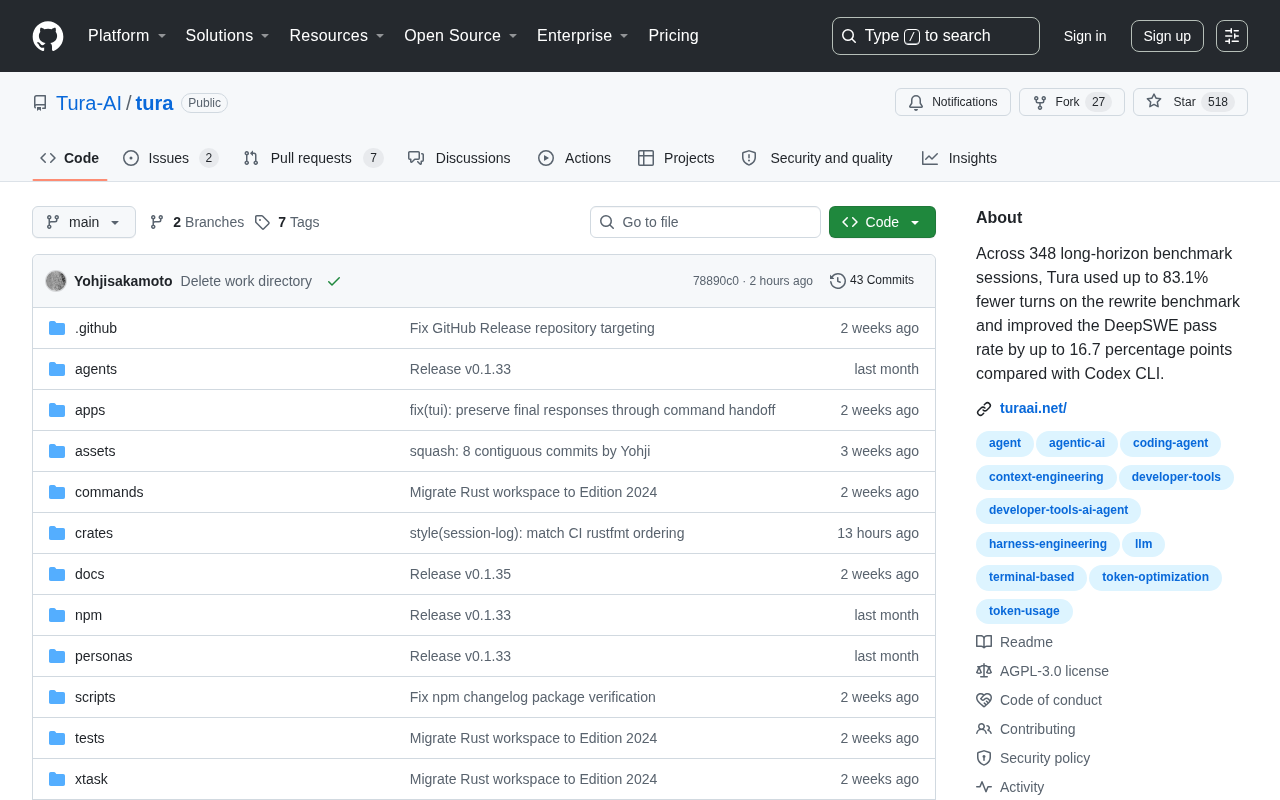
Tura: A New Approach to Saving 80% of Tokens for AI Agents
An in-depth analysis of how the Tura framework helps AI Agents reduce 80% of token consumption while improving task quality through intelligent context management and structured tool calling.
Read more →