#Git hooks AI sessions
51 related articles
·4 min
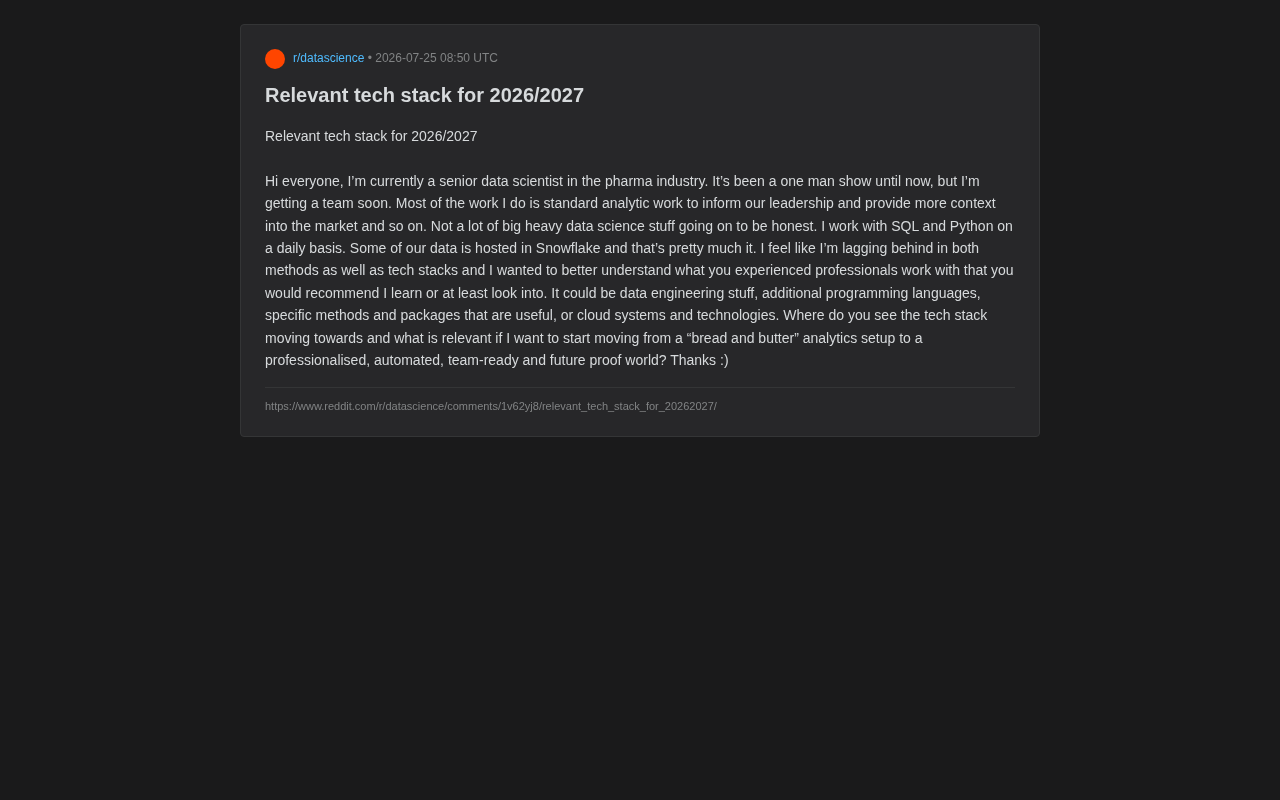
From Solo Analyst to Team Data Platform: A Practical Guide to Leveling Up Your Tech Stack
How should a data scientist upgrade their tech stack when transitioning from IC to team lead? A phased roadmap covering Git, dbt, Snowflake, modern data stack, and generative AI.
Read more →
·5 min
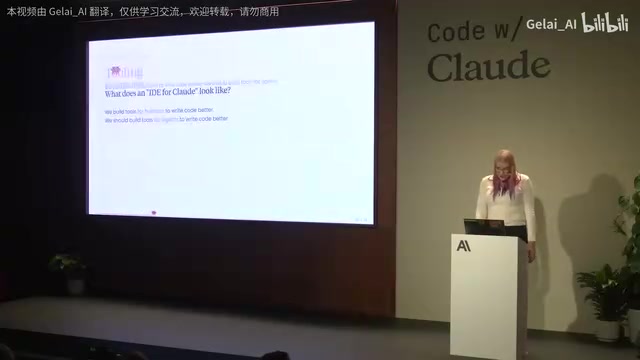
Advanced Claude Code in Practice: Building a Top-Tier AI Development Workflow
In-depth analysis of Claude Code customization methodology: from access, knowledge injection to tooling. Master context window management, zero-overhead Hooks, and MCP & Skills plugin primitives to build a scalable AI software engineering workflow.
Read more →

·4 min
Claude Code Getting Started: Environment Setup, Core Commands, and Git Workflow Automation
A practical guide to Claude Code covering installation, Chinese LLM switching, project analysis, key commands, and conversational Git workflow automation for developers.
Read more →

·3 min
Intent-Driven Development: Claude Code's Evolving Paradigm and Practical Tips
Anthropic engineer Lydia and YK Sugi break down Claude Code's Intent-Driven Development paradigm, covering dynamic workflows, auto mode, sub-agent orchestration, and the evolving role of software engineers in the AI era.
Read more →
Capn-hook: Breaking the Cycle of Repet…
·2 min
Capn-hook: Breaking the Cycle of Repetitive Exploration for Coding Agents
Capn-hook is an open-source hook-based tool that helps coding agents retain knowledge across sessions—eliminating redundant exploration and turning one-time discoveries into reusable engineering assets.
Read more →

·4 min
Agent Loop in Practice: A Guide to Building Self-Improving Automation with Guardrails
A deep dive into building verifiable, self-evolving Agent automation loops with Claude Code and Codex — covering Loop Contracts, four trigger types, three-phase execution architecture, and Evolve Loops.
Read more →

·7 min
ManagedAgents.sh: A Deep Dive into the Model-Agnostic Open-Source Managed Agent Platform
ManagedAgents.sh is a model-agnostic managed agent platform from OpenComputer, supporting Claude, Pi, and Codex runtimes with Slack and GitHub integration.
Read more →

·5 min
The Attention Bottleneck in AI Coding: Hands-On Agent Workflows from the Father of Crayfish
OpenClaw author Peter shares his thinking on AI coding: when compute is no longer the bottleneck, developer attention becomes the new ceiling. Learn three practical skills—Agent Transcript, Auto-Review, and the Crapbox sandbox.
Read more →

·4 min
Claude Code New Features Deep Dive: Remote Control, Multi-Agent Parallelism, and Auto Memory
Deep dive into Claude Code's major new updates: Remote Control for session takeover, Auto Mode to reduce interruptions, multi-agent code review, Auto Memory, and Routines for cloud automation workflows.
Read more →

·7 min
Hermes Agent Deep Dive: An AI Agent Framework That Uses Fewer Tokens Than Open Cloud
Full comparison of Hermes Agent vs Open Cloud: lower token usage, 200+ model support, auto Skill encapsulation, WeChat/DingTalk integration. A cost-effective AI Agent alternative for long-term deployment.
Read more →
 Tech Frontiers
·4 min
Claude Slack Agent Upgrade: Multiplayer Collaboration, Proactive Responses, and Persistent Memory Explained
Anthropic upgrades Claude's Slack integration with multiplayer collaboration, proactive responses, and persistent memory — transforming AI from a passive tool into a true team partner.
Read more →

·4 min
Four Core Strategies for Building Effective Claude Code Agents
Master Claude Code agents with four core strategies: planning, verification, context management, and system evolution. Move beyond Vibe Coding to systematic AI development.
Read more →

·4 min
Harness Engineering in Practice: Mastering the Four Core Principles and Implementation Methods
Deep dive into Harness Engineering's four core principles: Documentation as Source of Truth, Mechanized Constraints, Feedback Loops, and Entropy Management, with practical AI Agent cases.
Read more →

·3 min
Claude Code Routines Explained: Automation in Practice with Proactive AI Coding Agents
Deep dive into Claude Code Routines: build proactive AI coding agents with time-scheduled and event-driven triggers. Covers automated docs, deploy verification, and on-call investigation.
Read more →

·3 min
Claude Code Debugging Guide: From Context Management to the Observability Flywheel
A systematic guide to Claude Code debugging and observability, covering Token monitoring, context management, Compact compression, security, and Skills ecosystem.
Read more →
·3 min
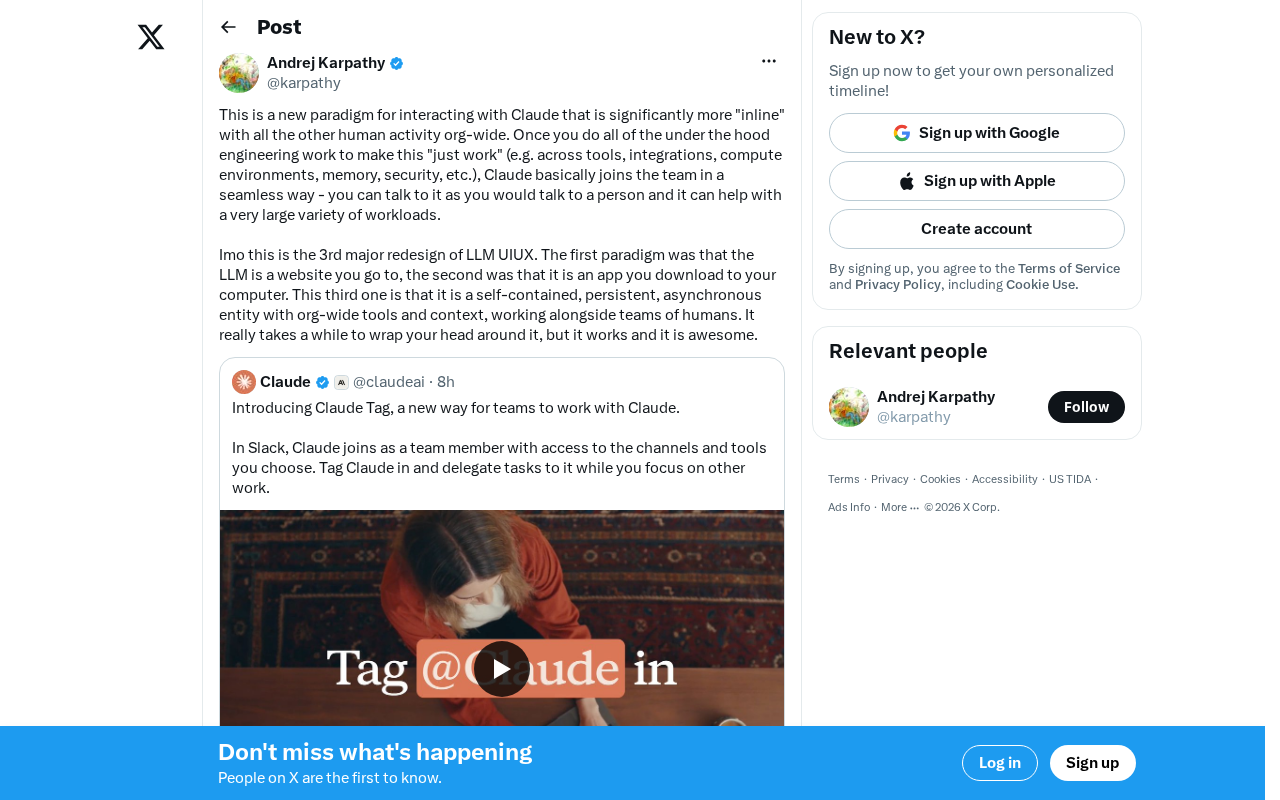
Three Paradigm Shifts in LLM Interaction: From Website to Desktop App to Team Member
Explore the three paradigm shifts in LLM interaction: from ChatGPT as a website, to desktop apps, to autonomous AI team members that collaborate asynchronously with humans.
Read more →

·1 min
Claude Code for Test Development: A Complete Workflow for AI-Written Test Cases, Bug Fixes, and Code Reviews
A practical guide to Claude Code for test development: auto-generating test code, Plan mode for spec-driven development, Playwright MCP automation, and deep GitHub integration.
Read more →

·3 min
The Complete Guide to Claude Code: Installation, Workflows & Advanced Tips
Complete guide to Claude Code: installation, agentic loop principles, the Explore→Plan→Code→Commit workflow, CLAUDE.md configuration, context management, MCP connections, and Hooks automation.
Read more →

·2 min
GitHub Copilot SDK Deep Dive: Core Features and Practical Guide
Deep dive into GitHub Copilot SDK: Agent Loop, Hooks lifecycle control, Custom Agents orchestration, Skills modules, and local model integration for AI app development.
Read more →

·2 min
Vibe Coding in Practice: Replacing a ¥6,800/Year SaaS Platform for Under ¥1,000
A tech team used 26 hours of Vibe Coding to build a video membership platform, replacing a ¥6,800/year SaaS for under ¥1,000 in AI development costs.
Read more →