#Go runtime optimization
821 related articles

·3 min
Building an LLM Inference Engine in Rust That Rivals Llama.cpp
Exploring the technical path to building an LLM inference engine in pure Rust that rivals Llama.cpp, analyzing Rust's advantages and challenges in memory safety, SIMD optimization, and GPU backends.
Read more →

·3 min
BaoMiao AI Manager Hands-On Review: An All-in-One Efficiency Platform for Managing Overseas AI Tools
Hands-on review of BaoMiao AI Manager's four core features: one-click AI Agent installation, Token quota monitoring, Skill & MCP management, and unified conversation archiving for overseas AI tools.
Read more →

·2 min
Building a Contract-Grade Verifier for AI-Generated GPU Kernels: Solving the LLM Code Trust Problem
Explore how contract-grade verifiers validate LLM-generated GPU kernel correctness, addressing trust issues like race conditions and out-of-bounds access in AI code generation.
Read more →

·3 min
Complete Guide to Configuring Codex Desktop SSH Remote Connection to Linux Hosts
Complete guide to configuring OpenAI Codex desktop SSH remote connection to Linux hosts, covering CC Switch setup, SSH key authentication, and remote project creation.
Read more →

·3 min
Unity CLI Hands-On: The Real Experience of Building Games with AI Agents Using a Single Prompt
Hands-on testing of Unity CLI showing how AI agents build complete games through code-first workflows. Covers setup tutorial, multi-game benchmarks, and comparison with Unreal Engine.
Read more →

·3 min
Meta Open-Sources Muse Glimmer: A 30-Billion Parameter Agent Model That Runs Locally on a Single GPU
Meta open-sources Muse Glimmer, a 30B parameter agent model compressed to under 20GB via 4-bit quantization. Runs on a single RTX 4090 with 128K context, 3x speedup via D-Flash speculative decoding, and MCP tool-calling score of 75.5.
Read more →

·3 min
Complete Guide to Building and Installing Python 3.14 from Source (Ubuntu)
A complete guide to building Python 3.14 from source on Ubuntu, covering dependency installation, optimization flags, altinstall safety, and troubleshooting.
Read more →

·4 min
Oh-My-Pi Deep Dive: A Comprehensive Review of the Programming Agent with Built-in LSP and Debugger
In-depth review of Oh-My-Pi programming agent: hashline editing, built-in LSP workspace refactoring, real debugger, voice interaction, and collaboration features compared to Pi's design philosophy.
Read more →

·3 min
Execlave: A Deep Dive into the Runtime Security Governance Platform for AI Agents
Deep dive into how Execlave builds pre-execution security defenses for AI agents through runtime policy enforcement, kill switches, and audit trails, helping enterprises meet SOC 2 and EU AI Act compliance.
Read more →

·3 min
AI Daily: Alibaba's Voice Platform Claims Three Global Firsts, OpenAI Halts High-Risk Model
Today's AI highlights: OpenAI halts a frontier model with cyberattack capabilities; Alibaba's CosyVoice Studio claims three global firsts in voice AI; Cloudflare launches Kitsurf headless browser for Agents; GitHub Copilot monitoring adds Agent analytics.
Read more →

·2 min
LaraCopilot: The Paradigm Leap from AI Copilot to Autonomous Engineer
LaraCopilot positions itself as an agentic AI engineer that generates full production-ready apps from natural language, covering frontend, backend, database, auth, and APIs—with no vendor lock-in.
Read more →

·4 min
Vibe Coding Architecture Explained: The Trinity of Cognition, Execution, and Orchestration
Deep dive into Vibe Coding's three-layer architecture: how the Cognition Layer (LLMs), Execution Layer (local Agents), and Orchestration Layer (workflow frameworks) work together for reliable AI programming.
Read more →

·4 min
Microsoft Agent Framework in Practice: Building Enterprise-Grade AI Agents with .NET
A deep dive into Microsoft Agent Framework for building enterprise AI agents with .NET, covering tool calling, multi-agent orchestration, Qdrant RAG, and A2A, MCP, AGUI protocols.
Read more →

·3 min
From OpenCV to Industrial-Grade Vision: An Advanced CV Learning Path and Practical Guide
A complete advanced path from mastering OpenCV and YOLO basics to building industrial-grade computer vision systems, covering deep learning, custom model training, real-time inference, edge deployment, and spatial perception.
Read more →

·6 min
Cloudflare OS Deep Dive: Security Architecture and Implementation Path of an Open-Source Enterprise Agent Platform
Deep dive into Cloudflare OS open-source enterprise agent platform, covering zero-permission security model, Gatekeeper governance, agent workspaces, application architecture, and model-agnostic strategy.
Read more →
·3 min
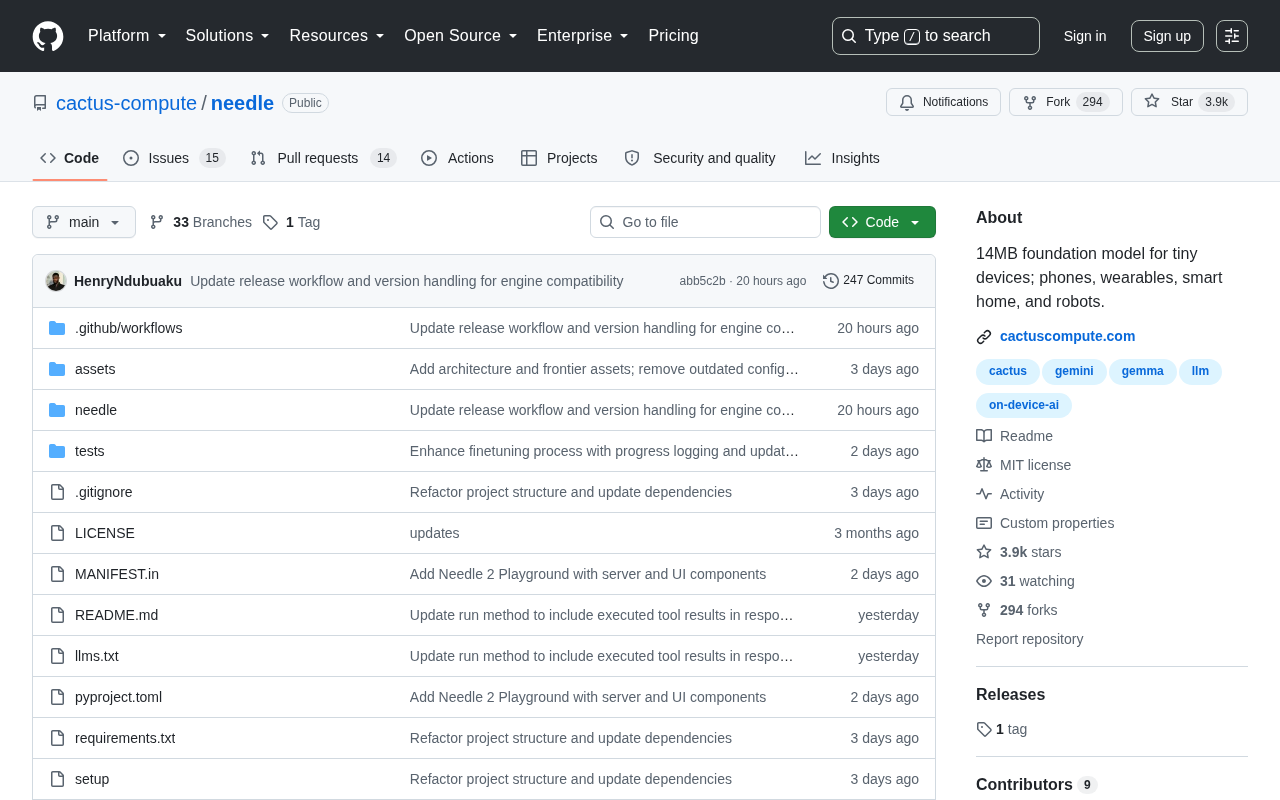
Needle: How a 14MB Foundation Model Is Unlocking Edge AI Deployment
Needle is a 14MB open-source foundation model from cactus-compute, designed for phones, wearables, smart home devices, and robots. Explore its edge AI potential.
Read more →

·2 min
Embabel: A Deep Dive into the AI Agent Framework Built for the JVM
Embabel is a JVM agent framework written in Kotlin, enabling Java/Kotlin developers to build AI Agents within their familiar tech stack. A deep analysis of its positioning, technical advantages, and synergy with the Spring ecosystem.
Read more →

·5 min
Harness: The Operating System That Takes LLM Agents from Demo to Production
Deep dive into Harness technology: how context engineering, memory management, and multi-agent architecture transform LLM agents from stochastic demos into stable production systems.
Read more →

·2 min
Aquifer Open Source: A Traffic Smoothing Solution for Peak Shaving Bursty GPU Inference Workloads
Aquifer is an open-source traffic smoothing runtime that uses durable queue buffering and backend backpressure to solve burst traffic challenges in GPU inference services, enabling peak shaving and cost reduction.
Read more →

·4 min
6 Must-Do Tasks Before Deploying Enterprise AI Agents: A Complete Guide to Observability + Evaluation
A detailed guide to 6 critical engineering challenges for enterprise AI Agents before production, covering Langfuse-based tracing, observability, evaluation stages, prompt governance, and high-concurrency architecture.
Read more →