#HBM memory
154 related articles

·3 min
GPU Rental vs. Buying: How Low-Usage Teams Should Actually Do the Math
Should low-usage teams rent or buy GPUs? Based on real billing data, we break down hardware costs, electricity, and hidden time losses to help small teams decide.
Read more →

·3 min
DeepSeek Open-Sources DSpark: 50%–400% LLM Inference Speedup Without Retraining
DeepSeek open-sources DSpark, delivering 50%–400% LLM inference speedup with no retraining or quantization, via semi-autoregressive drafting and confidence-scheduled verification.
Read more →

·6 min
A Deep Dive into OpenAI Codex: How AI Engineers Are Reimagining Software Development with Agents
OpenAI Codex is redefining how AI engineers work: from code completion to autonomous Agents, from single-threaded to parallel Value Maxing. A deep dive into the Codex App architecture, open ecosystem, and Manager of Agents practice.
Read more →
CUDA Kernel Fusion: A Practical Guide …
·2 min
CUDA Kernel Fusion: A Practical Guide to Reducing Memory Bandwidth and Launch Overhead
Learn how CUDA Kernel Fusion merges multiple GPU kernels to reduce global memory traffic and launch overhead, with real-world examples from AI inference and deep learning.
Read more →
Hardware-Software Co-Design: A Guide t…
·2 min
Hardware-Software Co-Design: A Guide to Building Hardware-Friendly LLM Architectures
Explore AI Model Co-Design principles and how hardware-friendly LLM architecture design — covering MoE, GQA, and FP8 quantization — optimizes the accuracy, throughput, and latency trade-off.
Read more →
Flash-MSA: How Sparse Attention Kernel…
·2 min
Flash-MSA: How Sparse Attention Kernels Break the Million-Token Training Barrier
Flash-MSA uses GPU sparse attention kernels to reduce complexity from O(n²) to near-linear, tackling the compute bottleneck of million-token LLM training.
Read more →
Turning Papers into Interactive Course…
·2 min
Turning Papers into Interactive Courses with AI: An Experiment in LLM-Powered Self-Learning
An indie developer turned the Flash Attention paper into a Brilliant-style interactive course using AI. A deep dive into how LLMs can fill long-tail learning gaps.
Read more →
Apple M7 Ultra Chip Leaked: Can 1.5TB …
·2 min
Apple M7 Ultra Chip Leaked: Can 1.5TB Unified Memory Reshape Local AI Inference?
Reddit leaks suggest Apple's M7 Ultra chip could feature up to 1.5TB unified memory. We analyze the architecture, pricing debate, bandwidth limits, and ecosystem trade-offs for local LLM inference.
Read more →
JAX Host Offloading: A Practical Guide…
·2 min
JAX Host Offloading: A Practical Guide to Breaking Through LLM Training Memory Bottlenecks
Memory capacity is the core bottleneck in LLM training. This guide explores JAX-based host offloading — covering optimizer state offloading, activation strategies, PCIe bandwidth trade-offs, and how it complements activation recomputation.
Read more →
How Fixing Three Bugs Made Qwen3.5-122…
·3 min
How Fixing Three Bugs Made Qwen3.5-122B Run Reliably on Mac Studio
A developer fixed three critical bugs to make Qwen3.5-122B run reliably as a daily driver on Mac Studio. Explore memory management, inference stability, and quantization precision.
Read more →

·6 min
GPT-5.6 vs Grok 4.5 on the Same Day: A Packed Week of Flagship AI Model Launches
OpenAI's GPT-5.6 launches with Sawa, Terra, and Luna sub-models the same day as Musk's Grok 4.5, while Anthropic, Meta, and NVIDIA make their moves. A packed week of flagship AI launches.
Read more →

·3 min
AI Compute Prices Surge Across the Board + Rise of Two Domestic Coding Tools: The Wave of Self-Reliance Arrives
The U.S. imposes its strictest-ever export controls on top AI models, while Zhipu AI and Moonshot launch self-developed coding tools the same day—amid rising GPU and cloud compute prices. A deep dive into three trends driving cost rationality and tech autonomy.
Read more →

·2 min
Decoding the AI Full-Stack Approach: Google's Vertical Integration Strategy from Chips to Applications
Deep analysis of Google's AI full-stack strategy: from custom TPU chips and system software frameworks to Gemini models and applications, examining how vertical integration delivers performance, cost, and autonomy advantages.
Read more →

·4 min
Meta's In-House AI Chip Enters Mass Production in September: Modular Design Breaks New Ground for Compute Autonomy
Meta's new-generation in-house AI chip enters mass production in September, using a modular design to cope with rapid AI evolution. A deep dive into the cost logic, inference optimization, and market impact on NVIDIA.
Read more →

·6 min
DeepSeek Builds Its Own AI Chips: The Strategic Logic and Challenges Behind Compute Independence
DeepSeek is entering AI chip development, targeting compute autonomy. This article analyzes its motivations, software-hardware synergy, chip R&D challenges, and impact on China's AI vertical integration.
Read more →
·5 min
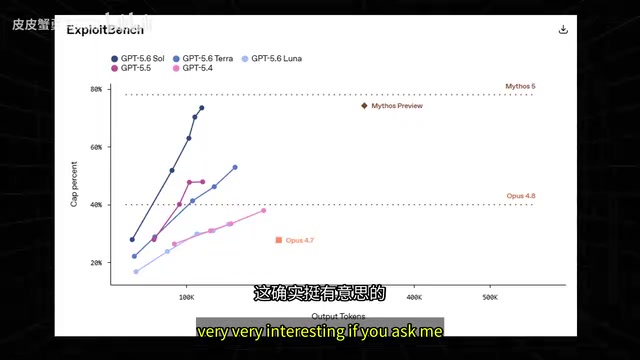
GPT-5.6 Released: Outperforms Rivals but Halted by Government—Cybersecurity Capabilities Trigger Regulatory Red Line
OpenAI releases GPT-5.6 (Sol/Terra/Luna), beating Anthropic on Terminal Bench at ~40% lower cost. But its cybersecurity capabilities hit danger thresholds, limiting access to trusted partners at government request.
Read more →

·6 min
Grok 4.5 Hands-On: A Faster, Cheaper Coding Dark Horse — Can It Replace Opus and GPT?
In-depth Grok 4.5 hands-on review: priced at a fraction of Opus 4.8, twice the token efficiency of peers, and coding ability in the top tier. A real-project breakdown of its strengths, highlights, and shortcomings.
Read more →

·7 min
Grok 4.5 Launch: Coding AI Market Reshuffle, Anthropic Claims Half the Territory
Grok 4.5 launches at just $0.49 per task, 90% cheaper than rivals. Anthropic's Claude Code claims 50% of the AI coding market. SambaNova raises $1B. Read the latest AI market shifts.
Read more →

·6 min
SK Hynix's Record $26.5B IPO: The AI Memory Chip Boom and the U.S. Factory Chess Game
SK Hynix completed a record $26.5B IPO—the largest by a foreign company in U.S. history. Explore the HBM memory boom, U.S. pressure to build local fabs, and the geopolitical restructuring of chip supply chains amid the AI wave.
Read more →

·5 min
GPT-5.6 Three-Model Breakdown: Sol/Terra/Luna Pricing and the Regulatory Dilemma
In-depth analysis of OpenAI's GPT-5.6: Sol, Terra, Luna pricing, Cerebras inference advantages, and how OpenAI and Anthropic navigate government regulation amid US-China AI competition.
Read more →