#HBM
148 related articles

·4 min
Open Source AI Closes the Gap: How Chinese Models Are Challenging America's AI Dominance
From DeepSeek to Kimi K3 and Qwen 3, Chinese open source AI models are closing in on OpenAI and Anthropic at stunning speed. A deep dive into narrowing gaps, IPO valuation risks, the "open source decelerationism" debate, and why Google may be the biggest winner.
Read more →

·4 min
The Rise of Chinese Open-Source AI Models: A Head-On Challenge to Closed-Source Dominance
Chinese open-source models rapidly close the capability gap with top closed-source AI. DeepSeek shocks the industry while Qwen matches global benchmarks.
Read more →

·7 min
Alibaba Open-Sources 2.4T Qwen Model as Chinese AI Sweeps the Global Competitive Landscape
Alibaba open-sources a 2.4 trillion parameter Qwen model and launches the Qwen Token Plan. Chinese models surge, Kimi K3 tops global rankings, and China's AI is reshaping the global competitive landscape.
Read more →

·4 min
DeepSeek Open-Sources DeepSpec: A Full-Stack Breakdown of Speculative Decoding
DeepSeek open-sources DeepSpec, a full speculative decoding training and evaluation toolkit featuring three draft model algorithms (Ego3, DeepFlash, DeepSpark), 12 checkpoints, MIT license, and 60–85% real-world speedup.
Read more →

·5 min
DeepSeek V4 Enters Grayscale Testing, Grok 5.0 Ready to Launch | Latest AI Model Developments
This AI Daily covers five sectors: DeepSeek V4 reportedly enters grayscale testing with improved chain-of-thought; Musk previews Grok 4.6 and 5.0 with 2T parameters; Intern-S2 open-source model beats Claude Opus 4.8; xAI builds 2000MW Colossus cluster; NVIDIA RoboTTT breaks long-horizon robotics barriers.
Read more →

·3 min
GPT-5.6 Inference at 18x Speed: OpenAI's Compute Gamble and Business Logic
Why is OpenAI pushing its most powerful model to 750 tokens/s? A deep dive into GPU vs. Cerebras chip cost trade-offs, the $10B compute deal, and how speed, intelligence, and token efficiency are reshaping the AI landscape.
Read more →

·2 min
Deterministic Attention Transformer: H100 Benchmark Achieves Just 0.63 Joules Per Token
Researchers propose the Deterministic Attention-Transformer, measuring just 0.63 J/token on NVIDIA H100 GPUs. Explore the tech behind it and its green AI implications.
Read more →

·3 min
Apple vs. OpenAI: The 400-Employee Exodus and the Battle for AI Hardware Dominance
Apple sues OpenAI over 400 former employees allegedly stealing trade secrets. A deep dive into AI talent wars, hardware competition, HBM memory chips, and chip localization.
Read more →
Handwritten C/CUDA Inference Engine: P…
·2 min
Handwritten C/CUDA Inference Engine: Pushing Qwen 35B to the Limits on RTX 5090
A deep dive into a handwritten C/CUDA inference engine for Qwen 35B on RTX 5090 (Blackwell), covering quantization, FlashAttention kernels, and memory optimization.
Read more →
High-Bandwidth Flash (HBF): A New Path…
·2 min
High-Bandwidth Flash (HBF): A New Path to Breaking the AI Storage Bottleneck
High-Bandwidth Flash (HBF) bridges the gap between HBM and NAND, offering high-bandwidth weight storage at lower cost to tackle the memory wall bottleneck in large AI model inference.
Read more →
·2 min
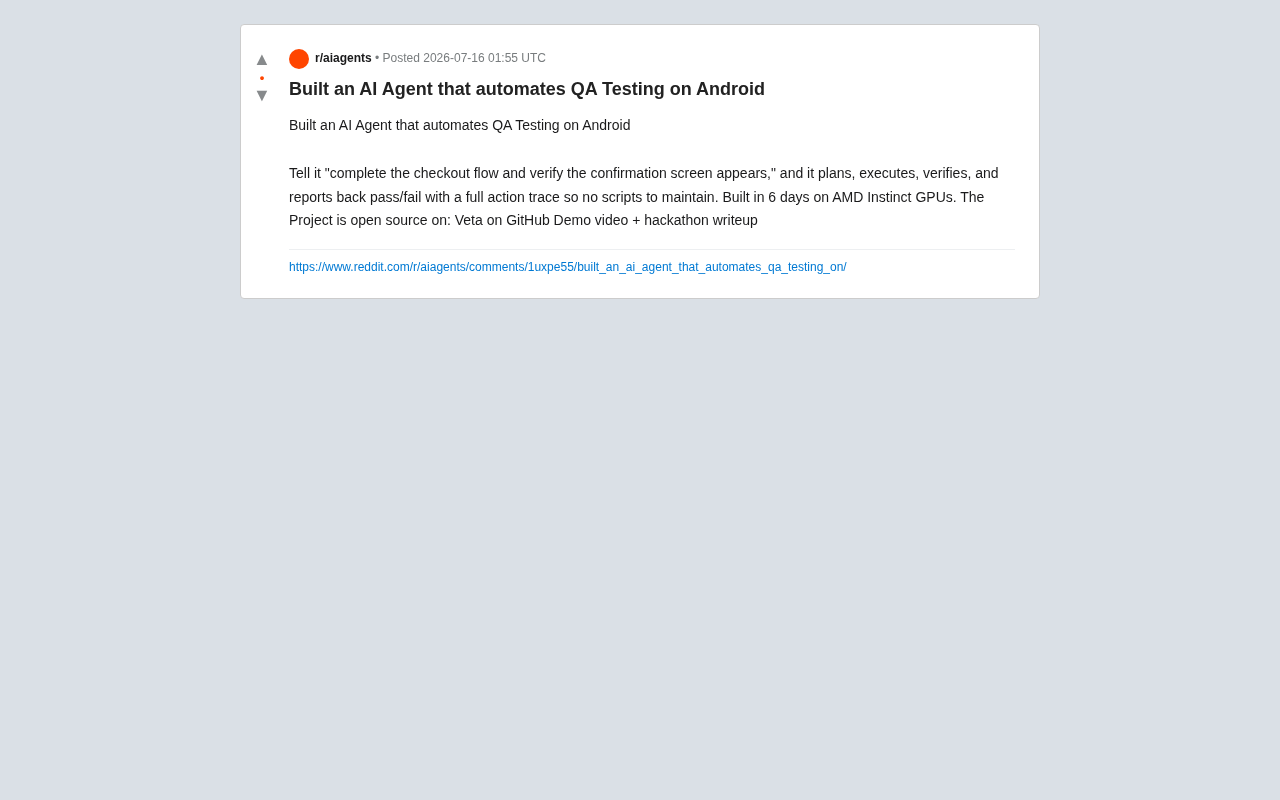
6-Day Open Source AI Agent: Natural Language-Driven Android Automation Testing
Veta is an open source AI testing agent: just describe your test goal in natural language and it autonomously plans, executes, verifies, and reports Android test results — no scripts needed.
Read more →
Apple M7 Ultra Leaked: Can 1.5TB Unifi…
·2 min
Apple M7 Ultra Leaked: Can 1.5TB Unified Memory Challenge NVIDIA Blackwell?
Apple's M7 Ultra chip rumored to feature 1.5TB unified memory targeting NVIDIA Blackwell-level AI performance. A deep dive into UMA advantages, what "matching Blackwell" really means, and Apple's AI strategy.
Read more →

·3 min
GPUStack in Action: Complete Guide to Day 0 Deployment of DeepSeek-V4-Flash
Deploy DeepSeek-V4-Flash DSpark on 8× H20-141G using GPUStack's SGLang backend on Day 0. Full walkthrough of Web UI config, parameter tuning, and 200 tokens/sec benchmark results.
Read more →

·2 min
ExLlamaV3 v1.0.0 Official Release: Faster Inference, Lossless KV Quantization, and Streamlined Dependencies
ExLlamaV3 v1.0.0 releases with lossless KV cache quantization via kernel fusion, removal of flash-attention-2/xformers, major GEMM/GEMV gains, and broader tensor parallelism support.
Read more →

·3 min
GPU Rental vs. Buying: How Low-Usage Teams Should Actually Do the Math
Should low-usage teams rent or buy GPUs? Based on real billing data, we break down hardware costs, electricity, and hidden time losses to help small teams decide.
Read more →

·3 min
DeepSeek Open-Sources DSpark: 50%–400% LLM Inference Speedup Without Retraining
DeepSeek open-sources DSpark, delivering 50%–400% LLM inference speedup with no retraining or quantization, via semi-autoregressive drafting and confidence-scheduled verification.
Read more →

·6 min
A Deep Dive into OpenAI Codex: How AI Engineers Are Reimagining Software Development with Agents
OpenAI Codex is redefining how AI engineers work: from code completion to autonomous Agents, from single-threaded to parallel Value Maxing. A deep dive into the Codex App architecture, open ecosystem, and Manager of Agents practice.
Read more →
CUDA Kernel Fusion: A Practical Guide …
·2 min
CUDA Kernel Fusion: A Practical Guide to Reducing Memory Bandwidth and Launch Overhead
Learn how CUDA Kernel Fusion merges multiple GPU kernels to reduce global memory traffic and launch overhead, with real-world examples from AI inference and deep learning.
Read more →
Hardware-Software Co-Design: A Guide t…
·2 min
Hardware-Software Co-Design: A Guide to Building Hardware-Friendly LLM Architectures
Explore AI Model Co-Design principles and how hardware-friendly LLM architecture design — covering MoE, GQA, and FP8 quantization — optimizes the accuracy, throughput, and latency trade-off.
Read more →
Flash-MSA: How Sparse Attention Kernel…
·2 min
Flash-MSA: How Sparse Attention Kernels Break the Million-Token Training Barrier
Flash-MSA uses GPU sparse attention kernels to reduce complexity from O(n²) to near-linear, tackling the compute bottleneck of million-token LLM training.
Read more →