#Harness methodology
139 related articles

·3 min
Claude Code Enterprise Guide: Environment Setup, Git Workflows, and Switching to Chinese AI Models
Enterprise guide to Claude Code: CLI setup, switching to DeepSeek and other Chinese AI models, Git workflow automation, and bug fix loops to boost team productivity.
Read more →

·2 min
Claude Code for Beginners: How Non-Programmers Can Build AI Agents
Bilibili creator Nates releases a 6-hour, 30-lesson Claude Code course for complete beginners. No tech background needed. Learn to build AI agents and automated systems using natural language.
Read more →
·3 min
Claude Opus 4 + RAG + Knowledge Graph: A Real-World Architecture for AI Novel Writing
Microsoft MVP Michael shares how AI Story Builders uses Claude Opus 4, RAG, and Knowledge Graphs to solve consistency in long-form AI fiction writing.
Read more →

·3 min
AI Code Getting Worse with Every Fix? A Three-Layer Closed-Loop Engineering Methodology to Break the Cycle
AI code spiraling out of control? This article breaks down a three-layer engineering system — Prompt rules, Skill workflows, and Harness feedback loops — with real-world results showing pass rates rising from 70% to 98%.
Read more →

·3 min
Can Open Source Topple ChatGPT? CSDN Founder Jiang Tao Breaks Down DeepSeek's Game-Changing Strategy
CSDN founder Jiang Tao analyzes how DeepSeek uses open source to challenge ChatGPT's dominance — from technical transparency to national AI strategy.
Read more →

·3 min
AI Agents Are Reshaping Software Testing: A Practical Guide from Cursor to LangChain
A deep dive into AI-powered testing: Cursor Skills, Coze agents, and LangChain multi-agent systems for automated test case generation, BDD, and review workflows.
Read more →

·3 min
LangChain 1.3 in Practice: A Complete Technical Guide from LLMs to DeepAgent
An in-depth analysis of the core knowledge system of LangChain 1.3, covering the Harness architecture philosophy, DeepAgent positioning, LangGraph fundamentals, Agent memory, and human-in-the-loop.
Read more →

·3 min
GPT-5.6 Three-Model Hands-On Test: A Complete Comparison of Sol, Terra, and Luna
An in-depth hands-on test of the GPT-5.6 series' three models—Sol, Terra, Luna—compared with Fable and Sonnet 5. Sol wins overall at nearly half the price. Full analysis of prototyping, code debugging, and browser use.
Read more →

·6 min
An Efficient Learning Guide for Data Science: Study Partnerships and Hands-On ML in Practice
Struggling to learn data science alone? This article explores the value of study partnerships and pairs them with the classic Hands-On ML textbook to offer a phased learning plan from math foundations to deep learning.
Read more →

·5 min
ECC: An Agent Enhancement Framework for AI Coding Assistants — Five Core Capabilities Explained
ECC is an agent optimization framework for AI coding assistants like Claude Code, Cursor, and Codex, enhancing them with skills, memory, security, and research-first development capabilities.
Read more →

·6 min
Cross-Model Review Between Claude and Codex: A Practical Workflow to Systematically Eliminate AI Code Bugs
Vibe Coding saves time but leaves piles of bugs? This article details the cross-model review workflow: Claude generates, Codex auto-reviews, with Stop Hook and Skill mechanisms building an AI code review system that intercepts problems automatically.
Read more →

·5 min
From Prompts to Harness Engineering: The Evolution of AI Agent Development Paradigms
Why has AI engineering methodology evolved from prompts to context engineering and now Harness engineering? This article examines three paradigms, key bottlenecks, and the Agent = Model + Harness formula.
Read more →
·6 min
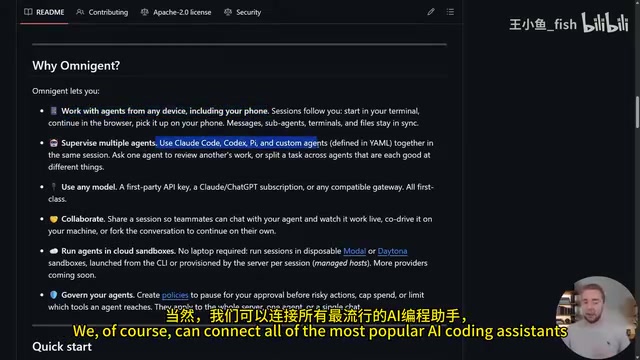
Omnigent Open-Sourced: A Meta-Harness for AI Coding Agents Built by Databricks
Databricks open-sources Omnigent, a Meta-Harness for orchestrating Claude Code, Codex, and more AI coding assistants together—with built-in guardrails, cross-model workflows, and real-time collaboration. Get started in 10 minutes.
Read more →

·4 min
Prompt Engineering 101: Core Concepts, Value, and Limitations Explained
What is prompt engineering? This guide covers prompts, their four key functions, the 6-step engineering process, business value, and technical limitations for a complete foundation.
Read more →

·2 min
Visa Harness: An Open-Source Security Testbed for Auditable AI Vulnerability Scanning
Visa's open-source Agentic security testbed Harness orchestrates threat modeling, vulnerability research, adversarial reproduction, and structured reporting into an auditable pipeline — not just a scan button.
Read more →

·7 min
LLM Evaluation: The Testing Industry's Scarcest Career Pivot and the Timing to Enter
LLM evaluation roles are growing over 100% year-over-year, with top companies offering 50K/month yet unable to fill positions. This article explores how testing pros can seize the window.
Read more →

·7 min
Harness Engineering: The Six-Layer Engineering Framework for Enterprise AI Agent Deployment
From Prompt Engineering to Harness Engineering, a deep dive into the core challenge of truly deploying AI Agents in enterprises. This article breaks down the six-layer architecture and shares real-world Hermes Agent practice.
Read more →

·7 min
Spec-Driven Development: Andrew Ng Teaches You to Master AI Coding Agents Efficiently
Andrew Ng partners with JetBrains on a new course systematically teaching Spec-Driven Development. By writing high-quality specs, developers can precisely control AI coding agents, eliminate context decay, and boost intent fidelity.
Read more →

·7 min
Fable AI Coding in Practice: Optimizing Reasoning Levels and Multi-Model Collaboration to Cut Costs
How developer Theo used Anthropic's Fable model to rebuild his AI coding workflow — controlling reasoning levels, multi-model routing with Codex, and sub-agent orchestration to cut costs from thousands to $150.
Read more →

·6 min
LangChain 1.3 in Practice: A Complete Guide to DeepAgent Architecture and the Harness Philosophy
An in-depth look at LangChain 1.3's core modules and DeepAgent architecture—covering the Harness philosophy, LangGraph internals, HITL, memory management, and guardrails to master production-grade AI Agent development.
Read more →