#Ising decoding
129 related articles

·4 min
Running Qwen3.6 27B Locally on a Single RTX 3090: A Complete Guide to Cloud-Rivaling Performance
One used RTX 3090, one 16.8GB GGUF file, and Qwen3.6 27B runs locally offline. SWE-bench score of 77 rivals Claude Sonnet. MTP boosts speed to 59 tok/s. Full local AI coding assistant deployment guide.
Read more →

·4 min
Retrieval vs. Reasoning: Does Search Technology Still Matter in the Age of LLMs? Six Experts Debate
When ChatGPT can answer directly, does retrieval still matter? Six experts from Microsoft, IIT Delhi debate parametric memory limits, BM25's endurance, and where retrieval ends and reasoning begins.
Read more →

·4 min
Two Paths to Better AI Reasoning: Test-Time Scaling and Formal Verification
This article synthesizes two MSR India Summit talks, exploring two key paths to better AI reasoning: test-time scaling with variable granularity search, and a formal verification framework for trustworthy agent execution.
Read more →

·6 min
The Frontier of AI Interpretability Research: Opening the Neural Network Black Box
An in-depth look at AI interpretability research: from chain of thought and probes to sparse autoencoders, exploring how scientists understand neural network internals and assess AI alignment and safety.
Read more →

·2 min
15-Year-Old Trains 200M MoE Language Model from Scratch: Full Architecture & Hands-On Breakdown
A 15-year-old trained Tiny-MoE, a 200M-parameter MoE language model from scratch using free Kaggle GPUs, featuring MLA attention, RoPE+YaRN, and native PyTorch.
Read more →

·4 min
AI Weekly Recap: Four Major Vendors Cut Prices Together, Copilot's Paid Conversion Rate Just 4.5%
In one week, OpenAI, xAI, Google, and Microsoft all cut AI prices, driving near-frontier inference costs sharply lower. Meanwhile, Microsoft Copilot's paid conversion across 450M seats is under 4.5%, exposing the monetization challenge of general AI assistants.
Read more →

·3 min
The Rise of Diffusion Language Models: DiffusionGemma Crushes Autoregressive Models in Speed Tests
Diffusion language model DiffusionGemma dramatically outpaces autoregressive Deepseek Flash in speed tests. Explore the tech behind diffusion vs. autoregressive models and their challenges.
Read more →

·3 min
UniFlex 11: A Complete Guide to the Free, Open-Source Krea 2 Workflow Suite
UniFlex 11 is a free, open-source ComfyUI workflow suite built for Krea 2. It offers Core and Full editions with prompt enhancement, inpainting, upscaling, and annotated modular design for all skill levels.
Read more →

·2 min
LingBot-Video 1.3B Selective FP8 Quantization Benchmark: 22% Faster Sampling
Reddit developer ALX-CODE shares a selective FP8 quantization scheme for LingBot-Video 1.3B, achieving ~22% faster sampling (4.65s→3.65s) on an RTX 5080. This article breaks down the mixed-precision strategy, open-source resources, and ComfyUI adaptation.
Read more →

·2 min
LTX 2.3 Hands-On: How Efficient Is Local AI Video Generation on the RTX 5080?
Hands-on with LTX 2.3 and ComfyUI for local AI video generation on the RTX 5080: 8-second clips in just 2-3 minutes while running DaVinci Resolve simultaneously. Covers hardware, workflow setup, and multi-tool creation.
Read more →

·2 min
Why Does Speech-to-Text Keep Failing? A Practical Guide to Optimizing Messy Audio Transcription
Meeting recordings, mixed languages, and background noise causing speech-to-text to drop words or produce gibberish? This article dives deep into ASR hallucination causes and offers practical solutions.
Read more →

·4 min
GPT-5.6 Released: Coding Benchmarks Surpass Rivals, Inference Speed 10x Faster
Just 12 days after a rival launch, OpenAI released GPT-5.6, scoring 91.9% on Terminal-Bench 2.1 to surpass competitors. Ultra mode supports multi-agent collaboration, inference hits 750 tokens/sec.
Read more →

·6 min
The Eight-Step Method for Agent Development: A Practical Path from Pitfalls to Production
Many enterprises fail at AI Agents due to choosing the wrong tools and lacking methodology. This article outlines an eight-step Agent development method—from cognitive foundations, scenario selection, hand-writing ReAct, and structured output to Tool Use, RAG, evaluation sets, and production fallback.
Read more →

·3 min
Building a Variational Autoencoder from Scratch: A Hands-on Guide with PyTorch + PIL
A deep dive into building a Variational Autoencoder (VAE) from scratch with PyTorch and PIL. Covers the encoder, decoder, reparameterization trick, and KL divergence loss to help you truly understand the fundamentals of generative AI.
Read more →

·7 min
AI Agent Runs a Fully Automated Chess Channel: A Real-World Practice of Combining LLMs with Engines
A German engineer built a fully automated chess YouTube channel with an AI Agent, combining LLMs and chess engines to auto-generate explainer videos nightly, reaching 500K views. Here's the tech architecture, tool design, and real costs.
Read more →

·4 min
OpenAI GPT-Live Voice Model: How Full-Duplex Interaction Reshapes Human-AI Conversation
OpenAI unveils the GPT-Live voice model family, with full-duplex interaction enabling AI to listen and speak simultaneously and delegate complex reasoning to GPT-5.5. GPQA benchmark jumps from 45% to 80%.
Read more →

·2 min
Directly Optimizing Face Similarity: A Practical Guide to Accelerating Character LoRA Training
Ditch inefficient noise prediction and train character LoRAs by directly optimizing face similarity. Using the DRaFT differentiable reward method, training completes in 10-12 minutes on an RTX 4090, far outperforming traditional SFT. Includes open-source code.
Read more →

·5 min
In-Depth Comparison of AI Image Generation Tools: How to Choose Between Flux, Midjourney, and Gemini?
A comprehensive comparison of mainstream AI image generation tools: Flux, Midjourney, Grok, Gemini, and Stable Diffusion. Dissecting their pros and cons across quality, freedom, and usability to help you find the right AI drawing solution.
Read more →
·5 min
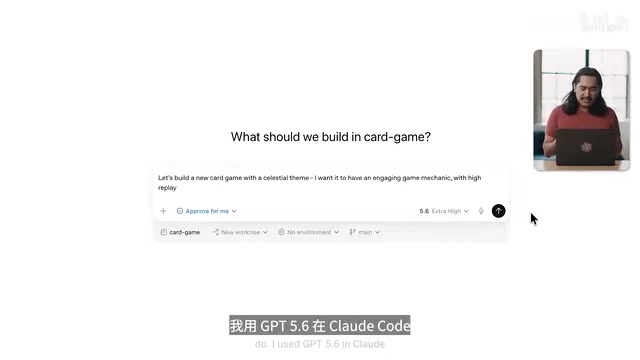
GPT-5.6 Released: Hands-On Analysis of Programmatic Tool Calling and Autonomous Agents
GPT-5.6 is officially released with core upgrades including programmatic tool calling, autonomous subagent delegation, and higher token information density. A hands-on card game build reveals its Agentic power.
Read more →

·7 min
Building AI Agents in Rust: The GAIA Benchmark Reveals the Capability Ceiling of Large Models
A Rust-based AI Agent evaluation framework uses the GAIA benchmark to compare GPT, Claude, DeepSeek and other models with no tools. Results show pure LLMs cap at ~25% accuracy, revealing why tool use is decisive for Agents.
Read more →