#Ising decoding
136 related articles

·4 min
OpenAI GPT-Live Voice Model: How Full-Duplex Interaction Reshapes Human-AI Conversation
OpenAI unveils the GPT-Live voice model family, with full-duplex interaction enabling AI to listen and speak simultaneously and delegate complex reasoning to GPT-5.5. GPQA benchmark jumps from 45% to 80%.
Read more →

·2 min
Directly Optimizing Face Similarity: A Practical Guide to Accelerating Character LoRA Training
Ditch inefficient noise prediction and train character LoRAs by directly optimizing face similarity. Using the DRaFT differentiable reward method, training completes in 10-12 minutes on an RTX 4090, far outperforming traditional SFT. Includes open-source code.
Read more →

·5 min
In-Depth Comparison of AI Image Generation Tools: How to Choose Between Flux, Midjourney, and Gemini?
A comprehensive comparison of mainstream AI image generation tools: Flux, Midjourney, Grok, Gemini, and Stable Diffusion. Dissecting their pros and cons across quality, freedom, and usability to help you find the right AI drawing solution.
Read more →
·5 min
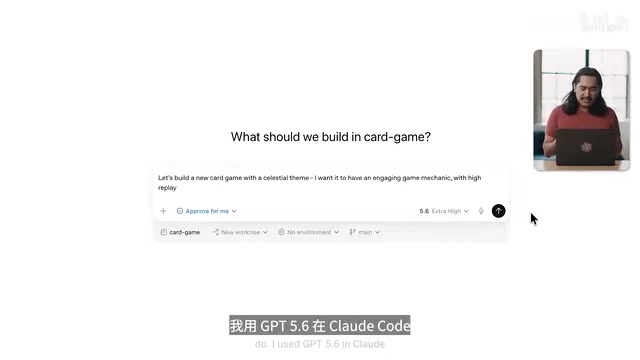
GPT-5.6 Released: Hands-On Analysis of Programmatic Tool Calling and Autonomous Agents
GPT-5.6 is officially released with core upgrades including programmatic tool calling, autonomous subagent delegation, and higher token information density. A hands-on card game build reveals its Agentic power.
Read more →

·7 min
Building AI Agents in Rust: The GAIA Benchmark Reveals the Capability Ceiling of Large Models
A Rust-based AI Agent evaluation framework uses the GAIA benchmark to compare GPT, Claude, DeepSeek and other models with no tools. Results show pure LLMs cap at ~25% accuracy, revealing why tool use is decisive for Agents.
Read more →
Local Coding Agents in Practice: A Com…
·6 min
Local Coding Agents in Practice: A Complete Guide to Replacing Your Claude Subscription with Open-Source Models
An in-depth look at local coding agents—core concepts, advantages, and real challenges. Compare against Claude Code and learn to build a zero-subscription, private AI coding workflow with open-weight models.
Read more →
·5 min
GPT-5.6 Triple Launch: Understanding the Positioning and Key Differences of Sol, Terra, and Luna
OpenAI released three GPT-5.6 models—Sol, Terra, and Luna—covering everything from flagship reasoning to lightweight speed. A deep dive into their positioning, performance differences, pricing, and industry signals.
Read more →

·6 min
GPT Live Full-Duplex, Grok 4.5 Coding, Seedream 5.0 Images: AI Accelerates Across Three Tracks Simultaneously
OpenAI's GPT Live full-duplex voice model, Grok 4.5 coding model with Cursor, and ByteDance's Seedream 5.0 Pro image generation launched together. A deep dive into three AI releases.
Read more →

·2 min
AI Agents for SGLang Kernel Optimization: Real-World Performance Gains and Engineering Methodology
SGLang's team converted expert knowledge into agent skills, achieving 71.4% throughput gains, TTFT reduced from 456ms to 168ms. A deep dive into agent-assisted kernel optimization methodology.
Read more →

·6 min
European Parliament Members Investigating Spyware Hacked by Pegasus: The Watchdogs Become the Watched
EU spyware committee members hacked by Pegasus, exposing the regulatory crisis of commercial spyware. Deep analysis of zero-click attacks, systemic risks to democratic oversight, and the urgent need for international regulation.
Read more →

·7 min
Gemini Live Integrates Nano Banana: A Complete Guide to Real-Time Camera, Image Generation, and Maps Integration
Google's Gemini Live now integrates the Nano Banana image generation model with Connected Apps like Google Maps, supporting real-time camera scene understanding and visualization. Free worldwide.
Read more →

·5 min
Behind Apple's Across-the-Board Price Hikes: How the AI Arms Race Is Driving Up Your Purchase Costs
Apple raised prices across MacBook, iPad, and Mac Studio, with Mac Studio up 25%. The real driver behind surging memory prices is AI's explosive demand for HBM and DRAM. A deep dive into the logic and how consumers should respond.
Read more →

·2 min
Tencent Hunyuan V3 Open-Sourced: Full Breakdown of the 295B MoE Architecture — 256K Context Is Its Biggest Weakness
Tencent open-sources Hunyuan V3: 295B MoE model with 21B active params, claims to beat DeepSeek-V4-Pro. Supports FP8, vLLM/SGLang — but 256K context and no multimodal are key drawbacks.
Read more →

·6 min
Tencent Hunyuan HY3 Official Version Open-Sourced: The Strongest Under 300B, at 1 Yuan per Million Tokens
Tencent Hunyuan HY3 official version is open-sourced under Apache 2.0, priced as low as 1 yuan per million input tokens, with major gains in agents, reasoning, coding, and long context. On the same day, Meituan open-sourced its trillion-parameter LongCat 2.0.
Read more →

·5 min
DeepSeek Boosts Inference Speed by 85%: How Speculative Decoding Is Reshaping the AI Speed Race
DeepSeek and Peking University's DS Spark paper boosts AI inference speed by up to 85% via confidence scheduling and semi-autoregressive speculative decoding — no model or GPU changes.
Read more →

·6 min
AI's Second Half: The Decisive Battle Shifts from Models to Infrastructure
Model capabilities are converging, making inference cost and scalability the new focus of AI competition. A deep analysis of AI infrastructure's core layers.
Read more →

·5 min
TensorRT Multi-Device Inference: Engineering Practices for Breaking Through Single-GPU Memory Bottlenecks
NVIDIA TensorRT now supports multi-device inference via pipeline and tensor parallelism, distributing large models across multiple GPUs to break through single-card memory limits.
Read more →

·6 min
7 Anima Model Combinations Tested: The Optimal Config Guide for Anime Image Generation
A Reddit user's rigorous controlled experiment testing all 7 Anima combos—base, aesthetic, turbo LoRA, and turbo baked. Key takeaway: choose aesthetic first, add Turbo LoRA for anime-girl style. Includes prompt structures and ComfyUI configs.
Read more →

·7 min
GPT-5.6 In-Depth Hands-On Review: How Do Soul, Tara, and Luna Really Perform?
OpenAI releases GPT-5.6 preview with three models: flagship Soul, balanced Tara, and lightweight Luna. Based on real KingBench 3 testing, this article breaks down each model's performance on math, front-end, and agentic tasks, and compares them with Anthropic Fable.
Read more →

·2 min
COLM Conference Deep Dive: Positioning, Academic Ecosystem, and What It Reveals About AI Research
COLM (Conference on Language Modeling) is the premier vertical venue dedicated to LLM research. This deep dive covers COLM's positioning, academic ecosystem, and what it reveals about AI research trends.
Read more →