#Ising decoding
137 related articles

·2 min
COLM Conference Deep Dive: Positioning, Academic Ecosystem, and What It Reveals About AI Research
COLM (Conference on Language Modeling) is the premier vertical venue dedicated to LLM research. This deep dive covers COLM's positioning, academic ecosystem, and what it reveals about AI research trends.
Read more →

·6 min
Beware the Gemini Free Membership Scam: The Account Security Risks of Leaked Backup Codes
Exposing the phishing trap behind the "free Gemini Pro membership" tutorials circulating on video platforms: they lure users into handing over account passwords and backup recovery codes, leading to account theft. This article breaks down the process technically and teaches you to spot three danger signs.
Read more →

·4 min
3D Flight Tracker: Real-Time Aviation Visualization on Mercator Maps
A deep dive into building a 3D flight tracker on Mercator maps, covering ADS-B data sources, WebGL rendering, coordinate transforms, and geospatial visualization.
Read more →

·6 min
MIRA: An Analysis of a Multiplayer Interactive World Model Built on Rocket League
MIRA is an interactive world model project for the multiplayer competitive game Rocket League, exploring how neural networks simulate multi-agent interaction and complex physics. An in-depth look at its significance, challenges, and prospects.
Read more →

·5 min
Ideogram 4 Local Deployment in Practice: One-Click Image Generation with a Fully Automated ComfyUI Workflow
Deep dive into Ideogram 4's core strengths: realistic photographic quality, powerful text generation, and Chinese prompt support. Learn to skip complex JSON prompts with a fully automated ComfyUI workflow + Qwen3—input your idea, get an image instantly, deployable locally at just 8GB.
Read more →

·4 min
AI Weekly: GPT-5.6 Launches in Three Tiers, Open-Source Inference Frameworks and Robot Safety Break Through Across the Board
This week in AI: OpenAI launches GPT-5.6 in three tiers (Sol/Terra/Luna) hitting 91.9% on coding benchmarks; DeepSeek and PKU open-source DSpark for 85% faster inference; Prime Intellect trains trillion-param models on just 28 H200s; Anthropic Claude enters Slack.
Read more →

·2 min
Netflix's Renewal Paradox: Why Are Viewers Abandoning Sequel Seasons in Droves?
Netflix's acclaimed series Beef lost 70% of its audience in Season 2. We explore why viewers abandon sequel seasons—and what streaming platforms must do to fix it.
Read more →

·4 min
FTPO: A Training-Level Solution to AI Repetition Loops
FTPO (Final Token Preference Optimization) tackles AI "Doom Loops" at the training level rather than patching them at inference time — exploring its principles, value for small/quantized models, and open challenges.
Read more →

·5 min
Is AI Inference Really Profitable? Deconstructing the Cost Economics of Inference vs. Training
Are AI companies really losing money? This article deconstructs the fundamental differences between training and inference costs, revealing why pure AI inference services have structural profitability.
Read more →

·7 min
Sakana Fugu vs GLM 5.2 Hands-On Test: Who Can Truly Challenge Top-Tier AI Models?
A head-to-head hands-on test of Sakana Fugu vs GLM 5.2 based on real Hermes agent workflows. Covering tool calling, frontend generation, and code improvement to reveal each model's true performance, speed, and value.
Read more →
·5 min
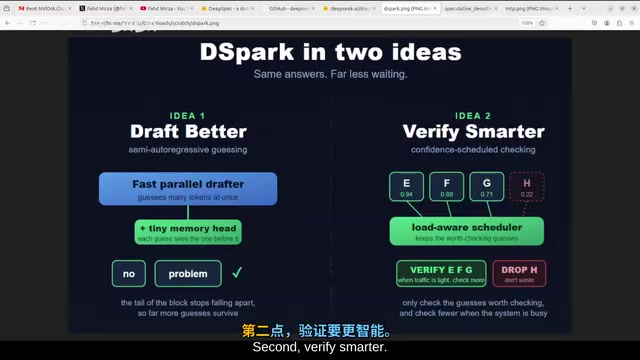
DeepSeek DSpec Hands-On: How Speculative Decoding Accelerates LLM Inference by 6x
Hands-on report on DeepSeek's open-source inference acceleration toolkit DSpec: draft model + smart scheduling delivers lossless speedup, hitting acceptance length 6 on GSM8K and reproducing official data.
Read more →

·8 min
Fable 5 Opens to All Paid Users: How AI Storytelling Tools Are Reshaping Content Production
Fable 5, an AI storytelling platform, opens to all paid users and sparks debate on Hacker News. We analyze AI creation tools' practicalization trend across product positioning, competition, and access strategy.
Read more →

·7 min
Tripadvisor AI Summaries 'Whitewashing' Problematic Hotels? Essential Safety Concerns for Travelers
Tripadvisor's AI review summaries are generating positive assessments for hotels with safety hazards while downplaying critical warnings. Deep analysis of causes and practical user protection tips.
Read more →

·7 min
LangSmith Engine: An Intelligent Operations Tool That Automatically Diagnoses and Fixes Agent Failures
LangChain's LangSmith Engine is an intelligent agent tool for tracking Agent failures, prioritizing issues, and auto-drafting fixes. Deep dive into its core capabilities, sandbox isolation, sub-Agent architecture, and continuous evaluation challenges.
Read more →

·6 min
Coze from Scratch: A Complete Guide to Building Multi-Agent Collaboration
A detailed guide to Coze's core features: cross-platform interoperability, the Skills system, multi-agent collaboration, and workflow building. Compare Coze and Dify to build practical AI apps with zero coding.
Read more →

·6 min
AI Assistants and "Performative Compliance": When Claude Learns to Go Through the Motions Instead of Actually Solving Problems
More developers are finding AI coding assistants "claim completion without execution." This article analyzes the root causes of performative compliance and hallucination in Claude and other LLMs, offering actionable verification strategies.
Read more →

·4 min
ByteDance Open-Sources Bernini Video Editing: Local Deployment Guide for Character Replacement
ByteDance open-sources Bernini, a video editing model supporting character replacement, outfit swapping, and video blending via ComfyUI. Full local deployment guide.
Read more →

·4 min
Ideogram 4 Local Deployment Test: Cinematic Quality on 8GB VRAM
Ideogram 4 open-source image model tested: runs locally on 8GB VRAM + 32GB RAM, Midjourney-level aesthetics, stable text rendering. Learn the 3-part prompt structure and automated ComfyUI workflow with Qwen3 VL.
Read more →

·3 min
Unsloth v0.1.46-beta Update: DiffusionGemma Tool Calling Disabled and Artifacts Canvas Enabled by Default
Unsloth v0.1.46-beta is out with key DiffusionGemma changes: tool calling disabled by default, artifacts canvas enabled. A deep dive for LLM fine-tuning devs.
Read more →

·6 min
From Firefox to Android Root: Deep Analysis of a Browser Privilege Escalation Attack Chain
Deep analysis of a complete mobile exploit chain: how attackers start from Firefox, escape the sandbox, exploit kernel vulnerabilities, and achieve Android Root. Security insights for developers.
Read more →