#JSON prompts
725 related articles

·4 min
WebMCP in Practice: How MakeMyTrip Is Reshaping the Travel Booking Experience
India's largest OTA platform MakeMyTrip uses WebMCP to standardize AI Agent interactions with web apps, replacing fragile DOM scraping with natural language-driven test automation and simplified complex booking scenarios.
Read more →

·5 min
WebMCP in Practice: Building Browser AI Agent Tools & DevTools Debugging Guide
A detailed guide to Google's WebMCP standard proposal, covering imperative and declarative tool building, smart home and car configuration demos, and Chrome DevTools debugging for AI agent tools.
Read more →

·4 min
WebMCP in Practice: How MakeMyTrip Is Reshaping the Travel Booking Experience
India's largest OTA platform MakeMyTrip uses WebMCP to standardize AI Agent interaction with web apps, solving DOM scraping fragility, enabling natural language test automation, and simplifying complex international flight bookings.
Read more →

·3 min
Grok 4.5 Feels Weaker in Cursor? A Deep Dive into AI Coding Tool Integration Differences
Users report Grok 4.5 underperforms in Cursor vs. the official terminal. We analyze how system prompts, context management, parameters, and tool calling create AI coding tool integration gaps.
Read more →

·4 min
AI Agent Development in Practice: A Complete Path from Zero to Production
A systematic guide to AI Agent development covering core modules, framework selection, tool calling, data preparation, and production deployment to help developers build production-ready Agent applications.
Read more →

·3 min
Agent Skills Explained: Solving the MCP Context Bloat Problem
Deep dive into Anthropic's Agent Skills mechanism, explaining how Progressive Disclosure solves MCP context bloat and tool calling accuracy issues in AI agents.
Read more →

·5 min
The Complete Guide to AI Agent Development: A Four-Stage Progressive Roadmap
A systematic guide to AI Agent development across four stages: LLM fundamentals, ReAct paradigm, memory & tools, and multi-agent collaboration for developers.
Read more →
·3 min
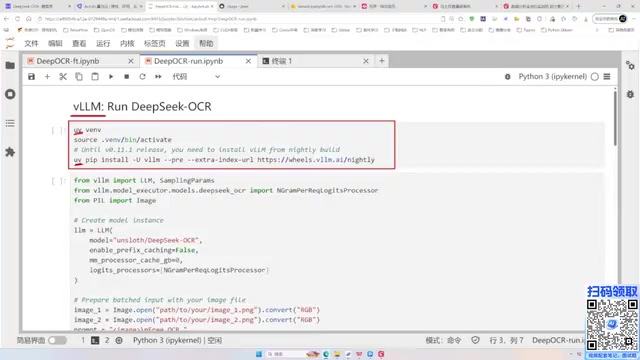
DeepSeek-OCR Deployment & Fine-Tuning in Practice: From vLLM Inference to Unsloth Fine-Tuning
Complete guide to DeepSeek-OCR from vLLM inference deployment and Unsloth model loading to fine-tuning, covering cloud server setup, GPU selection, and code examples — all on a single 4090 GPU.
Read more →

·3 min
Unified Prompt Management, Evaluation & Observability: A Comprehensive Comparison of LangSmith and Other Leading Platforms
In-depth comparison of LangSmith, Langfuse, PromptLayer, Helicone, and Orq.ai across Prompt management, Evals, and observability to help teams choose the best unified LLM Ops platform.
Read more →

·4 min
The More Complex the AI Agent, the More It Hallucinates? The Hidden Cost of Architectural Complexity
Why do AI Agents hallucinate more as they grow more complex? This article analyzes the causes from error accumulation, context noise, and model completion nature, with 5 practical production strategies.
Read more →

·3 min
Self-Hosted Receipt Tracking Tools: Monitoring Grocery Expenses and Price Changes
Explore self-hosted receipt tracking tools for grocery expense management, covering OCR recognition, price tracking, food categorization, and budget management with open-source solutions like Firefly III.
Read more →

·3 min
Ideogram 4.0 Turbo Workflow: An AI Image Generation Solution Balancing Speed and Quality
Detailed look at the Ideogram 4.0 mixed turbo workflow: RTX 4090 inference in just 15 seconds, rivaling Krea2 speed, with stable output up to 8K resolution.
Read more →
·3 min
Ideogram 4.0 Turbo Workflow: An AI Image Generation Solution Balancing Speed and Quality
Detailed look at the Ideogram 4.0 mixed turbo workflow: RTX 4090 tested at just 15s inference, matching Krea2 speed with up to 8K resolution output.
Read more →
·4 min
Hands-On Skill Writing and Agent Testing: A Guide to AI Testing Transformation
An in-depth look at AI testing challenges. Learn to write reusable Skill packs and master Agent testing and LLM evaluation—covering the SKILL.md six-dimensional rule, skill-creator, EvalScope, and dataset selection.
Read more →

·3 min
Anthropic's Hands-On Guide: How to Scientifically Choose and Evaluate AI Models
Anthropic's Applied AI team breaks down a methodology for choosing AI models: building custom evals, avoiding three common pitfalls, measuring value by cost per success, and cutting costs with prompt caching and context engineering.
Read more →

·2 min
Getting Started with Claude Code: A Complete Hands-On Installation and Setup Guide
A step-by-step guide to the full Claude Code installation and setup: Node.js environment, Git Bash config, npm install, proxy setup for China, and API Key authorization—helping beginners avoid every common pitfall.
Read more →

·2 min
Claude Code for Beginners: A Complete Hands-On Guide to Installation and Configuration
A step-by-step guide to Claude Code installation and configuration: Node.js setup, Git Bash config, npm install, network proxy for China users, and API Key login.
Read more →

·3 min
Stop Flying Blind: A Complete Practical Guide to Writing Evals for AI Agent Skills
A Google DeepMind engineer reveals that over 50,000 AI agent skills come with almost no evals. Learn how to write skill evaluations, from description tuning to test design.
Read more →

·3 min
Stop Flying Blind: A Complete Practical Guide to Writing Evals for AI Agent Skills
A Google DeepMind engineer reveals that over 50,000 AI agent skills come with almost no evals. This guide covers skill descriptions, test design, eval harnesses, and retirement strategies.
Read more →

·3 min
The AI Coding Landscape: Model Tiers, Tool Camps, and a Deep Dive into MCP/Skills/CLI
A systematic map of today's AI coding landscape: the evolution from ChatGPT to Claude Code, LLM capability tiers, tool camps like Cursor/Copilot, and the three key weapons of the Agent era — MCP, Skills, and CLI.
Read more →