#Java full-stack platform
207 related articles

·4 min
OpenAI Sites: Turn Ideas into Published Websites Instantly — No Coding Required
OpenAI's new Sites tool lets anyone describe an idea and instantly generate a live, shareable website or lightweight app — no coding skills needed.
Read more →

·4 min
Agent Skills Deep Dive: A Complete Guide to Modular Agent Development Architecture
A deep dive into Anthropic's Agent Skills architecture — clarifying its difference from MCP, and how modular Skill packages enable scalable, maintainable enterprise agent development.
Read more →
·7 min
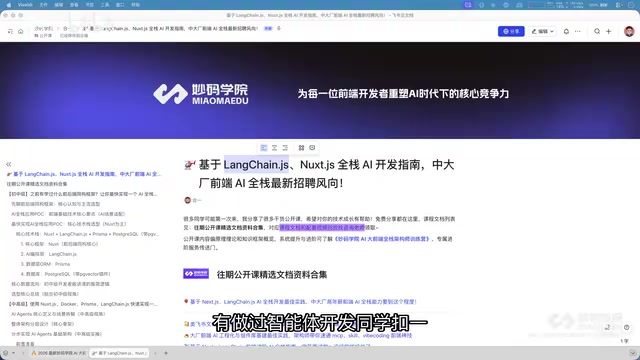
LangChain.js + Nuxt.js: An AI Full-Stack Advancement Path for Frontend Engineers
Frontend hiring now treats AI capabilities as a core assessment, covering RAG knowledge bases, AI Agent development, and LangChain.js engineering. Learn how LangChain.js + Nuxt.js helps frontend developers build memory- and retrieval-capable AI full-stack apps.
Read more →

·7 min
Electron + LangGraph in Practice: Building an AI Agent Visual Orchestration App from Scratch
A hands-on guide to building an enterprise-grade AI Agent workflow orchestration app with Electron Forge and LangGraph, covering local LLM deployment (Qwen3-0.6B), node-based visual canvas design, and full Function Calling integration.
Read more →

·7 min
Building AI Agent Frameworks with TypeScript: The Core Development Paradigm for Full-Stack Developers
An in-depth look at why TypeScript is the top choice for AI Agent development: covering Zod structured output validation, LangGraph's graph state machine design, and a full learning path for front-end devs transitioning to full-stack AI.
Read more →

·7 min
Learning Python from Scratch: A Complete Guide to the Three-Stage Learning Path
Want to learn Python from scratch but don't know where to begin? This article breaks down three stages—basic syntax, advanced mastery, and hands-on practice—with real projects in crawling, automation, and data analysis to help you build programming thinking.
Read more →

·6 min
Getting Started with LangChain: Unified Interfaces and Agent Development Explained
A beginner's guide to the LangChain open-source framework: explaining how to use the init_chat_model unified interface, tips for disabling DeepSeek's thinking mode, and core essentials of Agent development.
Read more →

·6 min
LangChain 1.0 Comprehensive Guide: Three Core Frameworks and Hands-On AI Application Development
Deep dive into LangChain 1.0's architecture: LangChain framework, LangGraph multi-Agent orchestration, and LangSmith observability platform, with hands-on RAG and intelligent customer service projects.
Read more →

·5 min
Deep Dive into Vercel's eve Framework: How AI Agents Are Becoming an Entirely New Form of Software
Vercel's Chief of Software Andrew Qu explains the eve Agent framework's design philosophy, covering Skills modularity, Sandboxes security, and agent-readable websites—revealing the paradigm shift from instruction-driven to goal-driven software.
Read more →

·8 min
The Codex Orange Book: An Open-Source Full-Stack Practical Guide for AI Programming Beginners
The Codex Orange Book is an open-source unofficial guide with 2.5K+ GitHub Stars, covering installation, plugins, MCP extensions, and hands-on projects to help beginners master AI programming tools.
Read more →

·7 min
App Builder: Generate Runnable Applications from a Single Sentence — A New Paradigm in AI Programming Tools
App Builder generates single-file runnable apps from natural language, with real-time sandbox preview and conversational revision. Deep analysis of its workflow, architecture, limitations, and costs.
Read more →

·7 min
AI Agent Code Execution Sandbox Selection Guide: In-Depth Comparison of E2B and Four Other Solutions
In-depth comparison of five AI Agent code execution sandbox solutions—E2B, Daytona, Modal, Cloudflare Sandbox, and Vercel Sandbox—across isolation, cold start latency, state management, and pricing.
Read more →

·3 min
Codex APP Deep Dive: Comparison with Claude Code and How to Choose
In-depth comparison of Codex APP vs. Claude Code and Cursor: pricing, stability, and capability differences. Discover Codex's unique strengths in frontend UI development and how to choose the right AI coding tool.
Read more →

·4 min
LangGraph.js Practical Guide: A Frontend Engineer's Path to AI Agent Development
A practical LangGraph.js guide for frontend engineers covering LangGraph vs LangChain comparison, workflow vs general-purpose agent types, and layered Agent architecture design.
Read more →

·3 min
Review of Domestic No-Registration AI Aggregation Platforms for GPT/Gemini/Claude and More
A detailed review of domestic Chinese platforms offering no-registration, no-VPN access to GPT-4, Gemini, Claude, DeepSeek and other top AI models, with security risk analysis.
Read more →

·2 min
AI LLM Development Career Path: Four Stages from Zero to $60K+/Year
A four-stage learning path for AI LLM application development: from Python basics and RAG architecture to Agent cluster orchestration, helping developers transition into AI roles.
Read more →

·4 min
Learn to Code with AI from Scratch: A Complete Learning Path from Beginner to Deployment
A complete learning path for coding with AI from scratch — from concepts and environment setup to using Cursor, Claude, and other AI tools to build and deploy your first project.
Read more →
·4 min
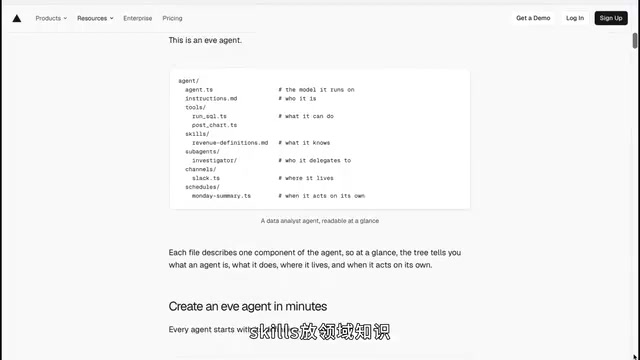
Deep Dive into Six AI Development Tools: Loop Recipe Library, Vercel Agent Framework, and More
Deep analysis of Loop workflow recipes, Vercel's open-source Agent framework, Pyker AI-native project management, Arrow P2P tool, DBX database client, and NVIDIA's Skill Spectre security tool.
Read more →

·4 min
A Beginner's Guide to Vibe Coding: The New Way to Build Software with AI — No Coding Required
What is Vibe Coding? Learn the core philosophy, three key traits, and boundaries of this AI-powered approach. Get a complete beginner's learning path with tools like Cursor and Bolt.new.
Read more →

·3 min
Xiaomi Mall Mini Program in Practice: Building a Full-Stack E-Commerce Project from Scratch
A full-stack Xiaomi Mall project built with WeChat Mini Program, Node.js, and MySQL, covering carousel, search, categories, cart, and login features.
Read more →