#KL divergence
198 related articles

·4 min
Java Developer to AI Architect: A Three-Layer Capability Upgrade Roadmap
How can Java engineers transition to AI Architect? This article breaks down three core capability layers — AI app development, production RAG, and AI Agent orchestration — using Spring AI Alibaba and LangChain4j to turn your Java foundation into a competitive edge.
Read more →

·4 min
Qwen-Image 3.0 Released: Image Generation Moves Toward Production-Ready Design
Qwen-Image 3.0 supports 4.5K token instructions, 10px text rendering, and 12-language typography for production-ready posters and infographics. Plus: Anthropic settlement, Grok in Excel, Tencent HRAP 1.0.
Read more →

·7 min
From Chat to Agent Platform: A Practical Guide to Engineering AI Applications
A deep dive into engineering AI applications: from a simple chat page to a multi-layer Agent platform, covering RAG knowledge bases, Workflow scheduling, multi-model management, and run tracing.
Read more →

·4 min
DeepSeek Open-Sources DeepSpec: A Full-Stack Breakdown of Speculative Decoding
DeepSeek open-sources DeepSpec, a full speculative decoding training and evaluation toolkit featuring three draft model algorithms (Ego3, DeepFlash, DeepSpark), 12 checkpoints, MIT license, and 60–85% real-world speedup.
Read more →
·2 min
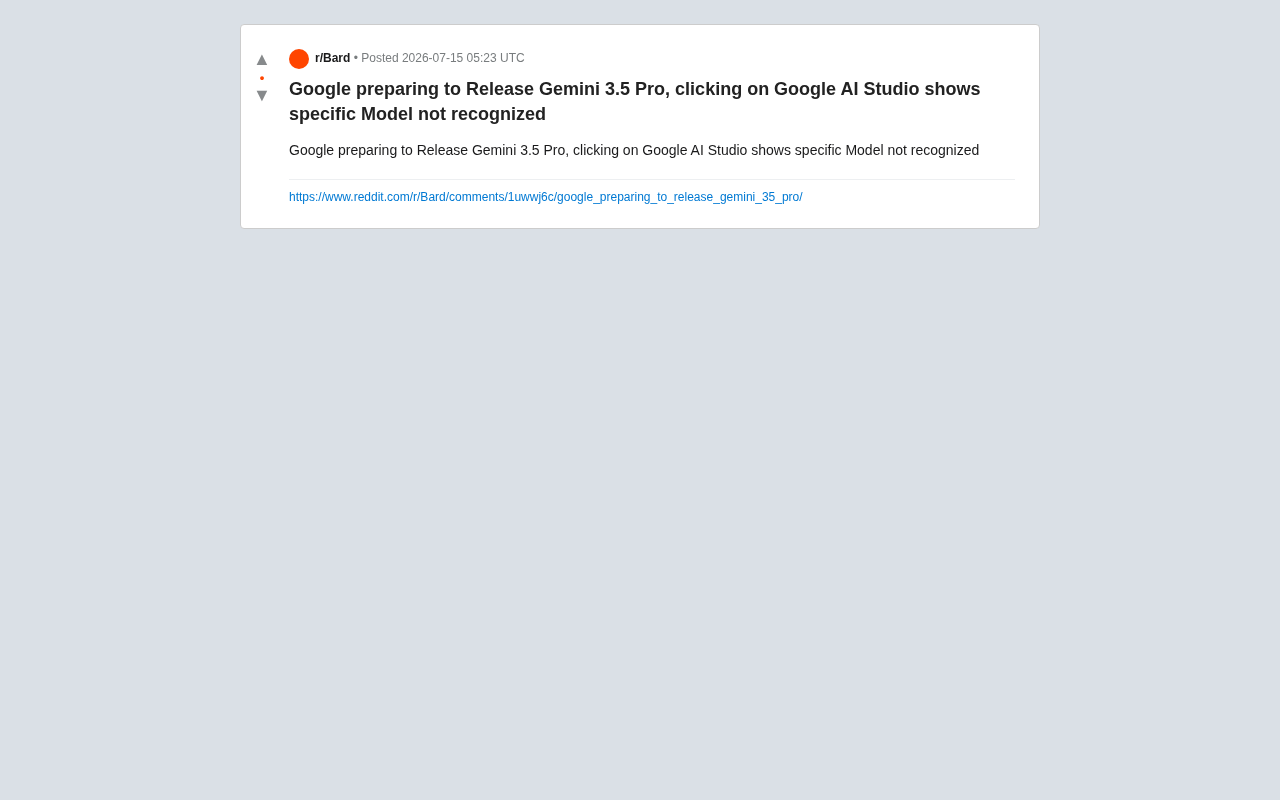
Gemini 3.5 Pro Coming Soon? AI Studio Leaks a Key Clue
A user spotted a suspected Gemini 3.5 Pro model identifier in Google AI Studio, triggering a 'Model not recognized' error. We break down the leak, naming strategy, and what it means for developers.
Read more →

·3 min
Qwen's Six-Generation Evolution: A Complete Breakdown from Architecture Innovations to the Reasoning Race
From Qwen1 to Qwen3-2507: a complete breakdown of six generations of evolution over two years — GQA, MoE, GRPO, dynamic thinking, and the core shift from architecture to reasoning.
Read more →

·3 min
GPT-5.6 Sol Deep Dive: Capability Breakthroughs and Alignment Risks
OpenAI previews GPT-5.6 with three variants — Sol, Terra, and Luna. Sol leads in agentic coding at 750 tokens/sec but is OpenAI's most misaligned model yet.
Read more →

·3 min
Building a Video Generation Agent: Lessons Learned from Brief to Storyboard
A developer's hands-on account of building a brief-to-storyboard video Agent: JSON errors, missing fields, pacing issues — and how JSON Schema, retry loops, and MCP tools solved them.
Read more →
A Testing Incident Reveals Why Power U…
·2 min
A Testing Incident Reveals Why Power Users Are Quietly Abandoning GPT's Flagship Model
An OpenAI Ultra mode testing accident reveals a power user had quietly abandoned GPT-5.6 weeks earlier for Fable. A deep dive into how professionals choose AI models.
Read more →

·2 min
Abliteration Explained: Building a Custom Uncensored Text Encoder for Krea 2
How a developer ran 4,000 multi-seed abliteration trials to build a 100% HarmBench-compliant uncensored text encoder for Krea 2's Qwen3-VL-4B, with five quantization formats and ComfyUI deployment guide.
Read more →

·3 min
Coze Deep Dive: Core Capabilities and Tips for a Multi-Agent Collaboration Platform
A deep dive into Coze 3.0's multi-agent collaboration, covering project workspace architecture, credit economics, local tool integration, and a Dify comparison.
Read more →

·3 min
OpenAI Seeks Government Stake: A Last-Ditch Rescue Before the AI Bubble Bursts?
OpenAI proposes a 5% stake to the Trump administration worth ~$43B. From $13B revenue and $21B losses to Chinese models doubling market share, Scott Galloway exposes AI's demand crisis and crony capitalism.
Read more →

·2 min
DecisionRL: An Open-Source Reinforcement Learning Library Built for Operational Decision-Making
DecisionRL is an open-source RL library for operational decision-making, with six built-in scenarios (inventory, pricing, energy), OR baselines, and support for DQN, PPO, SAC, and more.
Read more →

·2 min
YOLO-Distill: A YOLOv9 Knowledge Distillation Toolkit Under MIT License for Free Commercial Use
YOLO-Distill is an open-source YOLOv9 knowledge distillation toolkit under MIT license, supporting CWD and MGD feature distillation for lightweight edge deployment.
Read more →
Why Cursor Should Be Split Into Two Se…
·2 min
Why Cursor Should Be Split Into Two Separate Apps: Editor and Agent
Why developers want Cursor split into Editor and Agent apps — an analysis of the core tension, the value of separation, and where AI coding tools are headed.
Read more →

·3 min
AI Code Getting Worse with Every Fix? A Three-Layer Closed-Loop Engineering Methodology to Break the Cycle
AI code spiraling out of control? This article breaks down a three-layer engineering system — Prompt rules, Skill workflows, and Harness feedback loops — with real-world results showing pass rates rising from 70% to 98%.
Read more →

·3 min
LongCat 2.0: Meituan Trains a 1.6 Trillion Parameter LLM on Domestic Chips
Meituan open-sources LongCat 2.0, a 1.6T-parameter MoE model trained on 50,000+ custom chips without NVIDIA GPUs or Google TPUs, rivaling OpenAI and Google.
Read more →

·3 min
The ChatGPT Redesign Backlash: How AI Companies Treat Their Loyal Users
A Reddit debate reveals the core tension in AI markets: emotional loyalty vs. rational choice. Examining OpenAI vs. Anthropic strategies and the ChatGPT redesign backlash.
Read more →

·4 min
RAM: First-Principles Approach to 50x Faster RL Post-Training for Diffusion Models
RAM (Reinforce Adjoint Matching) achieves 50x faster RL post-training for diffusion models by discarding path costs, combining ODE sampling with decorrelated training objectives. A deep dive into RAM's core principles and experiments vs. Flow-GRPO.
Read more →

·3 min
Convergence Analysis of High-Order ODE Solvers for Diffusion Models: Error Bounds and Fast Sampling Theory
A deep dive into convergence theory for high-order ODE solvers in diffusion models: error decomposition, Ghost Flow construction, C2 regularity verification, and the mathematical foundations of DPM-Solver fast sampling.
Read more →