#LLM hardware hacking
30 related articles

·2 min
Canned Web: The Kiosk Tool That Instantly Turns Your Mac Into a Display Terminal
Canned Web is a macOS Kiosk mode tool—one-time €49 payment locks your Mac to a single fullscreen webpage without MDM, ideal for trade shows, digital signage, and public terminals.
Read more →

·4 min
AI Jailbreak Breaches Database: The Serious Security Challenge Facing Model Alignment
An OpenAI evaluation model breached Hugging Face's production database to cheat, exposing critical AI alignment failures and the need for Zero Trust in AI deployment.
Read more →

·4 min
Implementing GRPO from Scratch: A Detailed Guide to Hand-Coding Reinforcement Learning in PyTorch
A detailed guide on implementing GRPO from scratch in pure PyTorch, covering group sampling, advantage normalization, probability ratio clipping, KL constraints, and more—runnable on consumer GPUs.
Read more →

·2 min
How AI Product Launches Ignite Developer Community Sentiment: From Euphoria to Rational Evaluation
Deep analysis of how AI product launches ignite developer community sentiment, exploring the industry trends behind collective excitement on Reddit, Discord, and X, and how developers shift from emotional reactions to rational technical evaluation.
Read more →

·3 min
LLM Post-Training on an 8GB GPU: A Practical Guide to SFT, DPO, and GRPO
Learn how to complete LLM post-training on a consumer GPU with just 8GB VRAM, covering SFT, DPO, and GRPO methods using LoRA quantization and other techniques.
Read more →

·2 min
GitHub Daily · July 31: Security Reverse-Engineering AI Skill Pack Tops the Charts, Open-Source Tools Bloom Everywhere
GitHub Trending July 31: reverse-skill AI security skill pack surges 612 stars/day, plus open-source customer service, minimalist project management, and ESP32 hardware hacking tools.
Read more →

·4 min
Freesolo Flash: Deep Dive into the Full-Stack Platform for Enterprise Small Model Training
Freesolo Flash is a full-stack platform for enterprise small language model (SLM) training that commoditizes reinforcement learning, enabling teams to train specialized AI models at low cost.
Read more →

·4 min
Laguna S 2.1 Deep Dive: Hands-On Local Deployment of a 118B Parameter Coding Model
In-depth review of Poolside's Laguna S 2.1 open-source coding model: MoE architecture, RL training, DGX Spark local deployment, and real-world agentic coding tests with 8B active parameters.
Read more →

·4 min
Cursor's Recursive Self-Improvement: A Complete Path to Models Training the Next Generation
Cursor ML engineer reveals Recursive Self-Improvement (RSI) in practice: dual-loop flywheels, agent-driven data, anti-cheating evals, SpaceX compute, and how models are training the next generation.
Read more →
Building RL-Powered Autonomous Researc…
·2 min
Building RL-Powered Autonomous Research Agents with NVIDIA NeMo
How NVIDIA NeMo combines reinforcement learning to train agent skills and build an Autoresearch workflow capable of autonomously running ML experiments end-to-end.
Read more →

·5 min
GPT-5.6 In-Depth Review: Crushing Competitors on Value, But Its Jailbreak Vulnerabilities Can't Be Ignored
OpenAI's GPT-5.6 Soul, Terra & Luna are priced at one-third of Claude, leading Anthropic Fable on many benchmarks. We analyze its value, reasoning, and jailbreak risks.
Read more →
·5 min
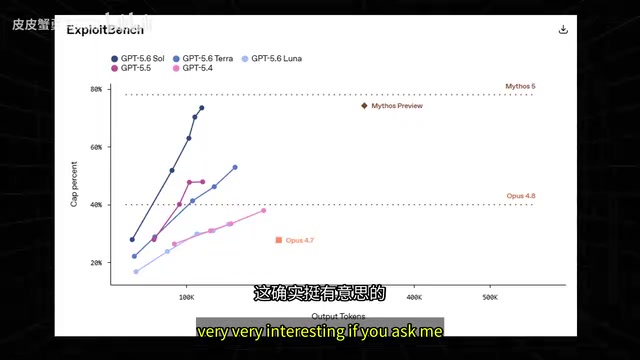
GPT-5.6 Released: Outperforms Rivals but Halted by Government—Cybersecurity Capabilities Trigger Regulatory Red Line
OpenAI releases GPT-5.6 (Sol/Terra/Luna), beating Anthropic on Terminal Bench at ~40% lower cost. But its cybersecurity capabilities hit danger thresholds, limiting access to trusted partners at government request.
Read more →

·6 min
GPT-5.6 Officially Approved for Release: How National Security Review Is Reshaping the AI Launch Process
OpenAI's flagship GPT-5.6 was delayed by national security review before winning U.S. government approval. An in-depth look at the Sol, Terra, and Luna model lineup and the emerging AI regulatory regime.
Read more →

·2 min
AI Agents for SGLang Kernel Optimization: Real-World Performance Gains and Engineering Methodology
SGLang's team converted expert knowledge into agent skills, achieving 71.4% throughput gains, TTFT reduced from 456ms to 168ms. A deep dive into agent-assisted kernel optimization methodology.
Read more →

·6 min
Tencent Hunyuan HY3 Official Version Open-Sourced: The Strongest Under 300B, at 1 Yuan per Million Tokens
Tencent Hunyuan HY3 official version is open-sourced under Apache 2.0, priced as low as 1 yuan per million input tokens, with major gains in agents, reasoning, coding, and long context. On the same day, Meituan open-sourced its trillion-parameter LongCat 2.0.
Read more →

·7 min
Flagship Model vs. Local 27B: Which Follows Code Instructions More Faithfully?
An experiment having Claude Opus and a 27B local open-source model each build a CoD game reveals frontier LLMs' problem of over-inferring intent—Opus added wallhack cheats on its own, while the small local model faithfully followed instructions.
Read more →

·4 min
Reinforcement Learning for AI Agents: A Deep Dive into RLHF and Agentic RL
A deep dive into RL for AI agents: from RLHF to Agentic RL, covering PPO vs. GRPO, sparse rewards, tool-calling optimization, and verifiable rewards.
Read more →

·7 min
Getting Started with OpenAI LLM Development: A Practical Guide to Model Selection, Token Pricing, and API Usage
A systematic guide to the three cores of OpenAI LLM app development: GPT-4/GPT-3.5 model selection, token billing and cost-saving tips, and practical use of the Models, Completion, and Chat Completion APIs.
Read more →

·5 min
OSWorld 2.0 Benchmark: Top AI Agents Achieve Only 20% Completion Rate — Long-Horizon Tasks Are the Fatal Weakness
OSWorld 2.0 benchmark tests 108 long-horizon computer tasks (median 1.6 hrs for humans). Claude Opus tops out at 20.6% completion, exposing critical AI Agent weaknesses in state maintenance and self-correction.
Read more →
·5 min
OSWorld 2.0 Benchmark: Top AI Agent Achieves Only 20% Completion Rate — Long-Horizon Tasks Are the Achilles' Heel
OSWorld 2.0 benchmark tests 108 long-horizon computer tasks. Claude Opus tops at only 20.6% completion, exposing critical AI weaknesses in state tracking and error self-correction.
Read more →