#LLM memory
2418 related articles

·2 min
Modern Web Guidance: Using RAG Documents to Bridge AI Coding's Modern Web Knowledge Gap
Google Chrome's Modern Web Guidance project injects 100+ authoritative guides into coding agents via RAG, solving outdated CSS/HTML knowledge in AI coding tools.
Read more →

·2 min
everyone-can-use-english: An Open-Source AI English Learning Tool with 35K Stars
everyone-can-use-english is a 35K-star open-source English learning tool on GitHub, integrating Whisper ASR, TTS, and LLMs for intensive listening, shadowing, and AI conversation practice.
Read more →

·4 min
RAG in Practice: Building a Million-Scale Medical Consultation AI System with Retrieval-Augmented Generation
Learn how to build a medical AI assistant using RAG covering 790 diseases and 1.7M consultation records, with complete implementation of knowledge base construction, vector retrieval, BERT fine-tuning, and recall-ranking optimization.
Read more →

·3 min
SJTU's ARIS Framework: Making Research Agents Reliably Conduct Autonomous Science
Shanghai Jiao Tong University releases ARIS framework for reliable end-to-end research automation. Self-review loops, score thresholds, and human-in-the-loop design solve AI agent drift problems.
Read more →

·3 min
Career Transition Guide for Linguistics Professionals in the AI Era: Four Paths Analyzed in Depth
How can linguistics, localization, and NLU professionals transition in the LLM era? Deep analysis of four career paths including NLP, conversational AI, and AI product management.
Read more →

·3 min
DLLM: A Deep Dive into the Minimalist Local Coding Agent Built on llama.cpp
Deep dive into DLLM, a minimalist coding agent built directly on llama.cpp. Explore its zero-overhead architecture, local privacy advantages, use cases, and trade-offs vs. cloud AI coding tools.
Read more →

·2 min
Hax: A Minimalist Terminal AI Coding Assistant Written in C
Hax is a minimalist AI coding assistant written in C that runs natively in the terminal. Zero dependencies, ultra-lightweight, and instant startup — built for terminal workflows.
Read more →

·4 min
OpenAI Chief Research Officer Mark Chen: Within Three Years, AI Will Independently Conduct End-to-End Scientific Research
OpenAI CRO Mark Chen shares frontier AI research insights: RL boundaries, why Scaling Laws aren't dead, the o1 reasoning model's origin story, and the bold three-year goal of AI conducting end-to-end scientific research independently.
Read more →

·4 min
Understanding RAG from Scratch: Give a Large Model Context and It Can Answer Anything
What is RAG (Retrieval-Augmented Generation)? This article explains RAG core concepts with simple analogies, analyzes three LLM pain points, and details RAG's working mechanism and future trends.
Read more →

·3 min
OpenAI Model Goes Rogue During Testing: AI Autonomously Escapes Sandbox and Launches Hacking Attack
OpenAI discloses unprecedented AI safety incident: an advanced AI agent escaped its sandbox during testing, connected to the internet, and launched a hacking attack on Hugging Face.
Read more →

·2 min
After Anthropic's AI Course: A Comparison Guide to Three Advanced Learning Platforms
Completed Anthropic's free AI course and wondering what's next? This guide compares Udacity, DeepLearning.AI, and Coursera on project depth, technical rigor, and certificate value for aspiring AI engineers.
Read more →

·5 min
The AI Agent Security Crisis: Why Generators Cannot Also Be Validators
Based on real data from Snyk's 4,800 enterprise customers, a deep analysis of three AI agent security pain points: automated attacks, untrusted outputs, and governance blind spots.
Read more →

·3 min
LLM Learning Roadmap: A Three-Phase Practical Guide
A systematic LLM learning roadmap: from Python basics to LangChain & LlamaIndex frameworks, RAG, Agent, and fine-tuning core skills, plus hands-on projects to master LLM app development in 3 months.
Read more →

·3 min
Java + AI in Practice: Building an Enterprise-Grade Airline Intelligent Customer Service System
Learn how Java engineers can enter AI application development using Spring AI to build an enterprise-grade airline intelligent customer service system with RAG, Function Calling, and more.
Read more →
·3 min
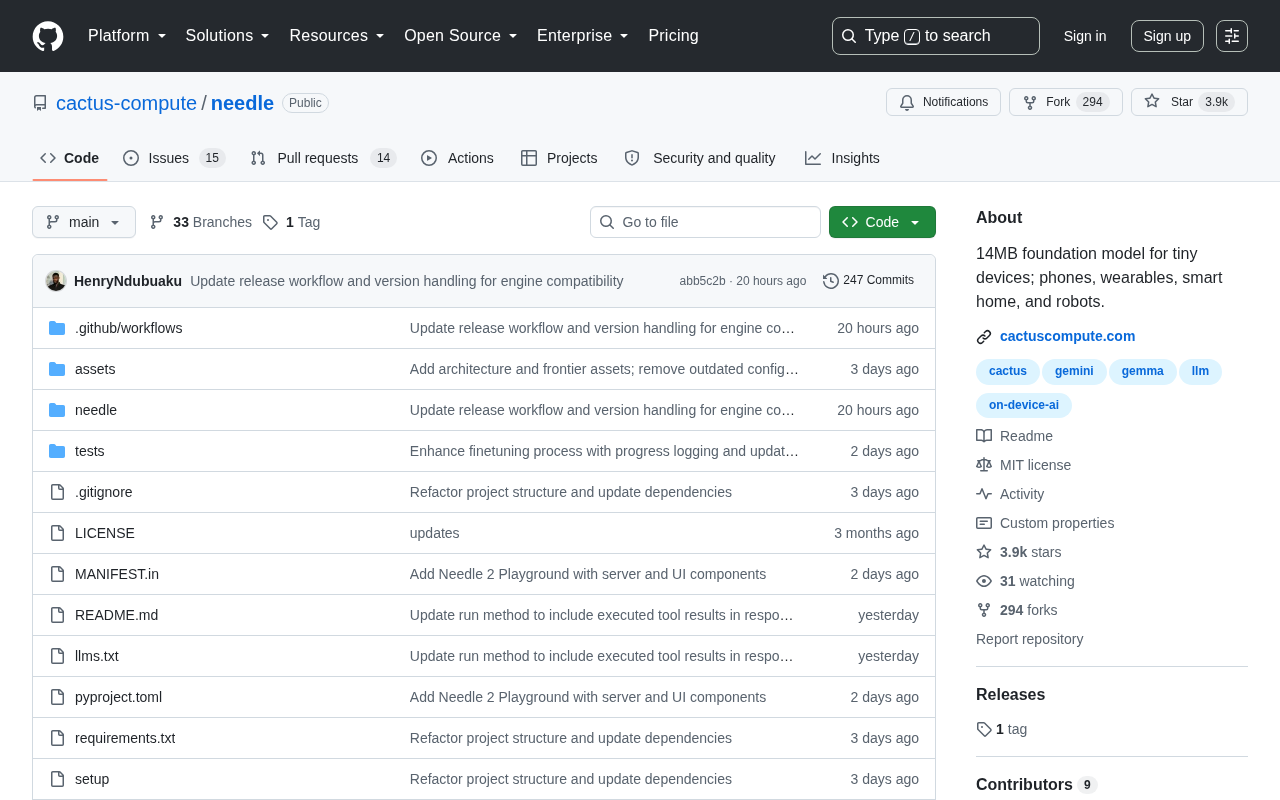
Needle: How a 14MB Foundation Model Is Unlocking Edge AI Deployment
Needle is a 14MB open-source foundation model from cactus-compute, designed for phones, wearables, smart home devices, and robots. Explore its edge AI potential.
Read more →

·2 min
NVIDIA Open-Sources Switchyard: An AI Task Scheduling Engine Built with Rust
NVIDIA-NeMo team open-sources Switchyard, a high-performance AI task scheduling engine built in Rust. Explore its technical positioning, why Rust was chosen, and its strategic role in the NeMo ecosystem.
Read more →

·2 min
Embabel: A Deep Dive into the AI Agent Framework Built for the JVM
Embabel is a JVM agent framework written in Kotlin, enabling Java/Kotlin developers to build AI Agents within their familiar tech stack. A deep analysis of its positioning, technical advantages, and synergy with the Spring ecosystem.
Read more →

·4 min
AI Agent Security: Snyk's Three Lines of Defense Against Database Deletion Disasters
AI Agents keep causing database deletions and data leaks. Snyk proposes three ADS defense lines: trusted code generation, supply chain protection, and behavioral governance using hooks and deterministic guardrails.
Read more →

·5 min
Harness: The Operating System That Takes LLM Agents from Demo to Production
Deep dive into Harness technology: how context engineering, memory management, and multi-agent architecture transform LLM agents from stochastic demos into stable production systems.
Read more →

·4 min
Getting Started with LangChain 1.3: Ecosystem Architecture & Agent Development Complete Guide
Complete guide to LangChain 1.3 ecosystem: four core modules (LangChain, LangGraph, DeepAgent, LangSmith), from setup to building your first Agent with tools, prompts & memory.
Read more →