#LangFuse
90 related articles

·2 min
LLM Thought Visualization: Making AI Reasoning Transparent and Interpretable
LLM thought visualization is emerging as a key breakthrough in AI explainability. This article explores the value, technical approaches, and challenges of visualizing Chain-of-Thought reasoning.
Read more →
·3 min
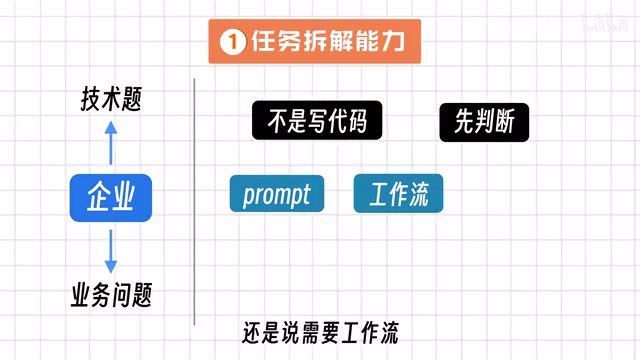
4 Core Competencies Every High-Value LLM Application Engineer Must Have
Why can't companies find qualified AI engineers? Discover the 4 core competencies every high-value LLM application engineer needs: task decomposition, tool calling, observability, and production readiness.
Read more →

·7 min
Otari: A Comprehensive Look at the Open-Source LLM Control Plane Tool
An in-depth analysis of the open-source LLM control plane tool Otari—covering unified multi-model access, cost observability, and security compliance governance to help teams build manageable, production-grade AI infrastructure.
Read more →

·6 min
Claude Comes to Azure: Three Enterprise-Grade Advantages of Microsoft Foundry's Anthropic Model Integration
Microsoft Foundry integrates Anthropic Claude models, enabling Azure customers to access Claude Opus 4.8 and Haiku 4.5 with unified authentication, billing, and commitment spend drawdown.
Read more →

·6 min
Claude Comes to Azure: Three Enterprise-Grade Advantages of Microsoft Foundry's Anthropic Model Integration
Microsoft Foundry integrates Anthropic Claude models. Azure customers can now access Claude Opus 4.8 and Haiku 4.5 with unified identity auth, billing, and commitment credit deduction.
Read more →

·3 min
Agentic AI in Practice: Core Principles, Engineering Challenges, and Practical Recommendations
A deep dive into Agentic AI: core components (planning, tool calling, memory), engineering challenges (reliability, cost, safety), and practical development recommendations for production deployment.
Read more →

·7 min
Harness Engineering: Core Methodology and Practical Guide for Enterprise-Level AI Programming
Can AI really replace programmers? This article explains Harness Engineering principles and its three evolutionary stages, revealing real pain points of enterprise AI programming.
Read more →
Morph Reflexes: Building Real-Time Beh…
·4 min
Morph Reflexes: Building Real-Time Behavioral Guardrails for AI Agents with Multi-Head Classifiers
Morph Reflexes is an open-source AI agent monitoring tool that uses multi-head classifiers for real-time trace classification — enabling safety guardrails, quality scoring, and training data filtering.
Read more →

·6 min
5 Critical Engineering Pitfalls in Enterprise RAG Knowledge Base Deployment: The Real Barriers from Demo to Production
Why do enterprise RAG knowledge bases dazzle in demos but fail in production? This article dissects five critical engineering pitfalls with real-world case studies from million-doc platforms and ops agents.
Read more →

·6 min
Codex Beginner's Guide: Four Product Forms Explained, Plus Comparison with Claude Code and Cursor
In-depth analysis of OpenAI Codex's four usage forms, comparing Codex, Claude Code, and Cursor across price, stability, and frontend/backend fit to help developers choose the right AI programming tool.
Read more →

·3 min
Building Your Own AI Studio: Full Automation from Code Generation to Deployment
A developer built Manifest Studio to automate the full pipeline from AI code generation to app deployment, using a Skill mechanism for one-sentence publishing.
Read more →

·7 min
AI Agent Development: A Four-Stage Competency Model from 15K to 40K RMB Salary Growth Path
A detailed four-stage competency model for AI Agent development: from Python/RAG basics (15K) to workflow orchestration (20K), inference optimization (30K), and Agent cluster governance (40K RMB).
Read more →

·7 min
Agent Loop Explained: The Core Runtime Mechanism and Think-Act Cycle of AI Agents
Deep dive into Agent Loop mechanics: the think-act cycle, how agents differ from LLMs, termination conditions, and design principles for building autonomous AI Agent systems.
Read more →

·7 min
AI Agent Code Execution Sandbox Selection Guide: In-Depth Comparison of E2B and Four Other Solutions
In-depth comparison of five AI Agent code execution sandbox solutions—E2B, Daytona, Modal, Cloudflare Sandbox, and Vercel Sandbox—across isolation, cold start latency, state management, and pricing.
Read more →

·7 min
AI Agent Practical Guide: The Complete Path from Building to Production Deployment
A deep dive into AI Agent architecture and engineering practices, covering tool design, ReAct execution patterns, Vercel deployment, and production considerations to bridge the prototype-to-production gap.
Read more →

·3 min
Dify Comprehensive Guide: The Open-Source Platform for Building AI Apps Without Code
Deep dive into Dify, the open-source LLM app development platform featuring visual workflow engine, RAG knowledge base, Agent capabilities, hundreds of model integrations, Docker deployment, and comparisons with LangChain, Coze, and FastGPT.
Read more →

·4 min
7-Step Framework for Deploying Commercial AI Agents: From Requirements to Production
A detailed 7-step guide to building commercial AI Agents, covering requirements, platform selection (Coze/Dify/FastGPT), prompt engineering, databases, UI, testing, and deployment.
Read more →

·3 min
What Are Agent Skills? A Deep Dive into the New Paradigm for AI Agent Decision-Making
Deep dive into Agent Skills: how they solve React Agent pain points through on-demand loading and capability modularization, improving decision precision for production-ready enterprise AI Agents.
Read more →

·3 min
Why AI Engineer Is the Hottest Career Track Right Now: Insights from the AI Engineer Conference
AI Engineer is evolving from a vague concept into a fast-growing career track. This article analyzes the role's core skills—Prompt Engineering, RAG, Agent development—and industry trends from the AI Engineer Conference.
Read more →

·3 min
PilotDeck: A Local Console That Tames Multi-Task Agent Chaos
PilotDeck is an open-source local Agent console from a Tsinghua-affiliated team that solves multi-task chaos with workspace isolation, white-box memory management, and smart model routing.
Read more →